Diamond Clarity Chart: What Eye-Clean Really Means and What to Buy
Clarity is graded under 10x magnification, not by the naked eye. Here's where the difference stops being visible, and how to pick the cheapest grade that still looks clean.
Written by Love & Carat, with AI assistance, from the sources listed below. How we write
In This Guide (9)
- The diamond clarity chart, from FL to I3
- What does eye-clean actually mean?
- VVS, VS1 vs VS2, SI1: where the eye stops seeing a difference
- Shape and size change the answer
- What inclusions look like in a lab-grown diamond
- How to judge clarity from a video and a report
- When a higher clarity grade is worth paying for
- Questions
- Sources
The best clarity grade for most people is the lowest one that is eye-clean in their chosen shape and size. Clarity is graded under 10x magnification, so a VVS stone and a carefully chosen, eye-clean VS2 or SI1 may look equally clean at normal viewing distance. Higher clarity can be worth considering for step cuts and larger round brilliants if a lower-graded stone has visible inclusions.
The diamond clarity chart, from FL to I3
Clarity describes the tiny internal features (inclusions) and surface features (blemishes) in a diamond. GIA's clarity scale runs from Flawless to Included across 11 grades, and it's the shared language of the trade. GIA says jewelers around the world commonly use terms such as VVS1 and SI2.
The crucial detail is how the grades are assigned. Clarity is graded under standard viewing conditions with 10x magnification, by a skilled grader, and GIA's chart describes each grade by what that grader sees at 10x:
| Grade | What a skilled grader sees at 10x | What it means for you |
|---|---|---|
| FL, IF | No inclusions visible at 10x (IF may show blemishes) | If both look clean to you, decide whether the higher grade matters to you beyond appearance |
| VVS1, VVS2 | Minute inclusions, extremely to very difficult to see | Generally eye-clean; judge the individual stone |
| VS1, VS2 | Minor inclusions, difficult to somewhat easy to see | Often eye-clean; check the individual stone, especially a step cut or large round |
| SI1, SI2 | Noticeable inclusions, easy to very easy to see | Some are eye-clean; check each stone |
| I1, I2, I3 | Obvious inclusions | Avoid for a center stone |
GIA notes that the clarity grade weighs the number, size, relief, nature and location of what it finds, and that many of these characteristics won't be visible to the naked eye. GIA notes that in the Included grades, inclusions may affect transparency, brilliance and durability, which is why we'd generally avoid those grades for a center stone.
For natural diamonds, GIA says that Flawless diamonds are exceptionally rare and most jewelers have never seen one. Rarity is a fair reason to admire a stone. It's a poor reason to spend more on a ring, because nobody sees a stone at 10x across the dinner table, and a diamond is not an investment.
What does eye-clean actually mean?
An eye-clean diamond is one where you can't see any inclusions without magnification. It's an appearance check that matters to the person wearing the ring, not a separate clarity grade on the report. IGI is explicit that traditional 4Cs assessment was not designed to judge whether a person can see inclusions, and that laboratories don't make an eye-clean judgment. Eyesight, distance, viewing angle and lighting all change what a given person sees.
Even so, IGI reports a working definition that a survey of gemologists agreed on:
Eye-Clean: No inclusions visible to the unaided eye when viewed from the face up position in daylight equivalent or fluorescent lighting between 6-12 inches from the eye using 20/20 vision.
Notice three things in that definition. It's face up, the way a ring is seen, not from the side. It's at a normal viewing distance, not nose to the stone. And it specifies daylight-equivalent or fluorescent lighting and 20/20 vision, so your own view may differ. That's a sensible, realistic standard to shop against.
VVS, VS1 vs VS2, SI1: where the eye stops seeing a difference
Here is the honest version. By the definition above, IGI says that round brilliant diamonds graded VS2 and higher are reliably eye-clean, but advises checking VS2 rounds over 3.00 carats individually. By that eye-clean definition, a VVS, VS1 and VS2 round can look equally clean without magnification; still check the stone you choose. The difference in grade is real, even when you can't see it at normal viewing distance.
VS1 vs VS2. VS1 is the higher grade: its inclusions sit nearer the "difficult to see" end of the VS range. In a round, we'd usually take the VS2 and keep the difference.
SI1. This is where careful shoppers find value. IGI points out that shoppers who look closely often find SI1 and SI2 stones with no visible inclusions, just as clean to the naked eye as VS, VVS and Flawless diamonds, for a far lower spend. Not every SI1 is eye-clean, so each one needs checking. SI2 can work too, but we'd check each stone carefully.
VVS. There's nothing wrong with choosing VVS if its grade matters to you beyond what you can see. But if the reason is "so it looks perfect", a well-chosen VS2 or SI1 round already does.
Once a stone is eye-clean, cut can make more difference to its sparkle than paying for an even higher clarity grade. Our guide to diamond cut grades explains where that money goes furthest. And if you're choosing a lab-grown diamond, it usually costs less than a comparable natural one to begin with, so the savings stack.
Shape and size change the answer
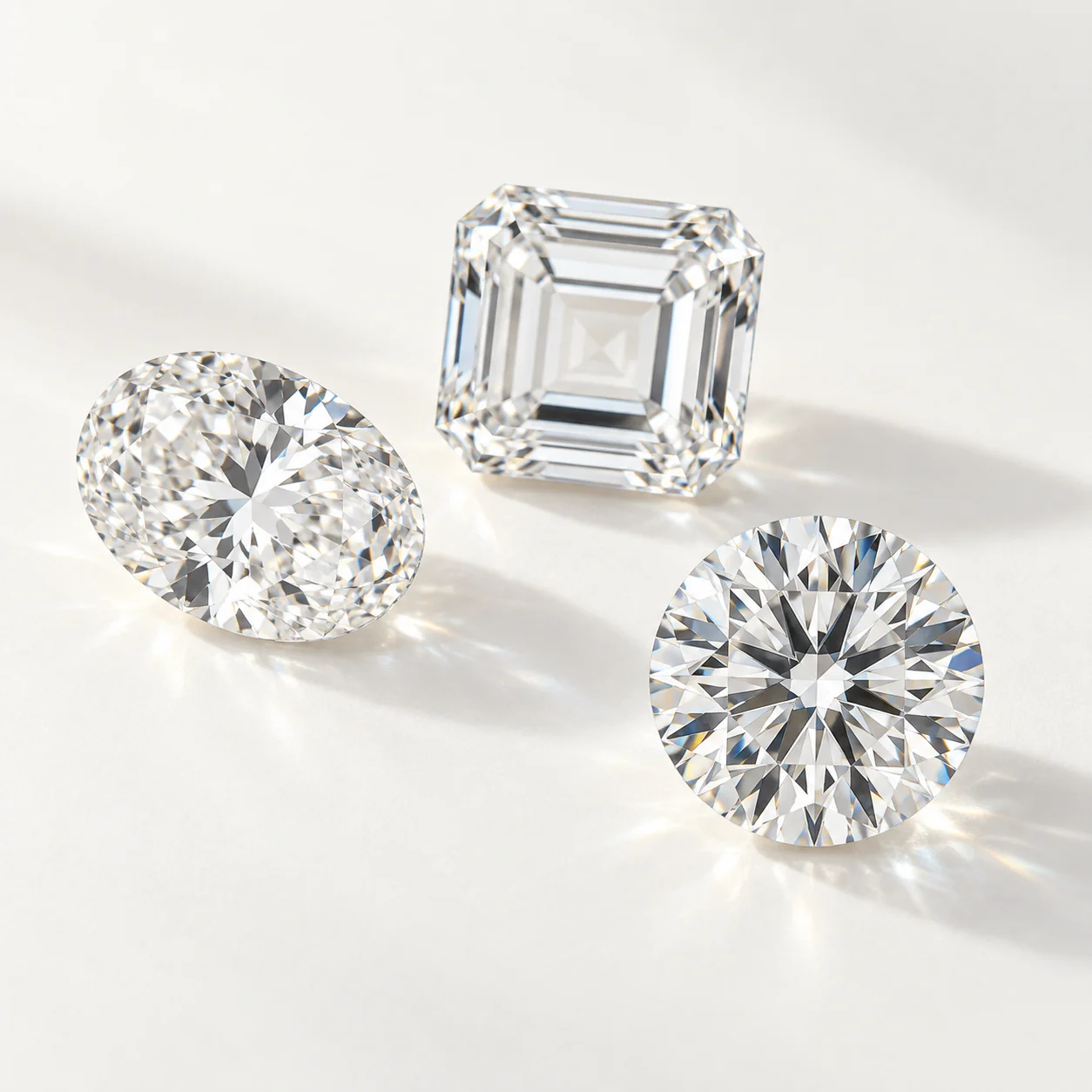
Clarity grades are the same for every shape, but how easily you see an inclusion is not. A round brilliant's many facets break light into lots of small flashes, which helps hide small features. Step cuts are different. Emerald and Asscher cuts have long, open facets that act like windows into the stone.
IGI says that for shapes which show inclusions more easily, such as step cuts like emeralds and Asschers, VS2 should be checked case by case rather than assumed eye-clean. The same applies to round brilliants over 3.00 carats: don't assume a VS2 is eye-clean without checking it.
So the rule of thumb shifts with the stone:
- Round under three carats: VS2 is reliably eye-clean; SI1 is worth checking.
- Emerald or Asscher cut: start at VS2, check each one by eye, and be ready to step up to VS1.
- Round over three carats: treat VS2 as "check each stone", and SI as a careful hunt.
What inclusions look like in a lab-grown diamond
Grown in a lab doesn't mean grown flawless. Lab-grown diamonds have inclusions and blemishes too, and they're graded on the same scale. GIA states that its scientists grade each lab-grown diamond with the same meticulous care as natural diamonds, using the full 4Cs.
The inclusions in a lab-grown diamond come from how it grew, which is why they differ from those in a natural stone. GIA's graders examine inclusions that support a natural or lab-grown origin as part of their analysis. Lab-grown stones can show familiar features such as feathers: GIA has documented fracture filling in a feather on the table of a lab-grown diamond.
That's a useful reminder that clarity can be treated, in lab-grown and natural stones alike. During grading, GIA checks for evidence of clarity treatments such as fracture filling or laser drilling. For lab-grown diamonds, GIA's full lab-grown diamond report can also state the growth method and post-growth treatment; its streamlined Dossier version leaves those options out. If growth method matters to you, our explainer on CVD vs HPHT lab-grown diamonds covers the difference.
For choosing by eye, the practical advice is the same whatever the origin: judge the specific stone, not its category.
How to judge clarity from a video and a report
Since eye-clean isn't on the report, you have to combine two things: what the lab recorded, and what the stone looks like.
Start with the report. GIA graders plot clarity characteristics on a diagram during grading; if your report includes a clarity plot, use it to locate the inclusions. An edge inclusion may be less visible than a mark in the middle of the table, but check whether it reaches the surface or affects durability. Our certificate glossary explains what else to read on a GIA or IGI report.
Then watch the video sensibly. A magnified video can help you find an inclusion, but can also make an eye-clean stone look alarming. Ask yourself the eye-clean question instead: face up, at real size, would you see it?
A few habits help:
- Look at the stone face up, the way it will be worn.
- Use the stone's measurements as a size guide, and don't rely on a magnified video alone to judge whether an inclusion is eye-clean.
- Pay particular attention to dark, large or central marks, but check small, pale and edge features on the individual stone too.
- Be wary of an inclusion that breaks the surface on a point or edge, and ask about it.
Every diamond we sell comes with a GIA or IGI grading report. If a clarity plot and video are available, use them together to assess the stone. And because no screen is perfect, read our returns policy before you buy so you know your options once the stone is in your hand.
When a higher clarity grade is worth paying for
Down-selling only builds trust if we're honest about the exceptions. Paying up for clarity makes sense when:
- You've chosen a step cut. Check emerald and Asscher cuts individually; consider VS1 or higher if the VS2 stones you're comparing show visible inclusions.
- The stone is large. For round brilliants over three carats, IGI advises checking even VS2 stones individually for eye-clean appearance.
- You'd always know. Some people simply want a stone that's clean under the loupe, and that peace of mind is a legitimate thing to buy, as long as you know that's what you're paying for.
What we wouldn't do is pay for VVS or Flawless expecting it to look better in a ring, or expecting it to hold value. Diamonds are not investments, and the extra spend on invisible clarity is better used on cut, carat or the setting.
Buy the lowest clarity grade that is eye-clean in your shape and size, and spend the difference where the eye can see it.
Stones That Fit This Guide
View all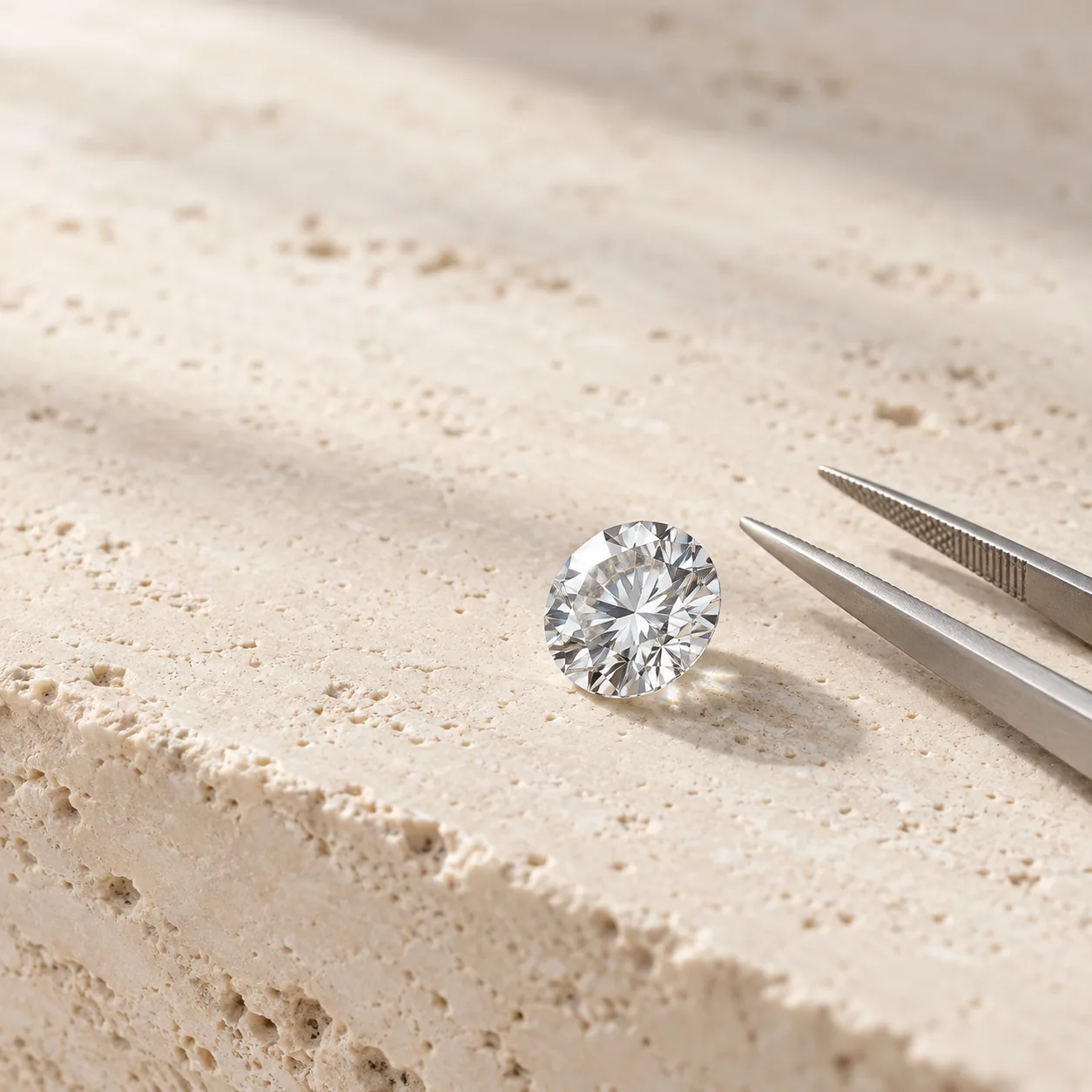
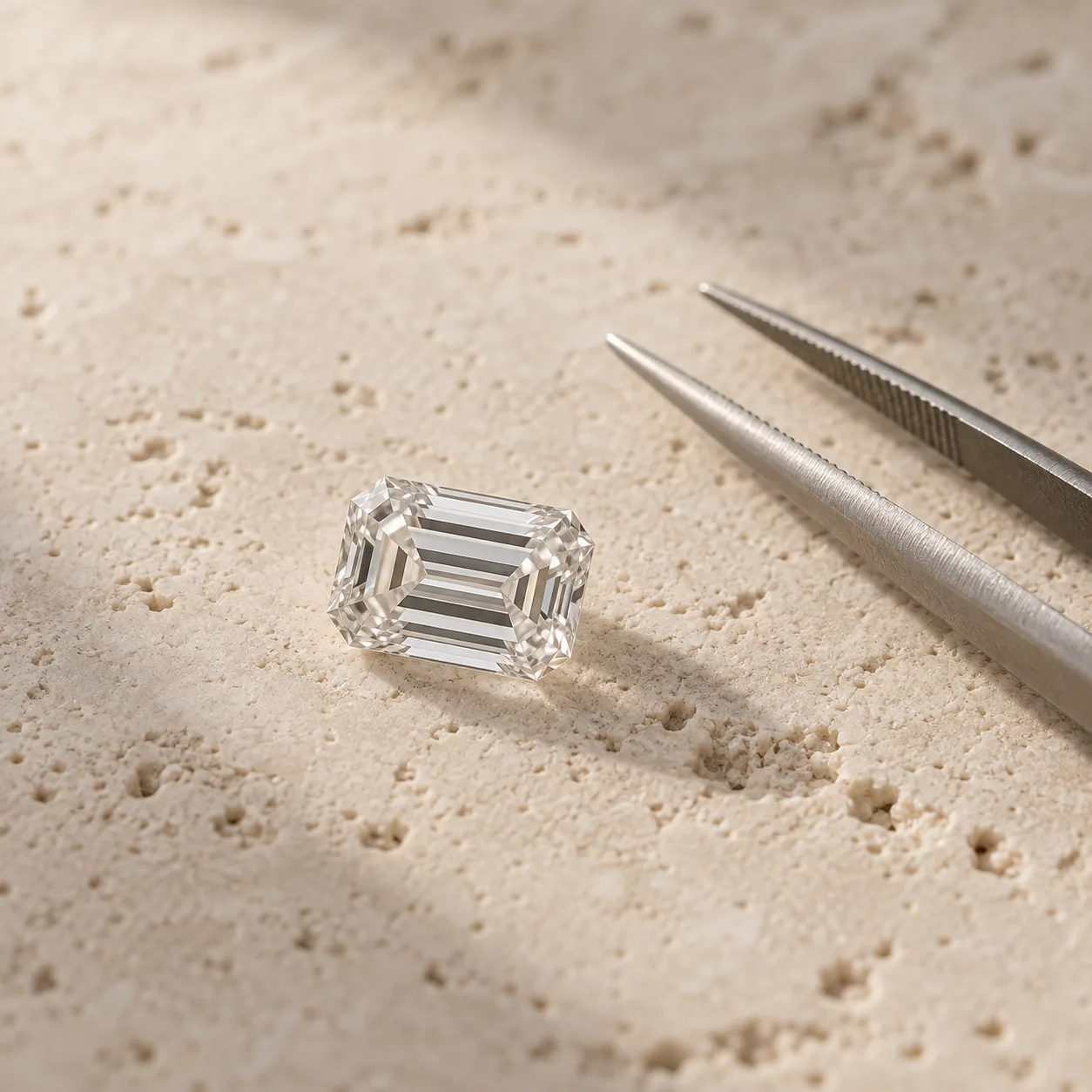
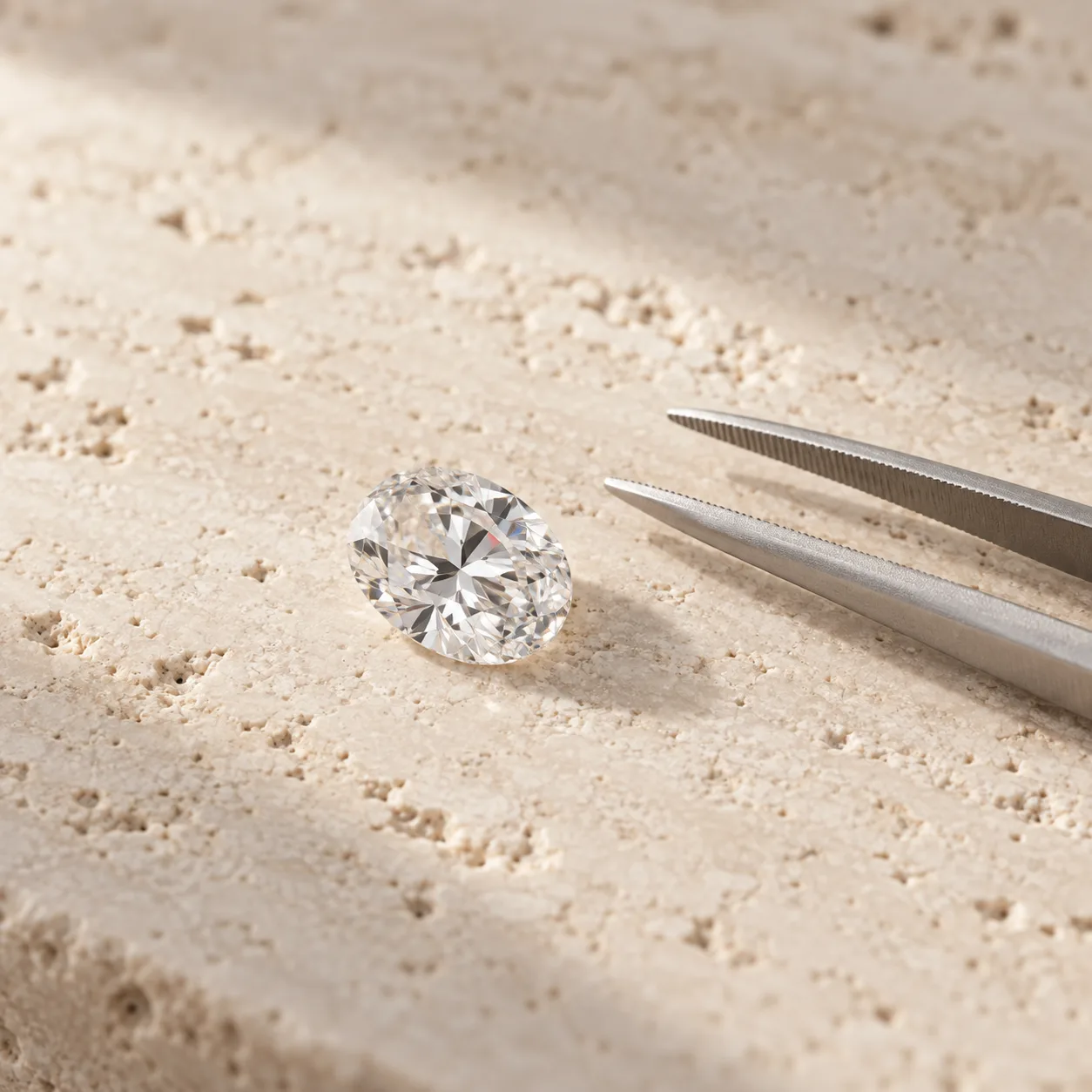
If you're comparing options now, start with our center stones for engagement rings, check the report and any available plot or video, and choose the less expensive stone if it looks equally clean to you.
Questions
Which clarity of diamond is best?
On paper, Flawless (FL) is the top of the scale, but GIA describes Flawless diamonds as exceptionally rare and says most jewelers have never even seen one. For a ring, the best choice is the lowest grade that looks clean to you at normal viewing distance.
Is VS1 or VS2 a better diamond?
VS1 is the higher grade, meaning its inclusions are harder for a grader to find at 10x. In a round brilliant under three carats you are unlikely to tell them apart in a ring, so we'd usually take the VS2. In an emerald or Asscher cut, the VS1 can be worth the extra.
Is an I or H diamond better?
H and I are color grades on GIA's D-to-Z scale, where D is colorless and color increases toward Z, so H sits slightly closer to colorless than I. Don't confuse an I color grade with the I1 to I3 clarity grades, which are a different scale entirely.
Which diamond is best, EF or GH?
E and F sit closer to colorless than G and H on the D-to-Z color scale. Like clarity, whether you can see the difference depends on the stone and its setting, so it's worth comparing color the same way you compare clarity: by eye, not by letter.
What is a poor man's diamond?
It's a vague phrase, not a clarity grade. Moissanite and cubic zirconia are diamond simulants, not diamonds. A lab-grown diamond is diamond, graded on the same 4Cs as a natural one, and it usually costs less than a comparable natural stone.
Sources
Nothing on this page is an appraisal or financial advice. Markdown version · RSS