

Tennis Bracelets
Brilliance in every link.







Good to Know
In Brief
Choose the style by how you want the line to read: a fine ribbon of small rounds, a crisp, unbroken row of emerald or princess cuts, or ovals and pears for a softer line with more movement. Next, lab-grown buys more diamond weight for the money, while natural gives you a line of mined diamonds. Last, settle the weight, length and gold together, taking the lightest line and the length that look right on you.
Pick the Look of the Line
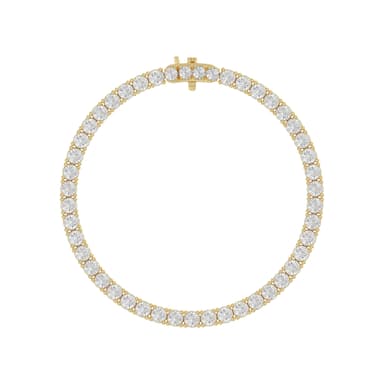
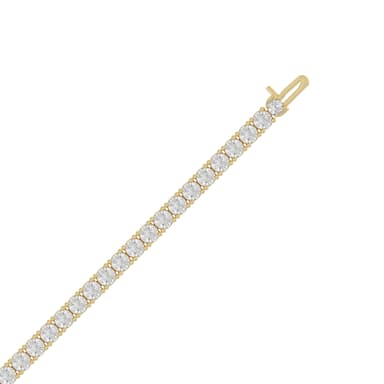
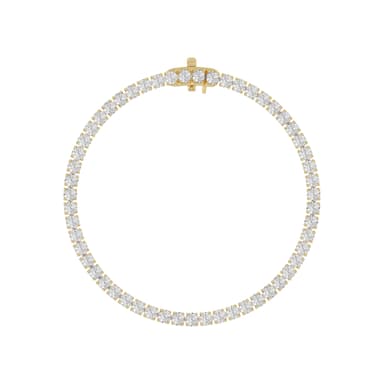
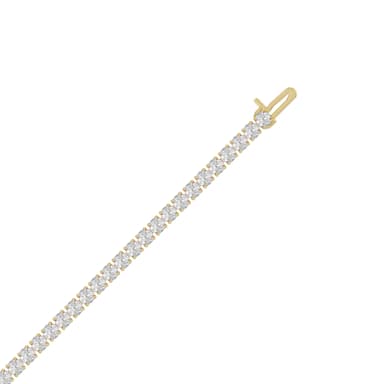
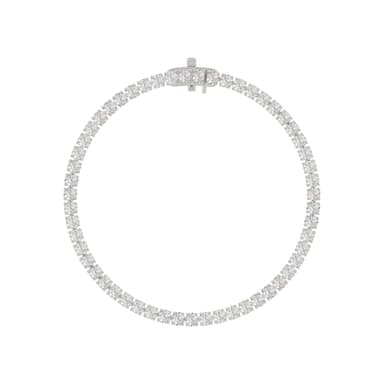
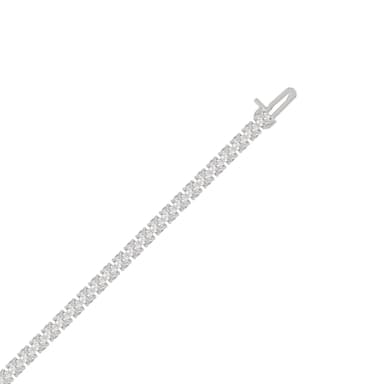
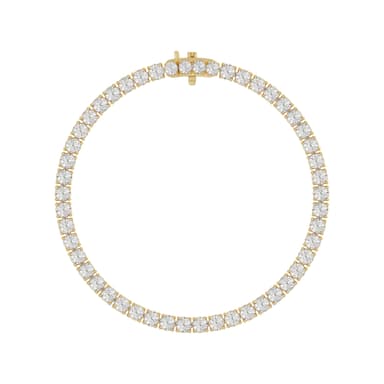
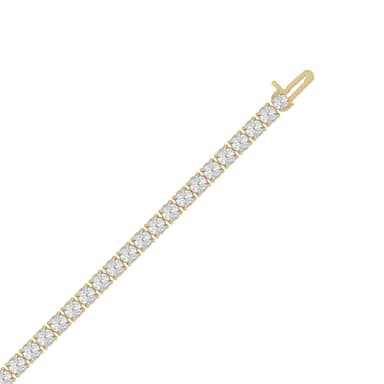
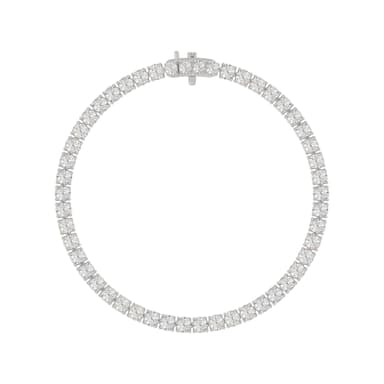
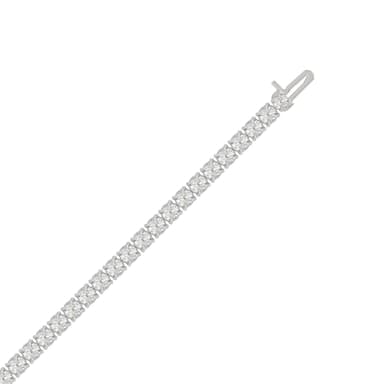
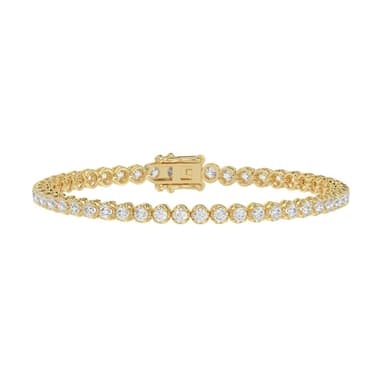
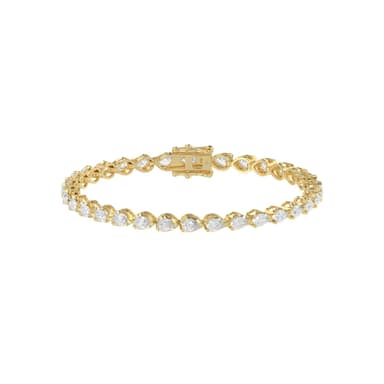
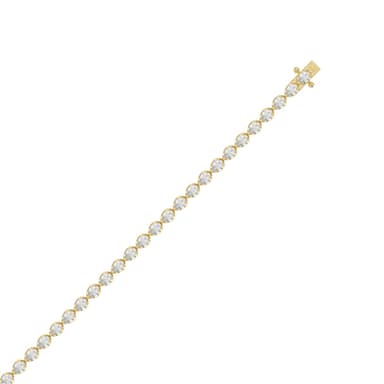
Start with the style, which decides how the line reads across a room. The Classic sets rounds in four-prong baskets, the traditional build: a fine, dense ribbon of sparkle. The Lightweight uses less gold and carries each weight in fewer, larger rounds, so it is lighter to wear. Ovals set end to end in four prongs read as separate bright stones and look larger than rounds of equal weight; in the Three-Prong Oval, three prongs hold each, so more of each oval shows. Pears, linked point to rounded end, form a row of drops. Emerald cuts trade sparkle for broad flashes in an unbroken, Art Deco line, and princess cuts, square and set edge to edge, make a crisp, tight line.
Filter by style, then watch each style's video, which shows the design made up, not the diamonds for your piece.
Lab-Grown or Natural Diamonds
The bracelets come with lab-grown or natural diamonds, and the Diamonds filter shows one origin or both. Their grades sit at most a color step apart: the lab-grown line is F-G in color and VS in clarity, with its jewelry report from IGI, and the natural line G and VS, with one from HRD. VS inclusions are minor under a loupe and, at tennis-bracelet sizes, rarely visible to the eye (what eye-clean means), so with color this close, the two lines look alike once worn.
The lab-grown line's diamonds are also listed with a Very Good cut. The usual cut scale, GIA's, is defined for round brilliants, so that grade says most about the Classic and Lightweight; what the cut grades mean shows how cut becomes sparkle.
Where they part is price: natural diamonds are scarcer, so a natural line is priced well above a lab-grown one of the same style and weight, and the gap generally widens as the weight goes up. Choose lab-grown for a fuller line or a bolder style on your budget, and natural if origin is the point. The Journal sets out where the two origins differ, and where they don't.
What Moves a Bracelet's Price
With the grades fixed for each origin, five choices set the price: origin, total carat weight, style, length and gold. On the natural line the weight leads. On the lab-grown line the diamonds cost so much less that going from 14K to 18K can count for as much as a step up in weight, so price both before you choose.
Styles are priced differently too: on the natural line, those that reach a weight with larger individual diamonds are often dearer per carat, because larger diamonds are rarer. Length works through the weight: the weight filter goes by the 7-inch length, and the same style made longer holds more diamonds, so it weighs more and usually costs more.
To compare fairly, change one choice at a time. Filter to one style and sort by price to find where it starts.
Caring for the Line
Take the bracelet off for heavy work, sport and swimming, and store it flat in its own pouch, since diamond scratches softer jewelry. A soft toothbrush dipped in warm, soapy water and worked gently under the settings keeps it bright. Now and then, ask a jeweler to look over the prongs, the links and the clasp.
Made to Order, Delivered Insured
Every bracelet is made to order unless its page says it is ready to ship. Making one and getting it to us usually takes 20 to 25 business days, and some natural pieces take about a week longer; the dates on each bracelet's page allow for that and the trip to you. Its jewelry report travels with it, and our returns policy lets you send it back within 14 days.
We run Love & Carat from New York as a jeweler that sells online only. The office, at 45 Rockefeller Plaza, takes no visitors, and the concierge answers by phone, chat or email. Each bracelet is insured until it reaches you and needs a signature on delivery, and for any US address we cover the import duty.
Tennis Bracelet Styles at a Glance
| Diamonds and Setting | How the Line Reads | Choose It For | |
|---|---|---|---|
| Classic | Rounds, each in a four-prong basket | A fine, dense ribbon of sparkle | The traditional look |
| Lightweight | Rounds in a lighter build with less gold | Fewer, larger rounds for the weight | Everyday ease |
| Oval | Ovals end to end, four prongs each | Separate bright stones that look larger for their weight | A softer, modern line |
| Three-Prong Oval | Ovals, three prongs each | Less metal between stones, a more continuous line | More of each oval on show |
| Pear | Pears point to rounded end, three prongs each | A row of drops | A statement line |
| Emerald-Cut | Step-cut rectangles, four prongs each | Broad flashes in an unbroken line | An Art Deco look |
| Princess-Cut | Squares edge to edge, four prongs each | A crisp, tight line | Geometric style |
Questions
Where is the best place to buy a tennis bracelet?
Look for a seller who gives you what you need to compare: the weight of the whole line and of a single diamond, the grades, an independent lab's jewelry report, your choice of length and a fair window for returns. Compare prices only between bracelets of the same origin, grades, style, weight, length and karat. Each bracelet here lists those details on its page and may be sent back within 14 days.
What does gifting a tennis bracelet mean?
There is no fixed meaning. It is often given to mark a milestone, such as an anniversary, a birth or a new job, and some read the unbroken line of diamonds as a promise that lasts. If you are guessing the wrist size, 7 inches is the length the listing shows first; each origin's page explains how to measure, and a bracelet that doesn't fit can come back within 14 days.
Why is it called a tennis bracelet?
The name is usually traced to the tennis champion Chris Evert, who asked for play to stop during a professional match so she could find her diamond line bracelet after it fell from her wrist. The story spread, and jewelers began calling the style a tennis bracelet; before that it was usually called a line bracelet. Accounts differ on the year, but the name stuck.
Do people still wear tennis bracelets?
Yes, and not only for evenings. A fine line of rounds is quiet enough for work and easy to leave on all day, so it can be worn alone or beside a watch and other bracelets. Bolder lines, such as pears or emerald cuts, tend to be saved for occasions. If you plan to wear yours daily, the Lightweight's lighter build is worth a look.
Can I stack a tennis bracelet with a watch?
You can, with a little care. Diamond is harder than steel, gold and even a sapphire watch crystal, so a tennis bracelet that knocks against a watch can mark its case over time, and two diamond lines rubbing together can wear each other's settings. Wear the watch on the other wrist, or put a plain bangle or a leather band between them. White and yellow gold can be mixed freely.
What is the difference between a tennis bracelet and a regular bracelet?
A tennis bracelet is one continuous line of matched diamonds, each in its own small setting and joined to its neighbors so the whole line bends and drapes around the wrist. Most other bracelets are chains, bangles or cuffs, where the metal is the design and any stones are accents. That is why a tennis bracelet is described by its diamonds' total weight and grades, and why a jewelry report is worth asking for.