

Lab-Grown Diamond Tennis Bracelets
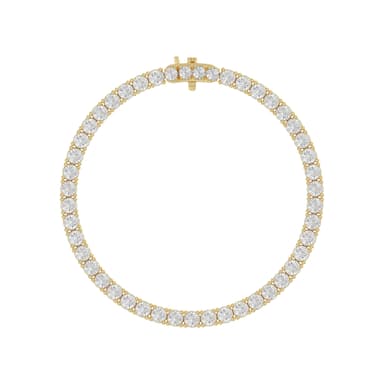
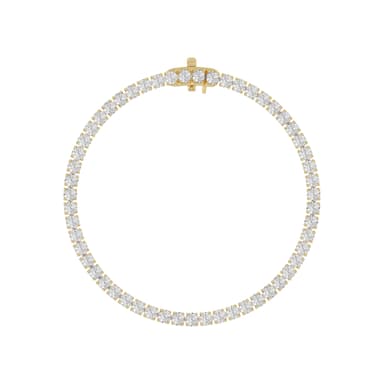
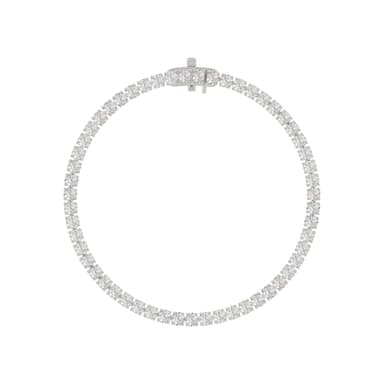
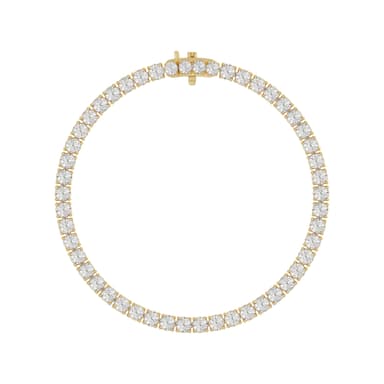
Tennis bracelets set with lab-grown diamonds of F-G color and VS clarity, each with an IGI jewelry report and made to order in solid white or yellow gold, from 6 to 8.5 inches long.

- 56 Available
- From $2,109
- Free Insured Delivery Over $100


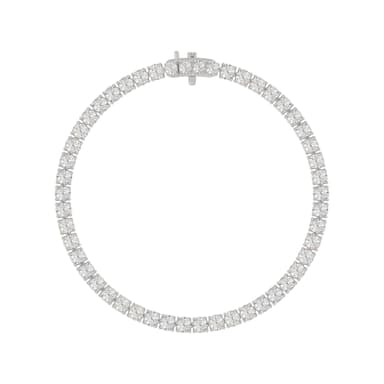
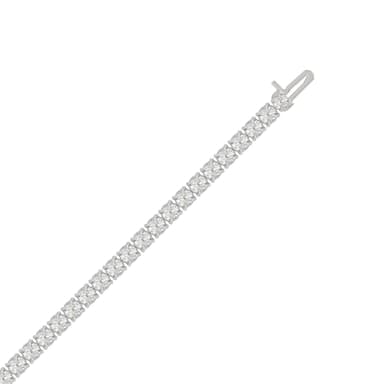
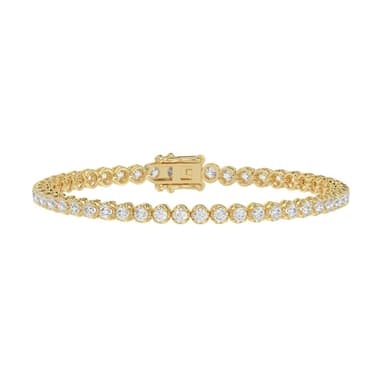


Good to Know
In Brief
Choose the weight by the size of each diamond, which each bracelet's page gives, rather than by the total in its name. If the Lightweight looks as good to you as the Classic, buy it: the same weight of diamonds sits in less gold, in fewer, larger stones, so it is lighter on the wrist and costs less. Then order the length your wrist needs and no more, and take 14K unless you want the richer color of 18K: on this line that step can cost as much as the next weight up.
Choosing a Carat Weight You Can See
A tennis bracelet is sold by its total carat weight, all its diamonds weighed together. That says how much diamond you buy, not how large each stone looks, and on the wrist each stone is what shows. Each bracelet's page gives both figures.
The weight a bracelet is offered by, in its weight choices and filters, is its weight at 7 inches. In the Classic sold as 3 ct, each diamond is about 0.04 ct, a little over 2 mm across; at 5 ct it is about 0.09 ct, and at 7 ct about 0.14 ct, close to 3.4 mm. In the round styles, a heavier bracelet uses fewer, larger diamonds, so more weight shows as bigger stones, not a longer row. If two weights look alike to you in the photographs and videos, the lighter one is the better buy. Carat weight set against diamond size shows the scale.
Classic or Lightweight Setting
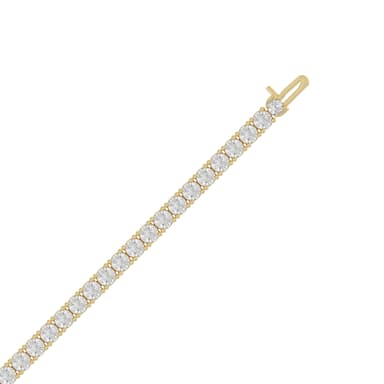
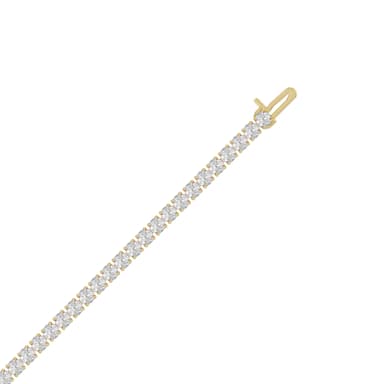
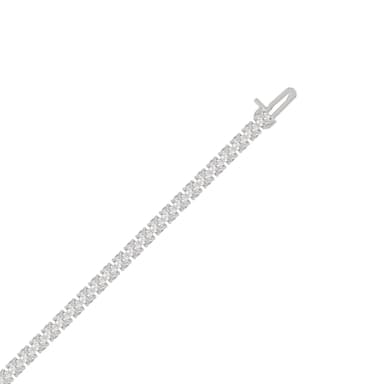
Both styles set round diamonds in an unbroken line. The Classic holds each one in its own four-prong basket, linked to the next so the bracelet moves with the wrist. The Lightweight is a lighter build of the same design, with less gold around each diamond, so it weighs less and costs less for the same weight of diamonds.
If the two look alike to you, buy the Lightweight: you keep the same weight of diamonds and pay less for the setting. Choose the Classic for a finer, denser line of smaller diamonds, or for the heavier feel of more gold on the wrist.
Ovals, pears, emerald cuts and princess cuts fill the other styles, and each page gives the size of each diamond too: in the Pear sold as 9 ct, each one is about a third of a carat, so the line reads as separate stones rather than a fine ribbon. A heavier line does not always mean larger stones, though: the Oval's diamonds are about 0.10 ct each whether it is sold as 4 ct or 5 ct, so check before paying for the heavier one.
Measuring Your Wrist for the Right Length
Measure around your wrist where the bracelet will sit, with a soft tape or a strip of paper laid against a ruler, then add roughly half an inch for a snug fit or an inch for a loose one. Every style is made from 6 to 8.5 inches in half-inch steps, and the listing shows the 7 inch piece until you choose another length.
Order the length you need and no longer. A longer bracelet does not space the same diamonds further apart: it carries more of them, so it usually weighs and costs more. The Classic sold as 3 ct weighs 2.57 ct at 6 inches and 3.64 ct at 8.5 inches.
White or Yellow Gold With F-G Diamonds
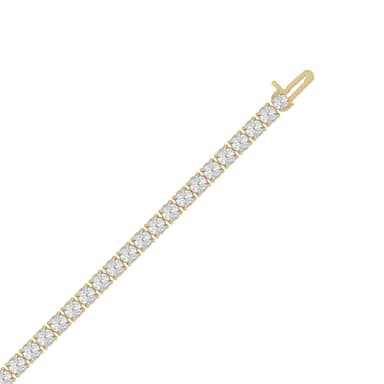
With the color grade fixed, the metal is your one color choice. White gold sets off F-G diamonds crisply; yellow gold reflects a little warmth into them and softens the line, though they still face up white. Our guide to which color grades look white explains how metal changes what you see.
14K is alloyed for strength: harder-wearing than 18K and less costly, which suits a bracelet that knocks against a desk all day. 18K has a deeper color but dents and scratches a little more easily. In white gold, the extra gold of 18K does not make the metal look any whiter, so 14K is the easy saving; in yellow, choose 18K only for its deeper color.
Grades, the IGI Report and the Price
The diamonds are F-G color and VS clarity, with a very good cut. F-G sits where GIA's colorless grades meet the near-colorless ones; at VS, any inclusions are minor and take effort to find even under 10x magnification. The grade is a range because the IGI jewelry report that comes with each bracelet, an independent laboratory's check of weight, color and clarity, describes its matched diamonds as one set.
Each style here is also made with natural diamonds, in the same lengths. The two look alike on the wrist; the price does not. A natural line's price climbs closely with its weight, while on the lab-grown line a step up in weight costs far less, and the step from 14K to 18K can cost as much: lab-grown diamonds cost far less per carat, so more of the price is the gold and the making. Here, then, spend on the diamonds and save on the gold. What a lab-grown diamond is covers how they are grown and graded.
Classic and Lightweight Tennis Bracelets Compared
| Classic | Lightweight | |
|---|---|---|
| Setting | Each round diamond in its own four-prong basket, linked to the next | A lighter build of the same design, also for round diamonds |
| Gold around each diamond | More | Less |
| On the wrist | Heavier, with more gold to feel | Lighter, with less gold to feel |
| Each diamond at the same total weight | Smaller: about 0.04 ct at 3 ct, 0.14 ct at 7 ct | Larger: about 0.06 ct at 3 ct, 0.19 ct at 7 ct |
| Price, same diamond weight and gold | Higher | Lower |
| Lengths made | 6 to 8.5 inches, in half inches | 6 to 8.5 inches, in half inches |
Questions
Is a lab-grown diamond tennis bracelet worth it?
It is if you will wear it often and want a fuller line than a natural budget allows: the same style, length and weight in lab-grown costs much less. It is not worth buying as a store of value. Spend on a weight whose stones you can see and on the length that fits, and if you want white gold, take 14K rather than 18K.
Do lab-grown diamond tennis bracelets hold their value?
Not as something to sell later. Few buyers will pay much for lab-grown diamonds secondhand, so treat the bracelet as jewelry to wear rather than to resell. What lab-grown gives you instead is the look for less: the same bracelet with natural diamonds costs much more, and the gap grows with the weight. If selling it later matters to you, compare the natural line instead.
Is a 7 inch tennis bracelet too big?
It depends on your wrist, not the bracelet. By the usual rule of adding half an inch to an inch to your wrist measurement, a 7 inch bracelet fits a 6.5 inch wrist closely and a 6 inch wrist loosely. On a smaller wrist it may slide down onto the hand, so order 6.5 or 6 inches instead; the shorter lengths also carry fewer diamonds and usually cost less.
Can a jeweler tell a lab-grown diamond from a natural one?
Not by eye or with a loupe. A standard thermal diamond tester reads both as diamond, because both are. Telling them apart takes specialist instruments of the kind gem labs use, which detect traces of how the crystal grew. With your bracelet there is no question to settle: the IGI report that comes with it names its diamonds as lab-grown.
Does a lab-grown tennis bracelet come with a grading report?
Yes. Each one comes with an IGI jewelry report: an independent lab's record of the diamonds' total carat weight, color and clarity in that bracelet. It gives their color as a range, F-G, and their clarity as VS, which is how a jewelry report describes many small stones set together.
How long does a lab-grown tennis bracelet take to make?
Each bracelet is made to order and usually leaves the workshop in 20 to 25 business days. Its page shows the dates it should arrive between, counting both the making and the delivery. It is sent insured, with a signature on delivery, and you have 14 days to return it, as with our loose diamonds.