
Loose Spinel
Natural spinel, each stone with a report from an independent lab that identifies it and names any treatment found.

- 35 Available
- From $539
- GIA, IGI and GRS Reports
- Free Insured Delivery Over $100


Good to Know
In Brief
Spinel is a sensible way to get a ruby's red for less: a fine red spinel usually costs much less than a ruby of similar color and size, and at 8 on the Mohs scale, with good toughness, it wears well in a ring every day. Red, cobalt blue, hot pink and vivid orange carry the premiums; if you love lavender, violet or purple, your budget goes much further. Before the price, check that the stone's report names it natural spinel and lists any treatment.
Red, Pink, Blue and the Quieter Colors
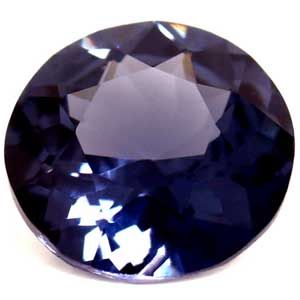
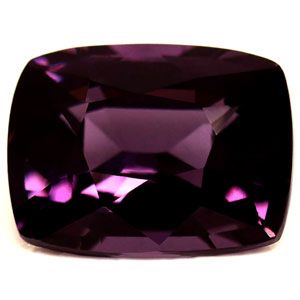
Spinel forms in red, orange, pink, purple, blue and black, and in every shade of violet and lavender between. GIA ranks red the most desirable, followed by a fine cobalt blue, then vibrant hot pink and vivid orange, and those four carry the premiums. Lavender, violet and purple spinels are in less demand and cost much less for their size, so if one of them is the color you love, your budget buys a larger or cleaner stone there.
Clarity comes after color. GIA values a spinel with no inclusions you can see above one where they show, and the value falls as they grow more visible, so look at the stone in its video or photographs at about its real size, not enlarged. An inclusion you would need a loupe to find changes the price, not the look on a hand. Spinel is also singly refractive, like diamond and garnet, so its color does not change with direction through the crystal. A cutter must orient a ruby or sapphire to face up its best color; a spinel's cutter can put weight and brightness first, though the cut still decides how even and lively its color looks.
The Ruby That Was Spinel
For centuries, red spinel and ruby were thought to be one gem. They look alike and often form together in the same deposits. Some of the most famous rubies in Europe's royal treasures are spinel: the Black Prince's Ruby, at the front of the British Imperial State Crown, and the Timur Ruby, in the British Royal Collection, are both red spinels. Only in 1783 did the mineralogist Jean Baptiste Louis Romé de l'Isle identify spinel as a mineral of its own. The old name balas ruby, once given to pinkish red spinel, dates from those centuries.
The lesson for a buyer today is that a name proves little. A trade word such as ruby-red is a description, not a lab's finding, so judge the red in the stone's video or photographs: a pure, strong red, neither brownish nor pinkish, without dark patches as the stone tilts.
Natural Spinel and the Lab-Grown Kind
Lab-grown spinel is the same mineral as natural spinel, and it has been made cheaply by flame fusion for more than a century, in many colors including cobalt blue. Much of it is used to imitate other gems, such as aquamarine and blue sapphire, and it often fills birthstone and class rings. So neither the color nor the price of a spinel tells you where it formed; only a lab can say.
Every spinel here is natural, mined rather than grown. For what a gem report contains, see how independent lab reports work; the species, and whether the stone is natural, are read from the report itself, issued by the lab named on each stone's page.
Rarely Treated, Still Worth Checking
GIA notes that spinel is rarely treated, which sets it apart from ruby and sapphire, where heating is the norm. Some spinel is heated to change its color, a result that holds in normal wear, and labs screen for it with specialist spectroscopy; GIA has found heated stones on the market. A few fractured stones are filled, and a filling can change over time.
Whatever treatment a spinel's report records appears on its page too. A page that lists none tells you the lab named none; that is not a lab's statement that the stone was never heated. If a confirmed unheated spinel matters to you, check the report's exact wording before paying more for it.
Hard and Tough Enough for a Ring
Spinel is 8 on the Mohs scale and has good toughness, so it is durable enough for a ring worn every day: a little softer than ruby and sapphire, and much harder than tanzanite. Durable is not unbreakable, and a hard knock on an edge can still chip it. Warm soapy water is always safe. Ultrasonic and steam cleaners are usually fine, but not for a stone with fractures or a filling its report names; give those only warm soapy water or a damp cloth. GIA counts spinel stable to light and everyday chemicals; only high heat, such as a jeweler's torch, can fade some colors, so say it is spinel when the piece goes in for repair.
Spinel Beside Ruby and Sapphire
| Spinel | Ruby | Sapphire | |
|---|---|---|---|
| Mineral | Spinel, a magnesium aluminum oxide | Corundum | Corundum |
| Hardness (Mohs) | 8 | 9 | 9 |
| Color by direction | One hue through the crystal in every direction | Two hues; the cutter orients for the better one | Two hues; the cutter orients for the better one |
| Usual treatment | Rarely treated; sometimes heated | Heat, in most stones | Heat, in most stones |
| Price for a similar color | Well below ruby for red; sometimes below sapphire for pink | The highest of the three for a fine red | High for a fine blue or a strong pink |
Questions
How much is 1 carat of spinel worth?
There is no single figure, because a 1 carat spinel's price follows its color first and its clarity and cut after, so two stones of that weight can sit far apart. The grid gives each one's price in your currency: narrow it to stones just over 1 carat, sort from the lowest, and let the videos and photographs, not the figures, make your shortlist.
Which color spinel is the most expensive?
A pure, strong red, with a fine cobalt blue next. The gap is widest in large stones: GIA notes that the price per carat of fine red, pink and blue spinel rises sharply above 5 carats. So if red is the point, a smaller stone of strong color is a better buy than a larger one that leans brown or pink.
Is a spinel a real stone?
Yes. Spinel is a natural mineral in its own right, a magnesium aluminum oxide, not a copy of ruby, though it was long mistaken for one. In 2016 it joined peridot and sardonyx as a birthstone for August. A lab tells it from ruby and garnet by how it handles light, and from lab-grown spinel by its inclusions and growth features, which is why the report, not the color, is the proof.
What is the rarest color of spinel?
A vivid cobalt blue, colored by traces of cobalt, is widely counted the rarest spinel color of all, and a pure, strong red is scarce too, above all in larger sizes. Some spinels change color between daylight and lamplight, and those are uncommon as well. The price measures rarity, not how the stone looks on a hand, so pay for rarity only when it is the reason you are buying.
Is spinel rarer than diamond?
In fine quality, generally yes: a large red or cobalt blue spinel turns up far less often than a natural diamond of the same size. Rarity alone does not set a price, though. Far fewer buyers ask for spinel by name, so even a fine one usually costs much less than a ruby of similar size and color. Buy spinel for its color and to wear, not in the hope of selling it on.
Is spinel good for an engagement ring?
Yes, for most wearers. It takes everyday knocks and scratches better than most colored gems, so the choices that matter are about the setting: protect the point of a pear and the corners of a princess cut, and choose a bezel or sturdy prongs if your hands work hard. Have the prongs checked from time to time, as with any ring worn every day.