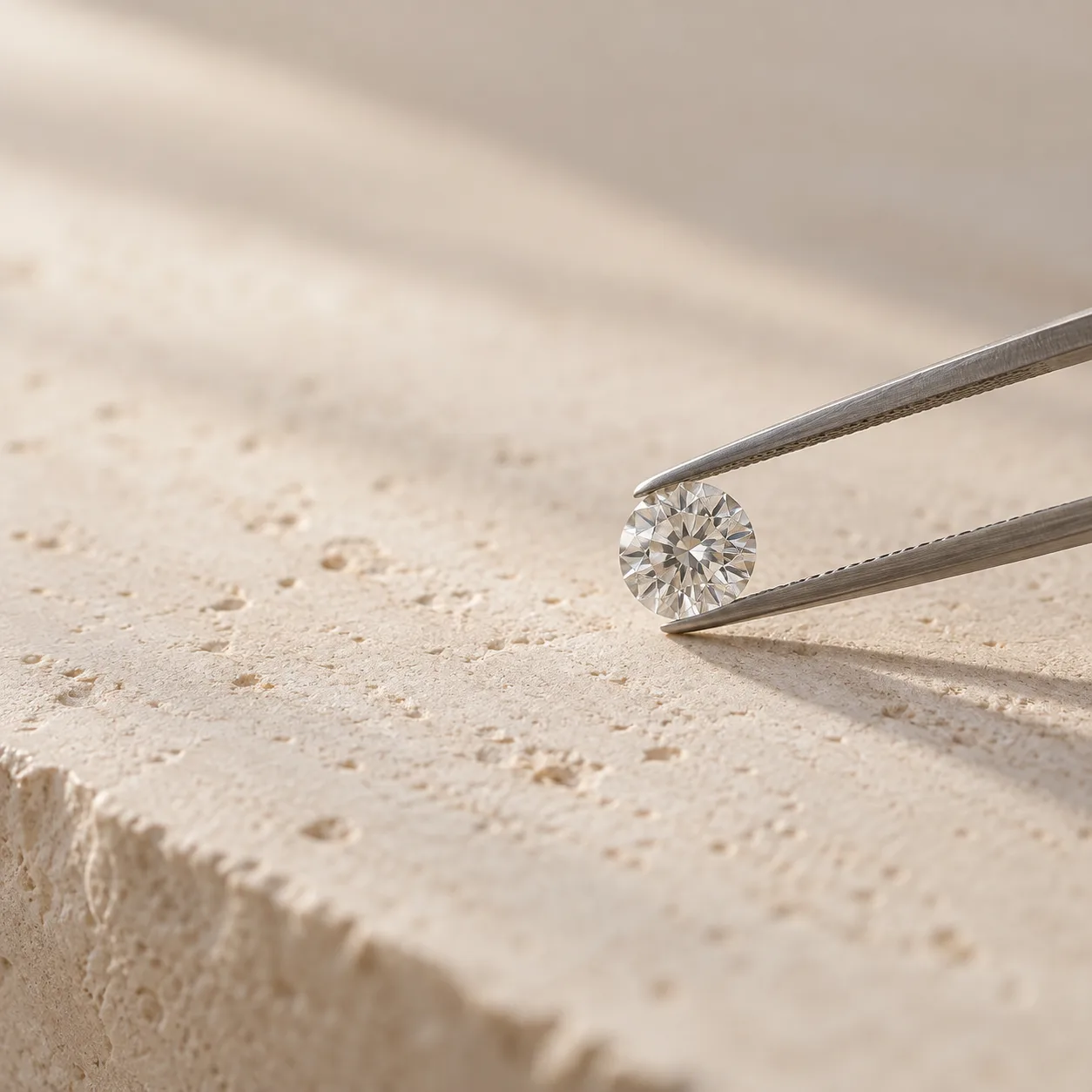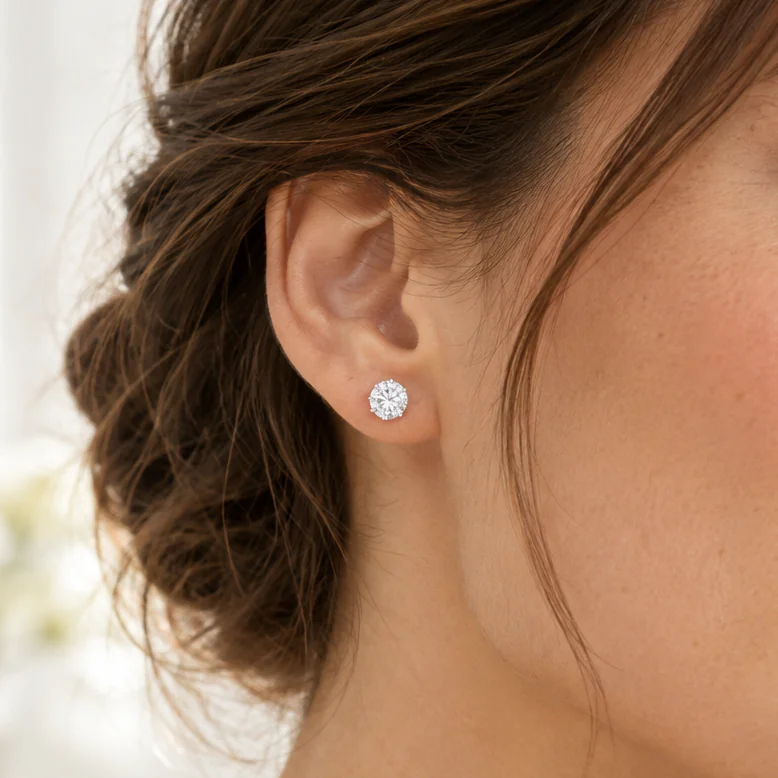

Diamond Color Scale: Which Grades Actually Look White
The D-to-Z scale grades the absence of color. Many neighboring grades are hard to tell apart once a stone is set, so a lower grade that looks right to you can save money.
Written by Love & Carat, with AI assistance, from the sources listed below. How we write
In This Guide (9)
The diamond color scale runs from D, which is colorless, to Z, which is light yellow or brown, and it measures how little color a stone has. Once a stone is set and seen face up, differences between neighboring grades may be hard to spot, even side by side. That is why a well-cut G or H, or a warmer grade in yellow gold, is often the better buy.
What the diamond color scale measures
Color grading is mostly about the absence of color. According to GIA, diamonds in the normal range are valued by how closely they approach colorlessness: the less color, the higher the value. The scale begins at D for colorless and continues to Z, with a little more color at each step. GIA describes the bottom of the range as light yellow, light brown, or light gray.
The scale starts at D for a historical reason. Before it existed, the trade used a muddle of letters, numerals and phrases like "blue white." The scale's creators chose D so it would have no association with those earlier systems. GIA introduced the scale in 1953, and its own history names Richard T. Liddicoat and Robert Crowningshield, with the first GIA diamond grading reports following in 1955.
Pinks, blues and other fancy colors lie outside this range. According to GIA, the term generally covers yellow or brown diamonds with more color than a Z masterstone, or a color other than yellow, gray or brown. If that is the look you want, start with our colored diamonds for engagement rings.
How a color grade is assigned
A diamond color chart on a screen is a rough guide at best, because display settings and lighting change how subtle color appears. Laboratories don't judge color in isolation. They compare the stone to stones of known color under controlled lighting and precise viewing conditions. GIA's laboratory uses color reference diamonds ("master stones") and a standard illumination and viewing environment.
Graders also examine stones in orientations different from the face-up view you will usually see in a ring. GIA explains that round brilliants are graded table-down. In its description of D-to-Z analysis for a fancy-colored diamond report, IGI says the diamond is placed upside down and viewed through the side for a neutral view, with multiple graders submitting opinions independently.
Once a stone is set, you see it face up, where brilliance and sparkle compete with body color. That is the gap between the grade and what you notice.
Many of these color distinctions are so subtle as to be invisible to the untrained eye. But these slight differences make a very big difference in diamond quality and price.
Every diamond we sell comes with a GIA or IGI grading report, so you can check its color grade before you buy. Our certificate glossary explains how to read one.
Where most people stop seeing a difference
This is our buying advice, based on how stones look once set, not a laboratory finding.
D, E and F are the top of the scale. Trained graders separate them under controlled conditions, but in a ring, many people can't tell them apart face up.
G and H are where we'd start for most engagement rings in white gold or platinum. A well-cut G or H may look white to you face up; compare stones in the setting and lighting you have in mind. If the H looks the same to you and costs less, choose it.
I and J can show a faint warmth to some eyes, especially next to a whiter stone or in bright daylight. In a white setting, plenty of people are happy with them. In yellow or rose gold they often look just right.
Further down the scale, warmth becomes part of the stone's character, which some people choose deliberately.
Cut often matters more than the color letter. Pay attention to cut as well as color: a stone that looks bright to you may be a better choice than a whiter one whose appearance you like less. Our guide to diamond cut grades covers what to look for.
How the metal changes what you see
The metal around a stone can affect how its color looks, especially when you compare stones in different settings.
- White gold and platinum can make warmth in a stone easier to notice; that's why we'd start by comparing G and H in these metals.
- Yellow gold can lend warmth to the overall look. Compare color grades in the setting you want before paying for a top grade.
- Rose gold gives a pinkish warmth to the overall look. Compare warmer grades in it if you like that effect.
If you want a whiter look with a warm band, consider a two-tone ring: a white-metal head holding the center stone on a yellow-gold band.
We've grouped stones that suit warm metals on our perfect stones for setting in gold page.
Shape and size: when color shows more
The letter on the report doesn't tell you everything about how a stone will look face up. Shape and size matter too.
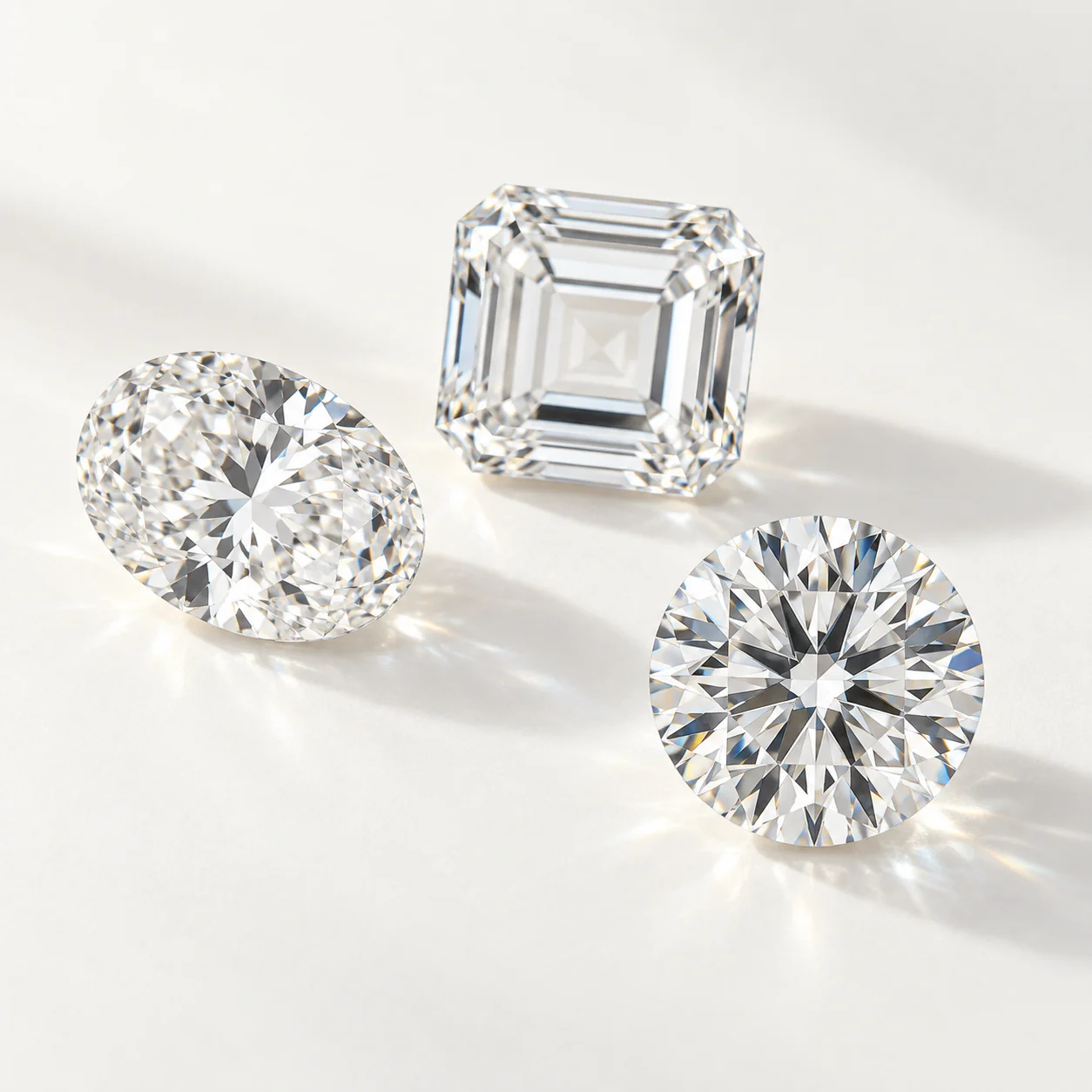
Shape. In our experience, round brilliants hide color well, while elongated shapes can gather a hint of tint at their ends. GIA has seen face-up differences strong enough to affect grading: in its experience, the majority of yellow fancy shapes graded Q or lower table-down appear to be one or more grades lower when observed face-up. That finding concerns the warmer end of the scale, but we'd apply the same caution higher up. With oval and pear shaped diamonds, consider one grade whiter than you would choose for a round, or ask to see the ends.
Step cuts such as emerald and Asscher have long, open facets. In our view, they show color more plainly than brilliant cuts.
Size. In our experience, warmth is easier to notice in a larger stone, so compare face-up appearance rather than relying on a size cutoff. For a smaller stone, a grade or two warmer often still looks right.
Side stones. If accent diamonds are described by a range such as "GH," ask how they will look beside the center stone. What matters is that they look right next to the center stone, so check them together.
When a higher color grade is worth paying for
We're not against the top grades. They can earn their price in particular situations:
- Larger stones in a white setting, if you can see warmth face up.
- Step cuts, where we'd lean toward the whiter end of the near-colorless grades.
- Elongated shapes in white metal, if the tips of an oval, pear or marquise show tint.
- Matching stones. For a trilogy or toi et moi ring, or a new center beside whiter stones you already own, compare them together; similar grades can help, but the face-up match matters more.
- Your own eye. Some people simply notice warmth. If you've compared stones and it bothers you, that's reason enough.
Lab-grown diamonds usually cost less than comparable natural ones, so a whiter grade can be easier to fit into a budget. Compare actual prices, and choose the less expensive stone whenever it looks the same to you.
Start with a well-cut G or H in white metal, or a warmer grade in yellow or rose gold, and if the lower grade looks white to you, put the savings toward cut.
Choosing your stone
Decide the metal first, then the shape, then the size. Pick the lowest color grade that suits all three, and give cut priority over color. Our color glossary is a quick reference while you browse.
Stones That Fit This Guide
View all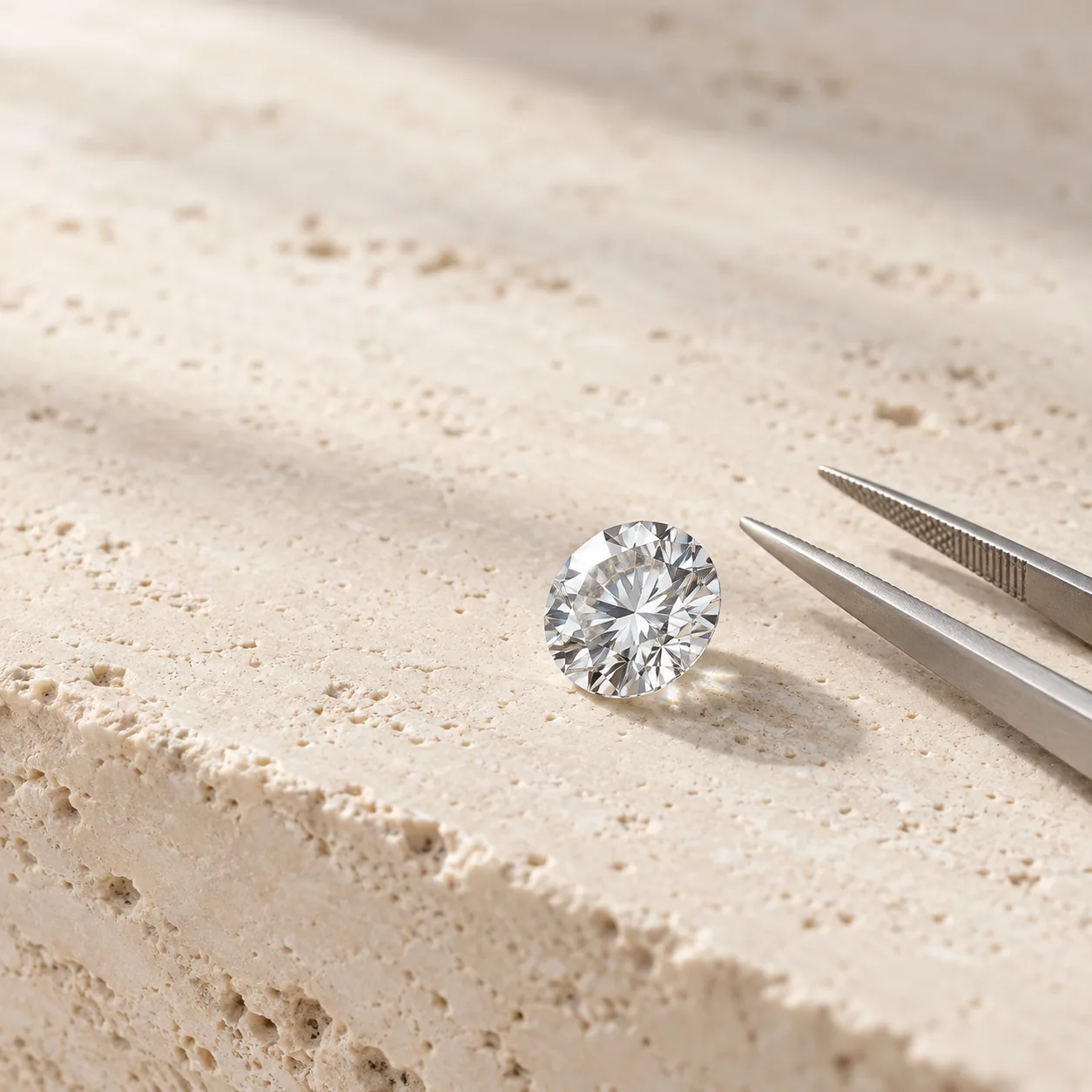
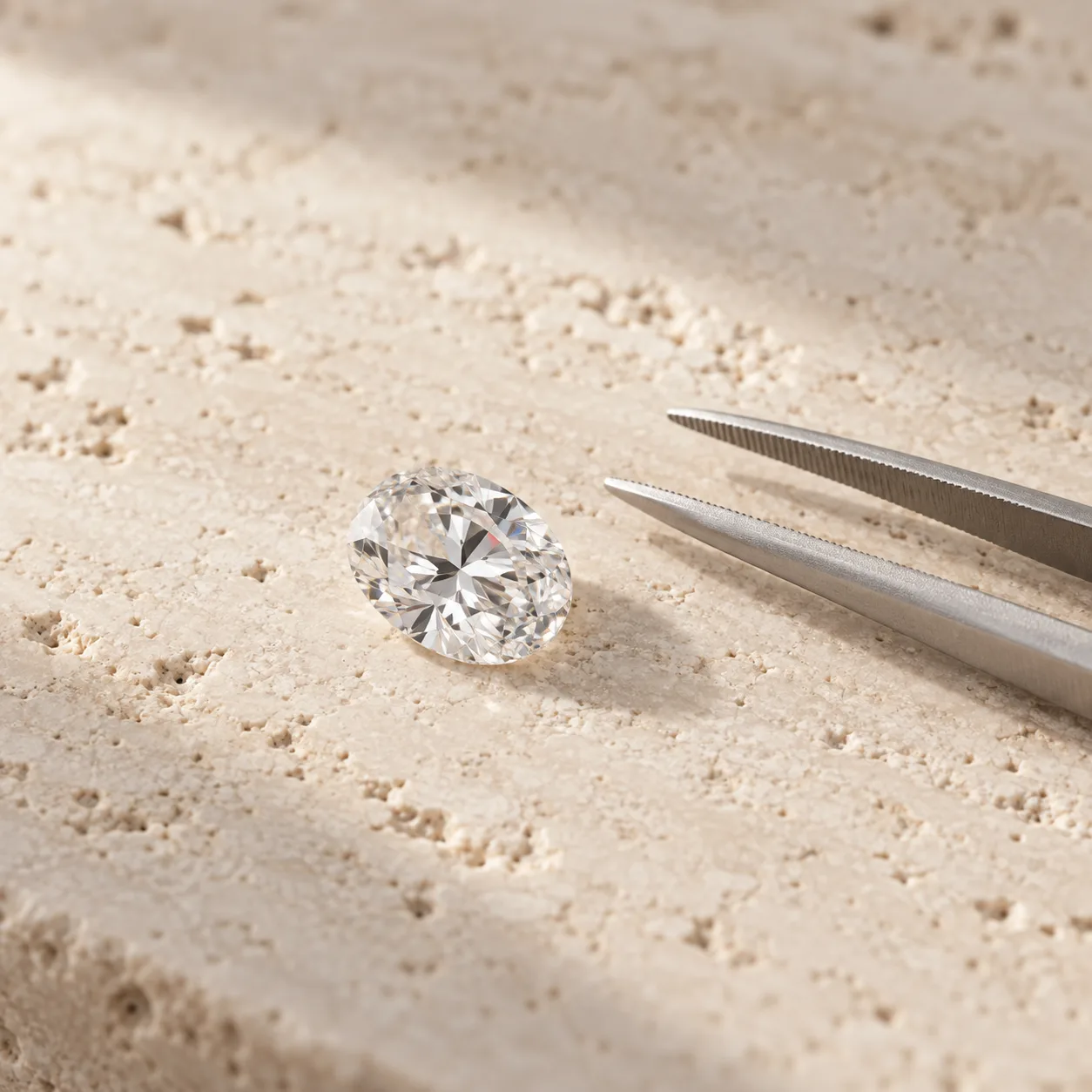
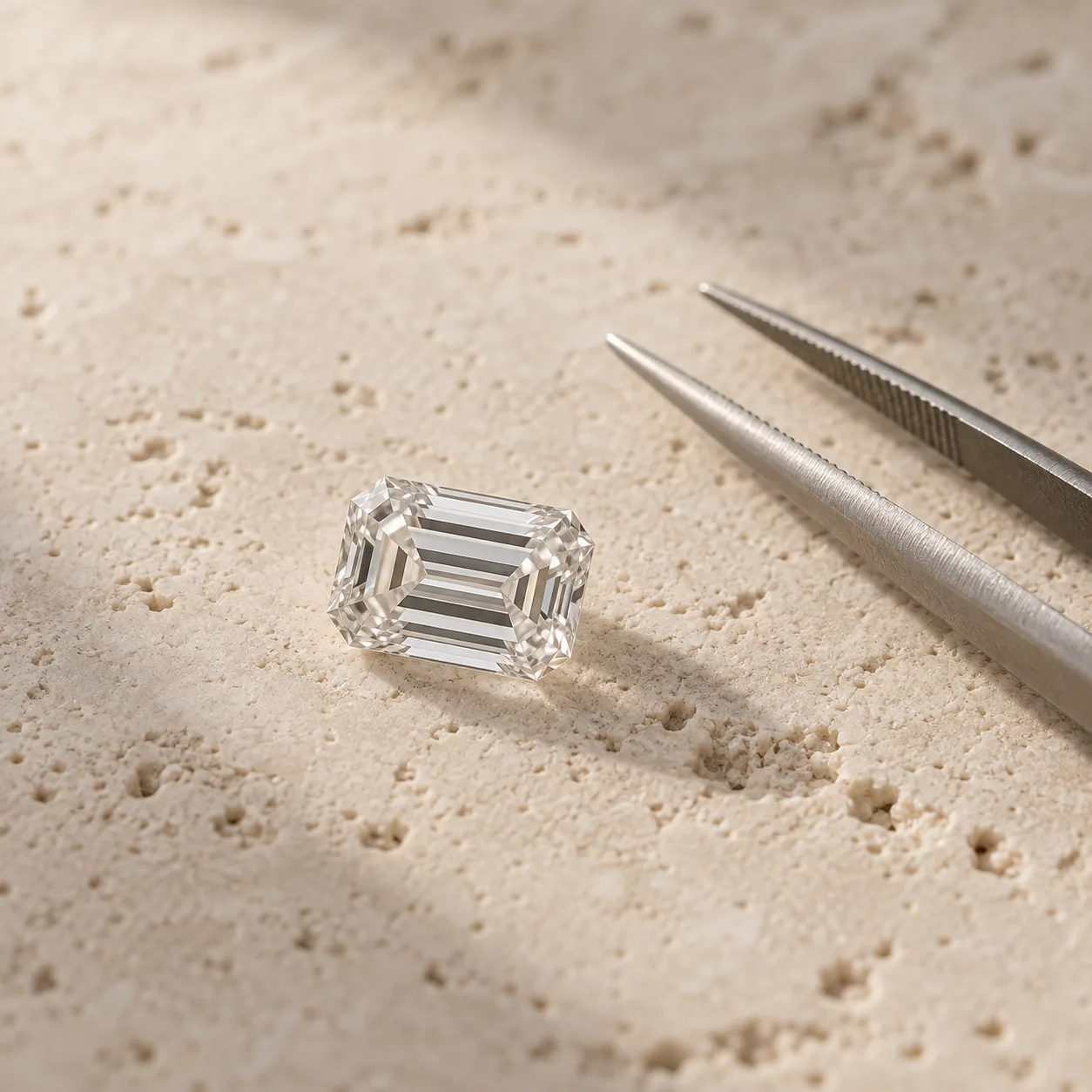
A round brilliant around one carat can be forgiving of slight warmth, so G or H is a comfortable place to start. An oval around 1.5 carats may be worth one grade whiter in a white setting. An emerald cut is where we'd be least inclined to go warm.
Questions
What is the GIA color grading scale for diamonds?
It is a letter scale that GIA introduced in 1953. It runs from D for colorless to Z for light yellow, light brown or light gray, and each letter covers a defined range of color appearance.
Which is better, G or H color diamond?
G has slightly less color on the grading scale. Compare the two stones face up, and if the H looks the same to you, choose it and save the difference; consider the G for a larger stone or a step cut.
What does the diamond color rating code "gh" mean?
If you see "GH" on a listing, ask whether it means a G-to-H range rather than a single grade. A range may describe a group of side stones rather than the grade of one center stone. For a center stone, look for a GIA or IGI report that gives one letter.
Is moissanite the same as a lab-grown diamond?
No. Moissanite and cubic zirconia are different materials, while a lab-grown diamond is a diamond. If a diamond is what you want, a lower color grade that looks the same to you is a better way to spend less than switching materials.
Which is clearer, VS1 or VS2?
VS1 is the higher clarity grade, with inclusions slightly harder to find under magnification. Without magnification the two often look the same, so check whether the stone is eye-clean before you pay for VS1.
Sources
Nothing on this page is an appraisal or financial advice. Markdown version · RSS