
Asscher-Cut Diamonds
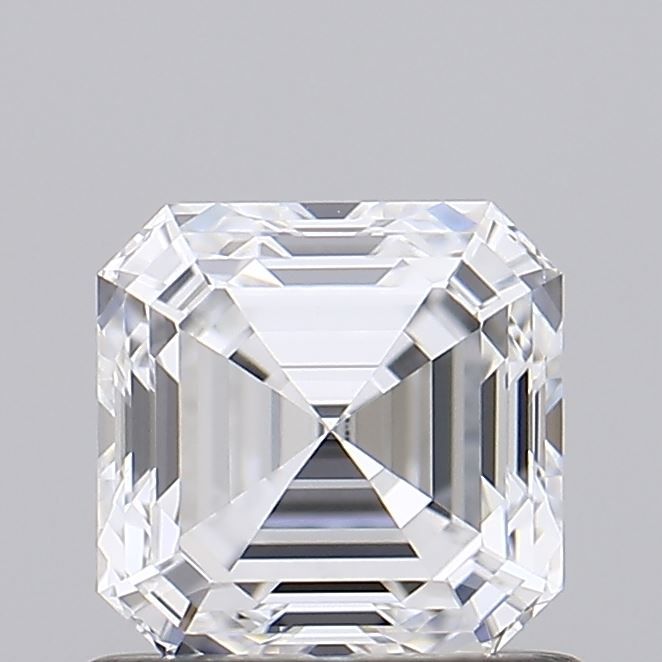
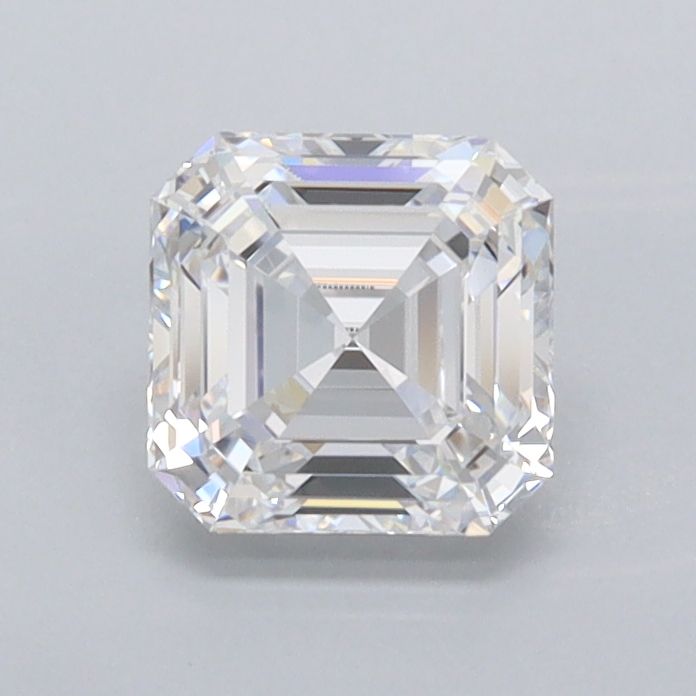
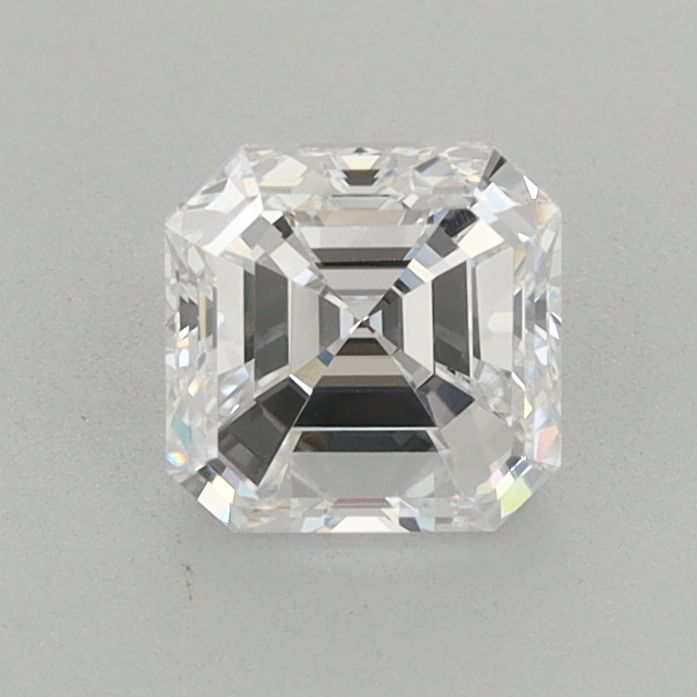
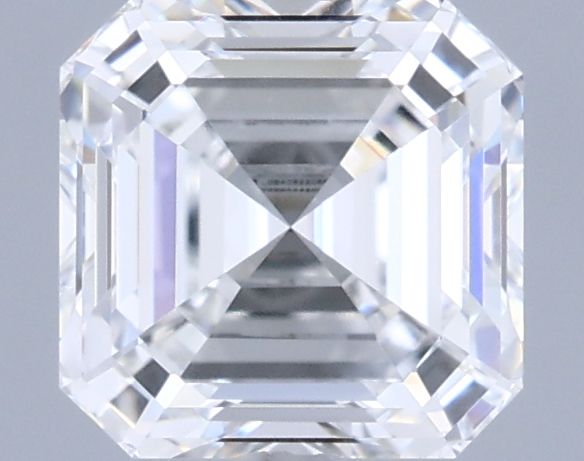
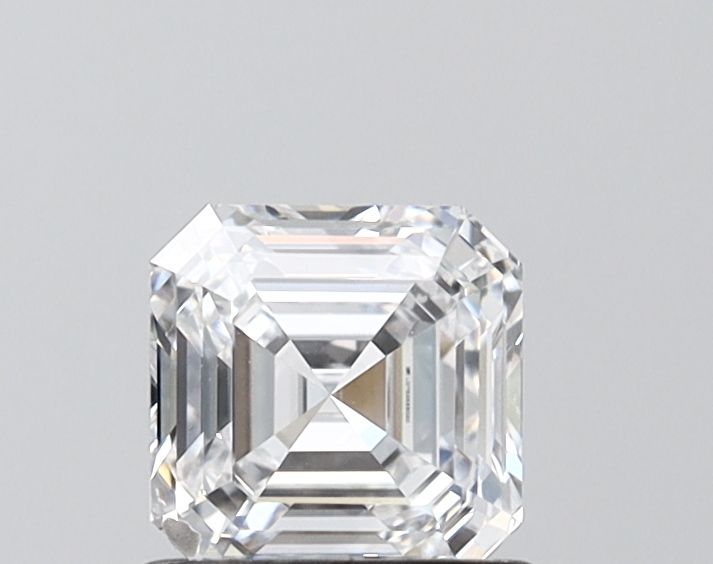
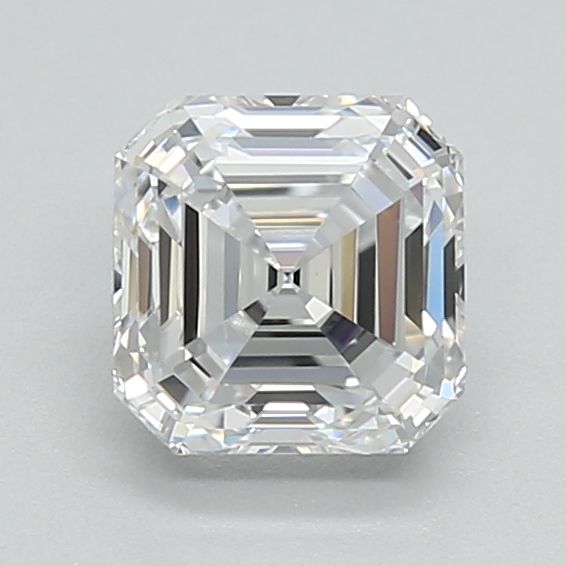
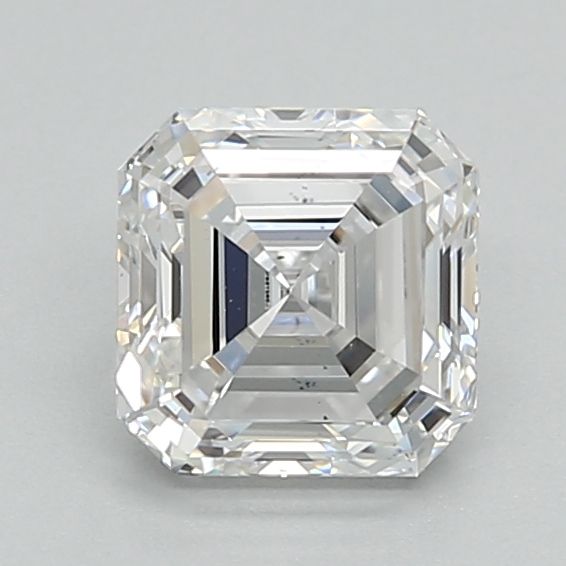
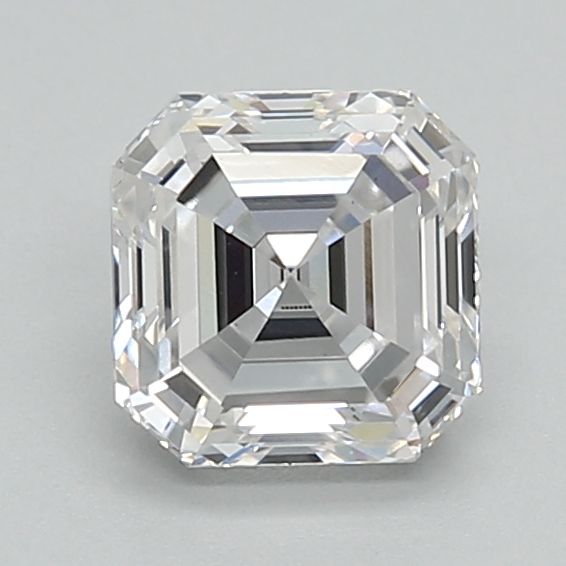
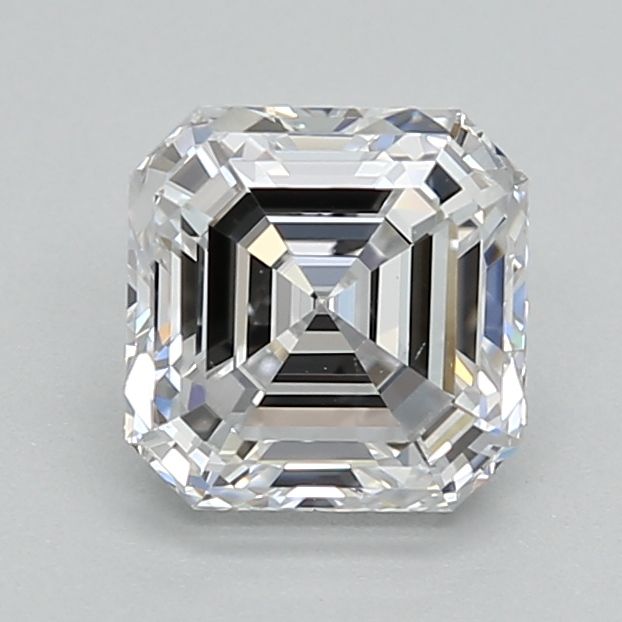
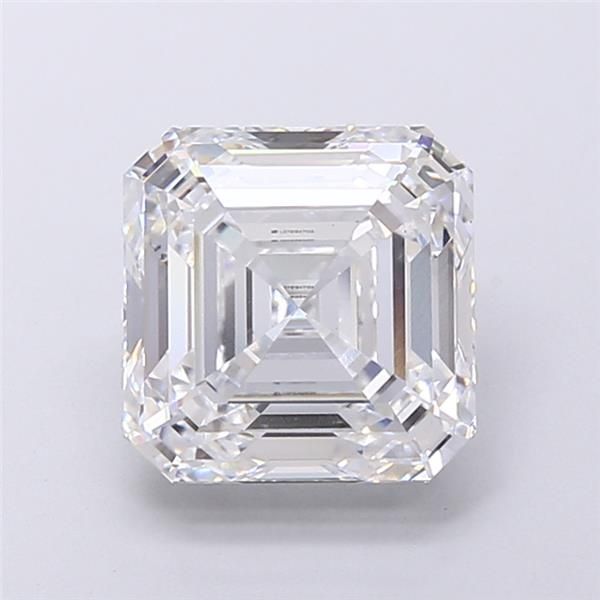
Asscher-cut diamonds, square step cuts with deeply clipped corners, lab-grown and natural, colors D to M, each with an IGI or GIA report.

- Over 25,000 Available
- From $174
- IGI and GIA Reports
- Free Insured Delivery Over $100

Good to Know
In Brief
An Asscher usually costs less per carat than a round of the same grades, but it faces up smaller, so compare millimeters before carats. Pick one whose video shows a crisp windmill and no inclusion you can see, often a VS1 or VS2 in G or H. A D color or a Flawless grade adds to the price, not to anything your eye will notice.
The Windmill Seen From Above
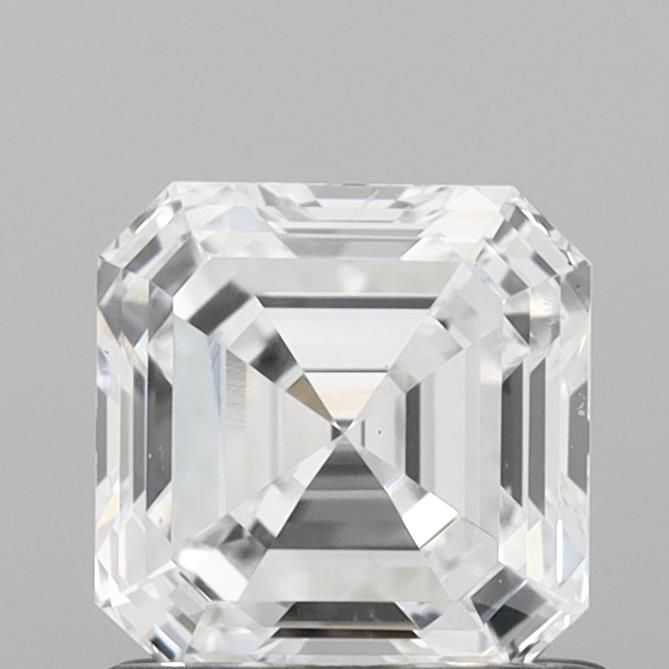
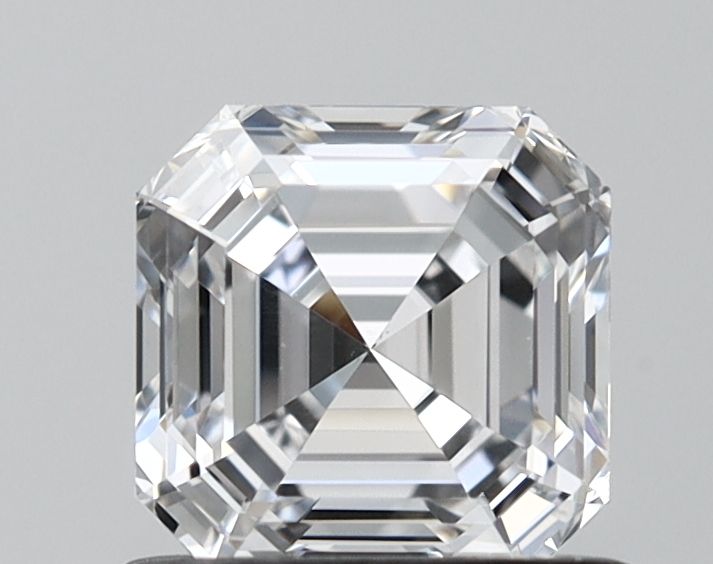
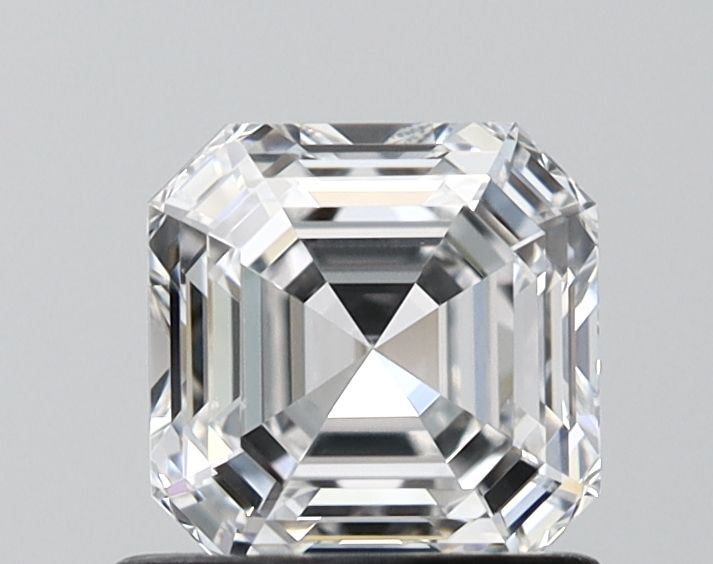
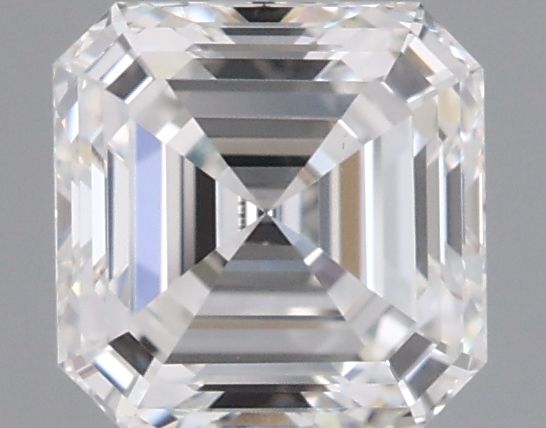
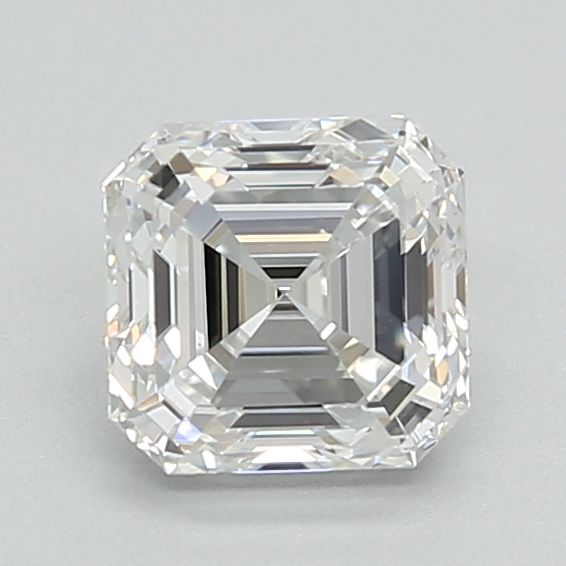
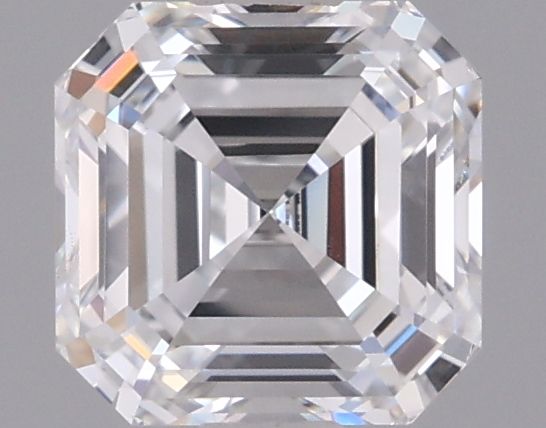
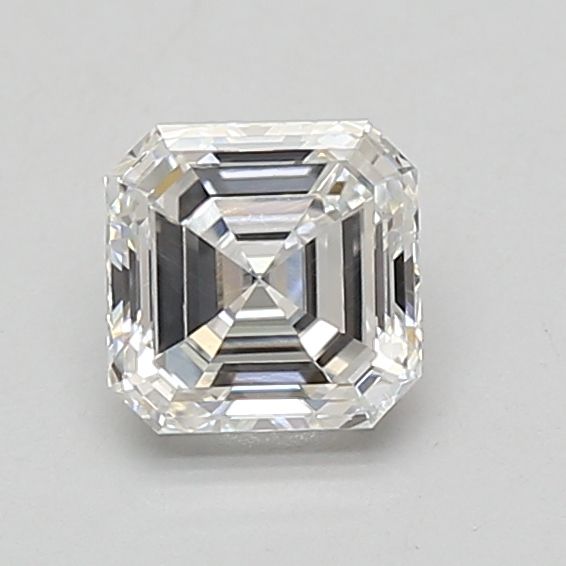
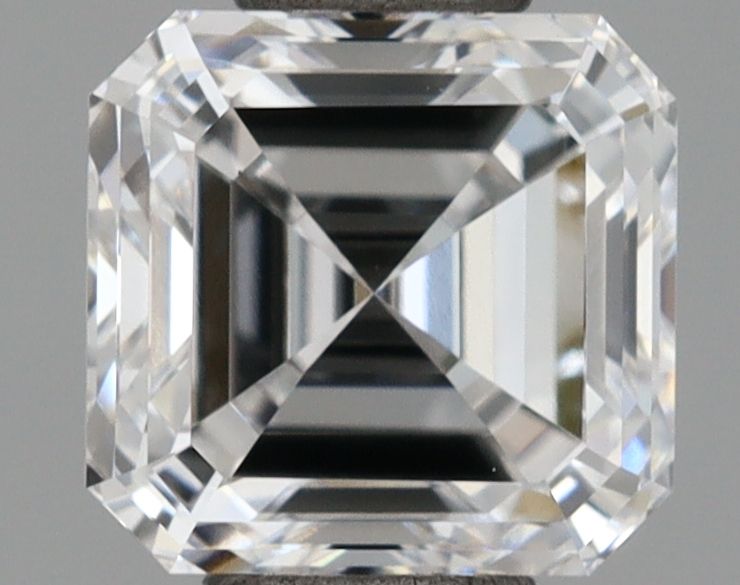
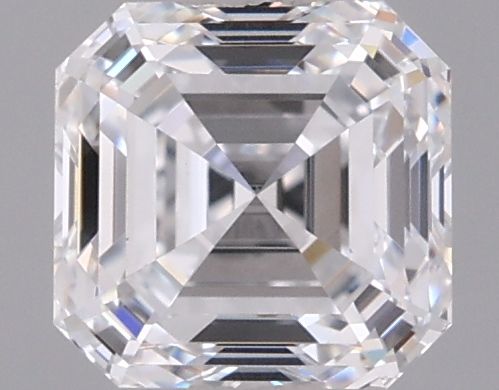
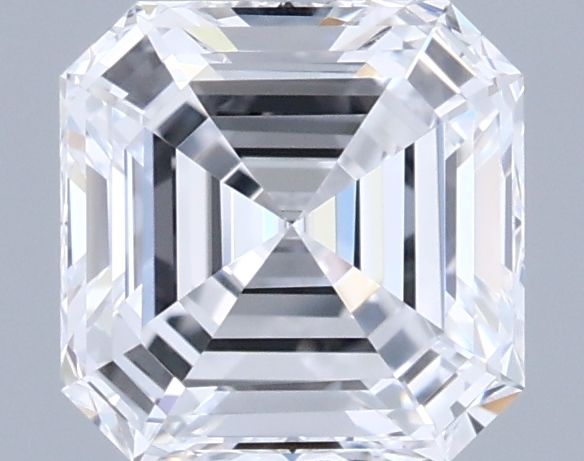
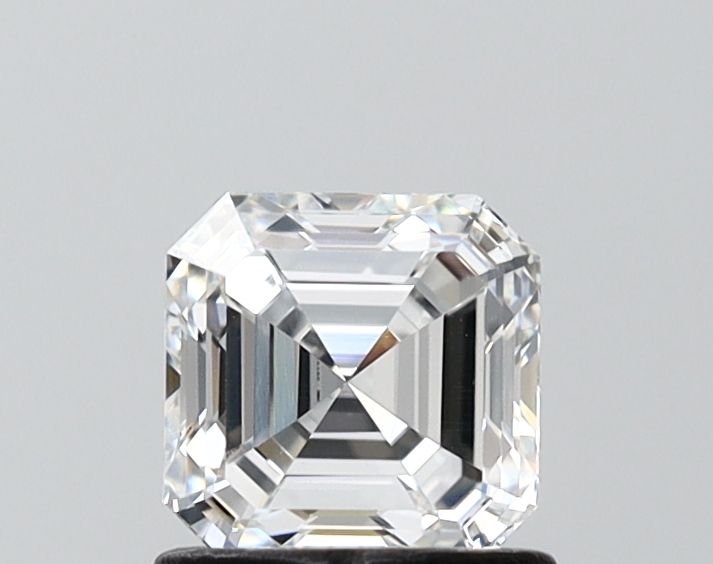
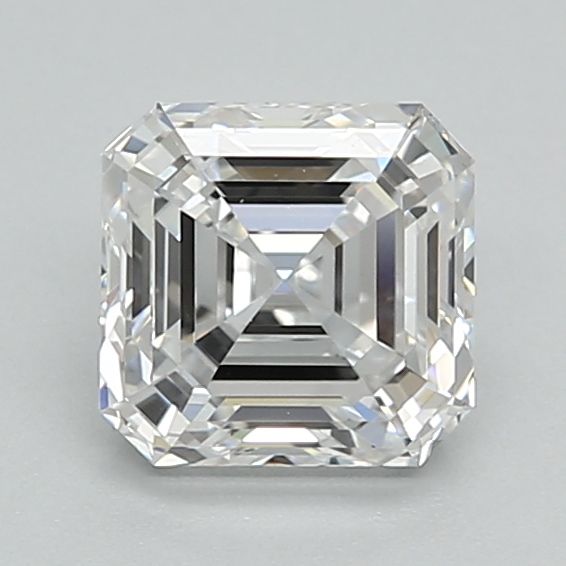
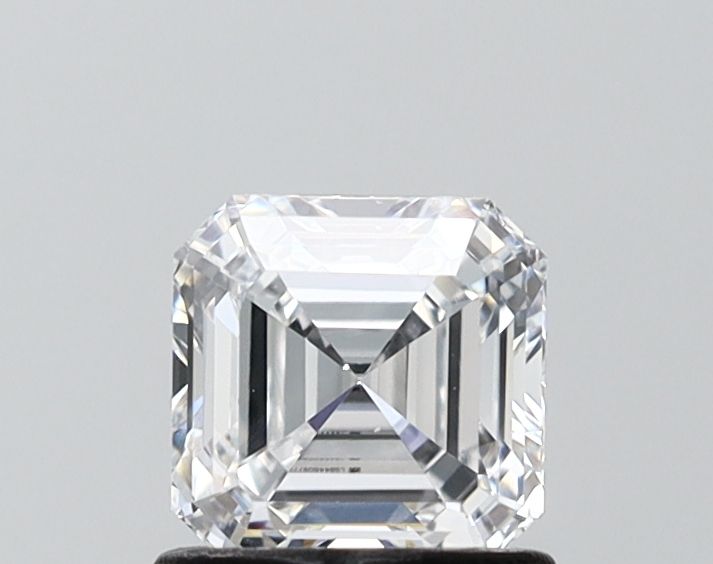
An Asscher is a square step cut with its corners clipped so deeply that the outline looks almost octagonal. Its facets run in stepped rows, and a traditional Asscher has a high crown, a small table and a deep pavilion. Look straight down and those steps line up as squares nested one inside the next, crossed by lines running out to the corners: the pattern known as a windmill. Joseph Asscher designed the cut in 1902, and it became a favorite of the Art Deco years.
That pattern is your best guide, because GIA gives no cut grade to an Asscher. In the video the squares should be sharp and centered, the four arms of the windmill equal, and light should flash across the whole face as the stone turns. Pass over one whose center looks dark, or whose windmill arms are blurred or uneven in size. Most people like an Asscher at about 1.00 to 1.05 length-to-width, which reads as a true square.
Not Always Called Asscher on the Report
Search a lab report for the word Asscher and you may not find it. GIA usually describes the shape as a cut-cornered square step cut or a square emerald cut, and other labs have their own wording. The name is a description, not a grade, so judge the outline and the windmill in the video rather than the label. How GIA and IGI grading reports work explains what a report tells you and how to check that it matches the stone.
Why an Asscher Faces Up Smaller
The high crown and deep pavilion put much of an Asscher's weight into its depth, where it adds carats to the report but nothing to the width you see. A 1 carat Asscher often measures about 5.5 mm a side, while a well-cut 1 carat round is about 6.4 mm across, so the square looks smaller than its weight suggests. Between two Asschers of equal weight, the deeper one shows less.
So read the length and width on each report before the carat weight. If a lighter stone measures the same across as a heavier one and its video still shows a crisp windmill, take the lighter one: it faces up the same size and, at the same grades, costs less. Price also jumps as a stone reaches 1 or 1.5 carats, and an Asscher a little short of either mark looks no different once it is set.
Clean Enough for a Square Step Cut
Step facets work like panes of glass into the diamond, and with little busy sparkle to break up the view, anything near the middle of an Asscher sits in plain sight. So judge clarity in the video, not by the grade alone. Many VS1 and VS2 diamonds look clean in this shape, and an SI1 sometimes does when its inclusion is pale and near a corner. Our eye-clean clarity chart shows where that line falls.
Once the video shows nothing, Flawless and VVS1 change only the report and the price. Body color shows more than in a brilliant, gathering in the deep pavilion and toward the corners, so G or H is a sensible floor in platinum or white gold, as our guide to which color grades still face up white explains. A warm yellow or rose metal hides a faint tint down to about I. D to F costs more for a whiteness few people can pick out once the stone is set.
Fewer to Choose From, Easy to Set
Fewer diamonds are cut as Asschers than as rounds, ovals or emerald cuts, simply because fewer buyers ask for one. Choice in any one size and grade is narrower as a result, but the price is not higher for it; matched grade for grade, a round still costs more per carat. Set the grid's filters to the size you want, sort by price and compare the videos side by side.
Its clipped corners are far less exposed than a princess's points, so four prongs, one on each corner, hold it securely, and a bezel, a collar of metal around the outline, protects the girdle as well as the corners. A deep Asscher also stands tall, so choose a setting with room for its depth.
Prices From Our Catalog
| Carat Weight | Median Price per Carat | Stones Counted |
|---|---|---|
| 0.30-0.49 ct | $2,438 | 449 |
| 0.50-0.74 ct | $1,844 | 835 |
| 0.75-0.99 ct | $2,493 | 986 |
| 1.00-1.49 ct | $375 | 5,507 |
| 1.50-1.99 ct | $297 | 4,625 |
| 2.00-2.49 ct | $312 | 3,510 |
| 2.50-2.99 ct | $299 | 1,490 |
| 3.00-3.99 ct | $283 | 4,479 |
| 4.00-4.99 ct | $278 | 1,902 |
| 5.00 ct and up | $286 | 2,356 |
The median price per carat of the asscher-cut diamonds on sale here in each band, in US dollars, as of November 2, 2026. The grid shows each stone’s own price in your currency.
Asscher, Emerald Cut and Princess Compared
| Asscher | Emerald Cut | Princess | |
|---|---|---|---|
| Outline | Square with large cut corners, nearly octagonal | Rectangle with cut corners | Square with four sharp points |
| Facet style | Step cut: traditionally a high crown, small table and deep pavilion | Step cut: long parallel steps under a wide table | Brilliant: crossing chevron facets under the table |
| How it shows inclusions | Readily, through its broad step facets | Readily, through the open table | Hides them well, though a corner inclusion matters |
| How it shows color | More than a brilliant, mostly in the depth and corners | More than a brilliant | Can hold a hint of warmth at the corners |
| Face-up size for its weight | Smaller than a round, because the cut is deep | Close to a round when not cut too deep | A little smaller than a round in area |
| Corners and prongs | Cut corners: four prongs or a bezel | Cut corners: four prongs, double prongs or a bezel | Sharp corners: a prong over each point |
| Ratio most people like | About 1.00 to 1.05 | About 1.30 to 1.50 | About 1.00 to 1.05 |
Questions
Are Asscher-cut diamonds more expensive than round diamonds?
Not as a rule. Rounds are the most sought-after shape, so a round of equal weight and grades is generally the pricier stone per carat. It also faces up smaller, so weigh the measurements as well as the price. To compare for yourself, choose your size and grades in the filters, then sort the grid by price.
What is special about an Asscher-cut diamond?
Its calm, geometric look. Where a brilliant breaks light into small sparkles, an Asscher throws broad flashes across a pattern of nested squares, and it has the vintage character of its Art Deco heyday. Almost all of its appeal lives in that pattern, which a report cannot grade, so the video tells you more about an Asscher than its grades do.
Which clarity is enough for an Asscher-cut diamond?
Whatever grade looks clean in the stone's video, which is often VS1 or VS2. A step cut lets you see deep into the diamond, so an SI1 that would vanish in a round can show here, though some still pass when the inclusion is pale and close to an edge. Pay for clarity only up to the point where the video shows nothing.
Why are Asscher cuts less popular than other shapes?
Mostly taste and trade-offs. An Asscher gives broad flashes rather than the sparkle most buyers expect, shows inclusions and color more than a brilliant, and looks smaller than a round of the same weight because so much of it is depth rather than width. For people who love its geometric, vintage look, those are fair trades.
What is the difference between an Asscher and an emerald cut?
Both are step cuts with cut corners. An emerald cut is a rectangle with a wider, more open table and long steps; an Asscher is square, with larger corners, and is traditionally cut with a higher crown, a smaller table and a deeper pavilion, which together make its windmill pattern. Some reports call an Asscher a square emerald cut, so check the length and width to see which outline you have.
How rare is an Asscher-cut diamond?
Not rare as a diamond, only less often cut. Suitable rough, natural or lab-grown, can be cut as an Asscher, but cutters make fewer because fewer buyers ask, so the choice in a given size and grade is narrower than for a round or oval. Being less common does not raise its price; if the choice at one size looks thin, widen the carat range in the filters a little.