
Gemstones
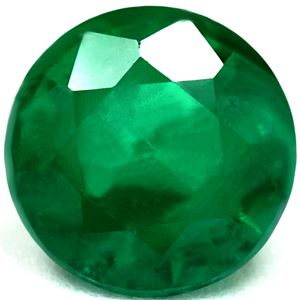
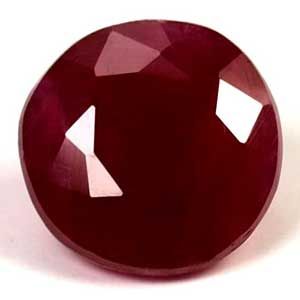
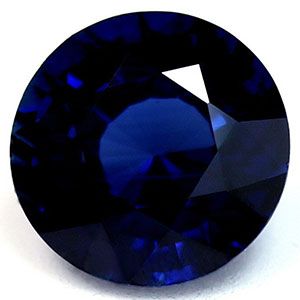
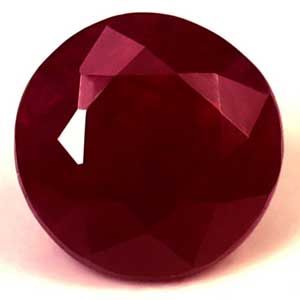
Natural sapphires, rubies, emeralds, alexandrite, tanzanite and other colored gems, each reported on by an independent lab that names any treatment it finds.






Good to Know
In Brief
For a ring you will wear daily, choose sapphire or ruby, both 9 on the Mohs scale, or alexandrite at 8.5. Keep emerald and tanzanite for earrings, pendants or a ring in a protective setting worn with care. Then judge any gem by its color, and read which treatment its report names, because treatment changes the price and, for some treatments, the care the gem needs.
Match the Gem to How You'll Wear It
A gem's hardness resists scratches and its toughness resists chips. Sapphire and ruby, both corundum, sit at 9 on the Mohs scale and are tough too, and alexandrite, a chrysoberyl, sits at 8.5; all three suit a ring worn daily, though even these can chip from a hard blow to an edge. Emerald, at 7.5 to 8, resists most scratches but is brittle and nearly always included, so a knock on a corner can chip it. Tanzanite, at 6 to 6.5, scratches sooner and splits readily along one plane, which makes it the gem to protect most.
A ring meets door handles and desks all day; earrings and a pendant meet almost nothing. So a softer or more brittle gem suits jewelry kept out of harm's way, or a ring with a bezel guarding its edges. A gem not compared here is judged the same way: check its hardness first, then its treatment line. Our education pages cover the basics.
Color Comes Before Everything Else
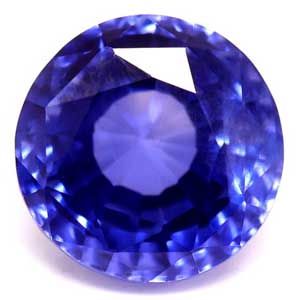
A colored gem has no D-to-Z scale. Its color is judged by hue, by tone, meaning how light or dark, and by saturation, meaning how strong, and color sets most of the price. If you want a color that stays put, choose ruby, sapphire or emerald; if you want one that moves, alexandrite changes with the light and tanzanite with the angle. For the deepest red or blue at a modest size, choose corundum; for strong color in a large stone at a gentler price, tanzanite.
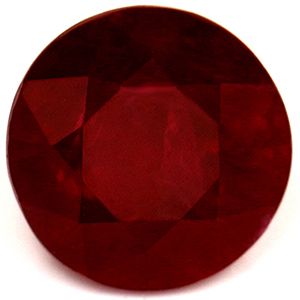
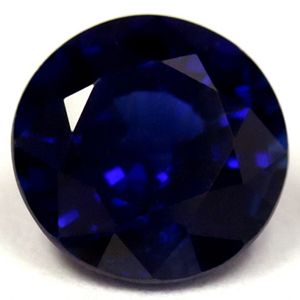
Whatever the gem, its video shows a single lighting. Deep blue sapphire and dark ruby slide toward black in a dim room sooner than paler stones do.
What Each Gem Is Usually Treated With
Each gem has a usual treatment, a pattern rather than a fact about any one stone. Sapphire, ruby and tanzanite are commonly heated, which is permanent and accepted; emerald usually has oil or resin in fissures reaching its surface; alexandrite is seldom treated. Among the treatments that cut the price most are lead-glass filling in low-grade ruby, which can leave a composite rather than a treated ruby, and diffusion in sapphire, where an added element brings color the crystal lacked.
Unless its report says otherwise, assume a sapphire, ruby or tanzanite has been heated and an emerald has been oiled; the treatment line on a gem's page repeats what its report says. A report listing none means the lab named none, not that the stone is untreated; heat in tanzanite, for one, rarely leaves a trace.
Why Carats Mislead With Colored Gems
A carat is a weight, a fifth of a gram, and gems differ in density, so one weight gives different sizes. Of these gems, corundum packs the most weight into a given size and emerald the least, so at one carat a ruby or sapphire faces up smallest and an emerald largest, with alexandrite and tanzanite between. Colored gems are also often cut deep to hold color, putting weight below the girdle where it never shows.
Compare different gems by their millimeter measurements, length and width, shown on a gem's page where the listing gives them, and compare carats only within one type. Our page on carat weight explains more.
Choosing Gems Online, With a Report in Hand
On a gem's page, read the lab, the treatment line, the origin as reported and the measurements, and watch its video if one was filmed. Origin carries its biggest premiums in ruby, sapphire, emerald and alexandrite, where a few famous sources are prized; tanzanite comes from one small area of Tanzania, so with it the question hardly arises.
Run from New York, Love & Carat is a jeweler you buy from online. Our desks are at 45 Rockefeller Plaza, in an office with no public access, so the concierge looks after you on chat, by email or on the phone. Each gem is insured from our hands to yours, and someone must sign for the parcel; if it is going to a US address, we have already paid the import duty.
Sapphire, Ruby, Emerald, Alexandrite and Tanzanite Compared
| Hardness (Mohs) | Treatment Often Seen | Wears Best As | |
|---|---|---|---|
| Sapphire | 9 | Heat; sometimes diffusion | Rings worn daily |
| Ruby | 9 | Heat; sometimes glass filling | Rings worn daily |
| Emerald | 7.5 to 8, brittle | Oil or resin in fissures | Earrings, pendants, a ring in a protective setting |
| Alexandrite | 8.5 | Usually none | Rings worn daily |
| Tanzanite | 6 to 6.5 | Heat, almost always | Earrings, pendants, an occasional ring |
Questions
Are the gemstones natural, and who reports on them?
Yes, they are natural: no lab-grown gem is offered here, so each one formed in the earth. The lab behind each report is independent and named on the gem's page; it may be GIA, AGL, GRS, Gübelin, SSEF or IGI. The report identifies the species, records any treatment the lab detects and may give an opinion on origin. It often gives no clarity or cut grade; where a gem's page shows one, it is the supplier's description.
What decides a gemstone's price?
Color leads: how pure, strong and even it is for that gem. Size counts too, since fine color grows scarcer in larger stones, along with clarity judged against what is normal for the type, a cut that spreads color evenly without a pale window, and treatment. A famous origin, where the report names one, can add a premium of its own. Compare prices only between stones of one kind, at a similar size, with the same treatment reported.
Why does a 1 carat emerald look bigger than a 1 carat sapphire?
Because emerald is a much lighter material. A carat measures weight, not size, and sapphire packs more weight into each cubic millimeter, so the same weight of emerald takes up more room and shows a larger face. Tanzanite falls between the two. When you compare gems of different kinds, set their measurements in millimeters side by side and let the carat weights go.
Which shapes are most common for colored gemstones?
Ovals and cushions, because a colored crystal is costly and these outlines let a cutter keep more of it. Rounds are scarcer and tend to cost more at the same weight, since more of the rough is ground away. Emerald is usually step cut, the clipped corners of the emerald cut guarding a brittle gem. Choose the outline you like best; color still matters more than shape.
How should I store loose gemstones?
Keep each one in its own pouch or paper fold so stones never touch, because a harder gem scratches a softer one and a diamond scratches them all. Keep emerald and tanzanite away from steam and ultrasonic cleaners, emerald from heat as well, which can disturb its oil or resin, and tanzanite from sudden changes of temperature. Handle a loose gem over a soft cloth rather than a hard counter.