
Types of Lab-Grown Diamonds: CVD vs HPHT, Explained
The two main ways to grow gem-quality lab-grown diamonds are CVD and HPHT. Here is what each method does, what it can leave behind, and why the grades matter more than the method.
Written by Love & Carat, with AI assistance, from the sources listed below. How we write
In This Guide (8)
There are two main types of lab-grown diamonds, named for how they are made: HPHT (high-pressure, high-temperature) and CVD (chemical vapor deposition). Both produce diamond with the same crystal structure of tightly bonded carbon as a natural stone. Once a stone is cut, its growth method is generally not apparent to the eye; GIA's full lab-grown diamond report states the growth method and any evidence of post-growth treatment.
The two ways a lab-grown diamond is grown
GIA dates gem-quality CVD growth to the 2000s, and says colorless lab-grown diamonds reached the jewelry market in commercial quantities in the mid-2010s, with both methods still in wide use. Listings may shorten these to “HPHT” and “CVD”; spell them out as “HPHT lab-grown diamond” and “CVD lab-grown diamond.” Both simply mean a lab-grown diamond made by that method. If you're new to the subject, our lab-grown diamond glossary entry covers the basics.
HPHT: recreating the conditions deep underground
HPHT imitates some of the high-pressure, high-temperature conditions under which natural diamonds form. In GIA's description, a capsule holding a carbon source and a mixture of metals is heated to 1300–1600°C (2400–2900°F) under pressures of 5–6 GPa, roughly the conditions 150–190 km below the surface.
A diamond seed sits in the chamber with the carbon and a metal catalyst, and anvils compress the whole assembly while it heats. GIA says HPHT lab-grown diamonds typically take a few days or weeks to grow, depending on the desired size, and that the result is usually a colorless crystal, though the method can also grow colored stones. Adding boron during growth produces blue crystals.
CVD: building a diamond layer by layer
CVD uses much lower pressure and deposits carbon from a gas onto a diamond seed. It takes place at near-vacuum pressure. A carbon-containing gas is energized, typically by microwaves, into a glowing plasma. According to GIA, carbon then settles onto diamond seeds and crystallizes at 700–1200°C (about 1300–2200°F), with each new layer copying the crystal structure beneath it.
GIA notes that CVD growth typically takes 4–6 weeks. The crystals generally have to be removed several times during growth so the graphite forming around them can be cleaned off. Many producers still choose it because the upfront equipment cost is lower than for HPHT, though the stones may need treatment afterward to improve their color.
While their final faceted appearances may be similar, the crystals produced from the two techniques are usually quite different.
CVD vs HPHT: what each method can leave in a stone
Each method leaves small fingerprints. Gemologists use them to identify a stone, and in some cases they show up in the clarity grade.
HPHT lab-grown diamonds can contain dark flux-metal inclusions left by the metals in the growth chamber. Under deep-UV light they often show a cross-shaped pattern, and some glow for a while after the UV light is switched off (phosphorescence). Because the pressure during growth is uniform, colorless HPHT stones usually show very weak or almost no strain, except around inclusions and cracks.
CVD lab-grown diamonds tend to contain dark graphitic inclusions instead. Photoluminescence spectroscopy can detect "ingredients" such as silicon, and deep-UV imaging reveals the layer-by-layer growth, like a stack of pancakes. Viewed between crossed polarizing filters, CVD stones tend to show banded strain patterns.
Most of these growth clues are not visible to the unaided eye, though some inclusions may be. These clues may require magnification or specialist instruments, and GIA cautions against relying on any single observation to identify a colorless HPHT-grown diamond.
Inclusions can affect the clarity grade; check the report's clarity information and, where available, its plot, then look at the individual stone to judge what you can see. If a report notes fluorescence, our fluorescence guide explains what it does and doesn't mean for appearance.
Treatment after growth: why so many CVD stones are heated
Post-growth treatment is worth understanding. CVD crystals often come out of the chamber with a brown tint that can be removed by heat treatment before faceting. GIA's view is that most colorless CVD material on the market was probably once brown and was decolorized by HPHT annealing. In other words, the HPHT press is also used to treat CVD stones.
GIA's submission data give a sense of how often this occurs among stones it examines. According to GIA's 2024 review of lab-grown diamonds, CVD stones now dominate the lab-grown diamonds submitted for its reports, and about 80% of CVD lab-grown diamonds submitted to GIA have had post-growth HPHT treatment to improve their color grade. GIA notes that its figures cover its own submissions and that global statistics may differ.
Treatment can also add color. GIA says the HPHT method can turn lab-grown diamonds colorless or a fancy color such as pink, blue, green or yellow. Other colors, such as pink and red, can come from radiation and heating, though they are less common.
In GIA research, you may also encounter the terms "type IIa" and "type IIb". Type IIb refers to detectable uncompensated boron; a CVD lab-grown diamond may contain boron yet be classified as type IIa. According to GIA's 2024 review, since 2020 approximately 5% of its CVD lab-grown diamond submissions have shown detectable boron, typically at concentrations too low to produce a noticeable difference in color; that is not a global figure.
Does the growth method matter to the eye?
Usually, the growth method alone is not what you will notice. GIA grades lab-grown diamonds using the same 4Cs as natural ones. An F-color, VS2, excellent-cut round can look very similar regardless of its growth method, but compare the actual stones as well as their grades. The method shapes how the crystal grew. The grades describe specific characteristics of the finished stone, not everything you might see.
A few buyers prefer an as-grown stone, or one method over the other, for personal reasons, and that's a perfectly fair choice. But we wouldn't pay more for it expecting to see a difference. If a seller prices one method higher than the other for stones with matching grades, ask what you're paying for.
The method matters most to gemologists, whose job is to confirm a stone's identity. GIA notes that there is no cost-effective or rapid screening tool that can definitively identify all lab-grown diamonds. That's why a report from a grading laboratory is worth far more to you than any claim made on a product page.
How a grading report shows growth method and treatment
Every diamond we sell comes with a GIA or IGI grading report. Here's what to look for, and our certificate guide walks through the rest of the document.
- Identity. The report should make it plain that the stone is lab-grown. GIA also laser-inscribes each lab-grown diamond's girdle with its report number and a statement that it is lab-grown.
- Growth method. GIA says it can determine by spectroscopy whether a stone was grown by HPHT or CVD, and its full lab-grown diamond report states the growth method.
- Post-growth treatment. The same report states whether there is evidence of post-growth treatment.
- The 4Cs and the plot. Color, clarity, cut and carat weight, plus a plot of the stone's clarity characteristics.
One wrinkle. GIA also offers a lower-cost lab-grown diamond "Dossier" report that omits growth-method and post-growth-treatment information. A Dossier does not provide those details, so don't rely on it to establish either growth method or treatment. If that matters to you, ask for the full report, or check GIA's report page for what each version currently includes. GIA's reports are digital and can be viewed through its app or Report Check.
For an IGI report, check IGI's own guidance on whether and where that report records growth method and treatment. Our piece on GIA and IGI grading reports explains where each report comes from.
The sensible way to spend
Once you know both methods produce the same material, the buying decision gets simpler:
- Don't assume the growth method determines appearance. Compare grades and the individual stones, not just the chamber.
- Put the money into cut. Cut is what makes a stone bright and lively, and it's the grade we'd protect first. Our cut guide shows what to look for.
- Stop paying for color and clarity where your eye stops seeing them. If a near-colorless, eye-clean stone looks the same to you in the setting you want, there is no need to pay extra for higher color or clarity grades.
- Choose treated or as-grown based on your preference, after comparing appearance. Either can be fine; if treatment matters to you, check whether the specific report records it, or ask if a full GIA report is available.
- Don't buy for resale. Diamonds aren't investments, lab-grown or natural.
Lab-grown diamonds usually cost less than comparable natural ones, and that is exactly why we recommend them wherever they look the same. When you're ready to compare stones, our center stones for engagement rings are a good place to start.
Stones That Fit This Guide
View all
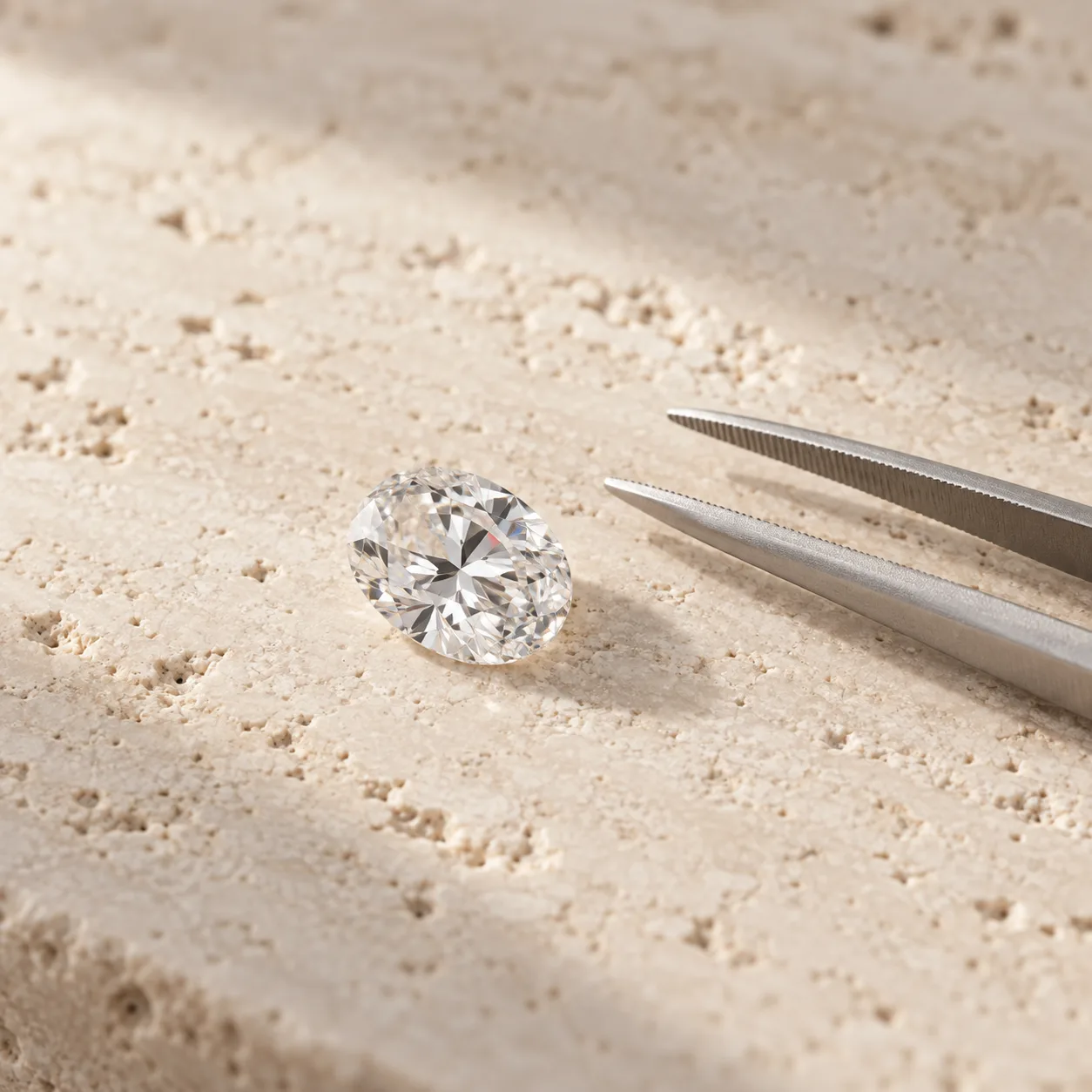
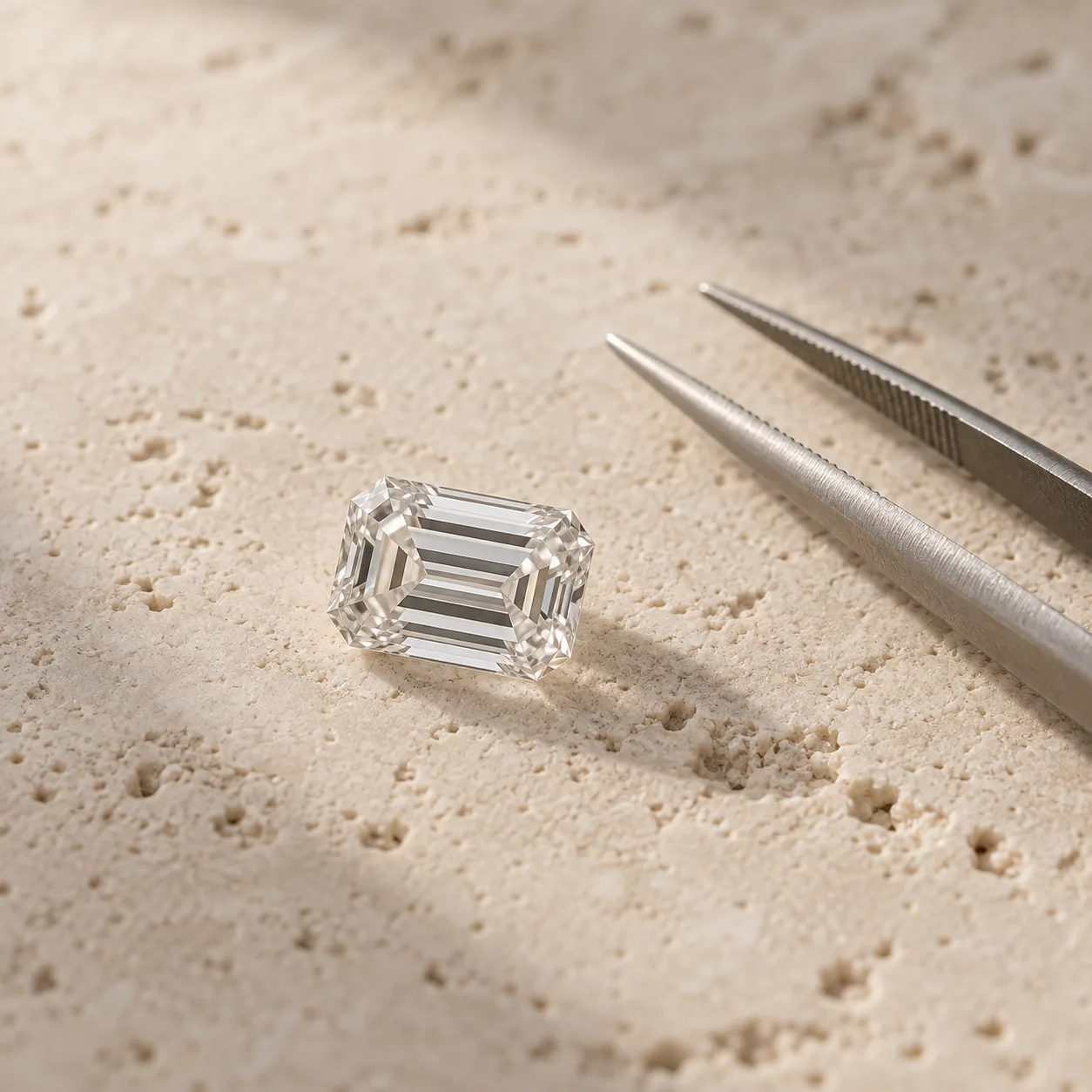
Choose the stone by how it looks and what its report says, not by growth method alone.
Questions
How many types of lab-grown diamonds are there?
The two main methods for growing gem-quality lab-grown diamonds are HPHT and CVD. Within those, stones differ in whether they were treated after growth and in their color, from colorless to fancy colors such as blue, pink or yellow.
Which type of lab-grown diamond is the best?
Neither method is better in itself. A well-cut stone with sensible color and clarity grades will look lovely whether it was grown by HPHT or CVD, so compare stones by their reports rather than their growth method.
Which has the higher clarity grade, VS1 or VS2?
VS1 sits one step higher than VS2 on the clarity scale, so its inclusions are slightly less noticeable under magnification. Both may look clean to the eye, but look at the individual stone and use the report's clarity information and plot, where available, before paying extra for VS1.
Can a lab-grown diamond chip?
GIA describes lab-grown diamonds as having the same crystal structure of tightly bonded carbon as natural ones, with nearly the same physical properties. Treat it as you would any diamond: it is hard, but it can still chip if it takes a sharp knock.
Is a lab-grown diamond a good investment?
No diamond is an investment, lab-grown or natural, and no one should promise you resale value. Buy the stone because you love how it looks and it fits your budget.
Sources
- Laboratory-Grown Diamonds: An Update on Identification and Products Evaluated at GIA
- Laboratory-Grown Diamond Report (LGDR) by GIA
- Simulants, Moissanite and Lab-Grown Diamonds | GIA 4Cs
- Features of Synthetic Diamonds | Gems & Gemology
- HPHT and CVD Diamond Growth Processes | How Lab- ...
- Laboratory-Grown Diamond Report (LGDR) by GIA
Nothing on this page is an appraisal or financial advice. Markdown version · RSS