
Diamond Cut Grades Explained: Why Cut Matters Most
Cut decides how a diamond handles light, which is what you see. Here is how cut grades work for rounds, what to check on fancy shapes, and where the top grade earns its price.
Written by Love & Carat, with AI assistance, from the sources listed below. How we write
In This Guide (8)
On a GIA report, the best cut grade a round brilliant diamond can get is Excellent. It sits at the top of a five-step scale that runs down to Poor. Cut matters most because it decides how a diamond handles light, which is what you actually see: its brightness, its fire and its sparkle. GIA does not give fancy shapes an overall cut grade, so for those you check the proportions and watch the stone move.
Of the 4Cs, no other ‘C’ has more impact on a diamond’s appearance.
What does a diamond cut grade measure?
Cut is not shape. A word like "oval" or "pear" describes the outline. Cut describes the arrangement and proportions of the facets, and so how the diamond interacts with light. GIA breaks what you see face-up into three effects:
- Brightness: the total internal and external reflection of white light.
- Fire: the dispersion of light into the colors of the spectrum.
- Scintillation: the pattern of light and dark areas, and the sparkle when the stone moves.
Two further groups sit behind those effects. The first is design: the weight ratio (the diamond's overall weight in relation to its diameter) and durability (the risk of damage built into its proportions). The second is craftsmanship, meaning polish and symmetry. GIA's cut page lists all of these.
In practice, two diamonds of the same carat, color and clarity can look very different side by side. GIA explains that a pavilion that is too shallow or too deep will allow light to escape from the side or bottom of the stone. A well-cut diamond sends more of that light back up through the top, toward your eye.
How GIA grades cut on a round brilliant
GIA's Cut Grading System for standard round brilliants launched on its reports in January 2006. It covers D-to-Z colors and diamonds of 0.15 carat and larger, and it gives one of five grades: Excellent, Very Good, Good, Fair or Poor.
GIA built the scale from computer modeling and from observation testing of actual diamonds with members of the trade and public. According to GIA, the study behind it included 70,000 observations on more than 2,300 diamonds.
The weakest link sets the grade
The laboratory measures the table size, the pavilion and crown angles, the lower half and star lengths, the girdle thickness, the culet size, and any painting or digging out. Grading staff then judge polish and symmetry by eye. GIA calls the result a "deductive" system: the overall cut grade is set by the lowest value among seven components. Those components are brightness, fire, scintillation, weight ratio, durability, polish and symmetry.
A grade is also a band, not a single ideal. GIA notes that each grade range represents a range of proportion sets, which leaves plenty of room for personal preference. GIA also says its cut system continues to evolve, so check GIA's own pages for the current version.
Every diamond we sell comes with a GIA or IGI grading report. If your stone has an IGI report, check IGI's definitions rather than assuming the GIA cut-grade boundaries described here apply. Our certificate glossary entry covers how to read either report.
How to read cut on the report: the diamond cut chart, table and depth
Every GIA Diamond Grading Report shows a proportions diagram. Think of it as your personal diamond cut chart. If you want to see what each grade looks like, GIA publishes a chart called Estimating a Cut Grade (revised December 2009). It shows twenty-five round brilliants, five in each grade, with their proportions and a short caption on why each landed where it did.
GIA's guide to diamond anatomy, published April 9, 2014, gives these figures:
| Measurement | What it is | GIA's figure |
|---|---|---|
| Table size | The top facet, as a % of average girdle diameter | 52–62% for Excellent |
| Pavilion angle | Angle of the pavilion mains to the girdle plane | 40.6–41.8° for Excellent |
| Crown angle | Where the bezel facets meet the girdle plane | 31.5–36.5° in a well-cut diamond |
| Star length | Star facets relative to the table-to-girdle distance | 40–70% in a well-cut diamond |
| Lower half length | Lower girdle facets relative to the pavilion | 65–90% in a well-cut diamond |
GIA is clear that no single proportion measurement is an indicator of the cut grade. A stone can sit inside every range and still grade lower if its proportions work against each other. So read the cut grade first and the numbers second.
Two smaller lines are worth a glance:
- Girdle: GIA says "medium to slightly thick" is preferred. An extremely thin girdle can be more susceptible to chipping, while a thick one can add weight where it does not show.
- Culet: none, very small or small falls in GIA's Excellent range for culet size, but other factors determine the overall cut grade.
Our table and depth glossary entry explains both measurements in more detail.
Why printed depth can exceed the Excellent limit
For standard round brilliants with an average girdle thickness between 2.5% and 7.0%, GIA's Facetware help sets out these calculated total-depth limits for estimating cut grade:
| Cut grade | Total depth % limits |
|---|---|
| Excellent | 57.5–63.0 |
| Very Good | 56.0–57.4 or 63.1–64.5 |
| Good | 53.0–55.9 or 64.6–66.5 |
| Fair | 51.0–52.9 or 66.6–70.9 |
| Poor | ≤ 50.9 or ≥ 71.0 |
For standard round brilliants with an average girdle thickness between 2.5% and 7.0%, these limits concern calculated depth rather than the depth printed on the report; outside that range, reported depth may matter. For rounds with a girdle between 2.5 and 7.0%, measured total depth plays no role in the cut grade. For rounds in this girdle-thickness range, Facetware calculates depth from rounded proportion parameters using a default culet size; GIA's laboratory also evaluates the diamond's actual culet and other factors when assigning the final cut grade. According to GIA's Facetware help, the two figures typically differ by 0.2–0.3%, and by as much as 0.8% in extreme cases. As a result, a number of reports show a measured depth above 63.0% on an Excellent stone.
Polish and symmetry
GIA's finish booklet sets a floor for polish and symmetry under each grade. To qualify for Excellent, polish and symmetry must be Very Good or Excellent. A Poor in either one means a Poor cut grade overall. GIA's observation testing found that Very Good polish or symmetry did not reliably look different from Excellent on an otherwise Excellent-cut round:
polish and/or symmetry descriptions of Very Good did not cause observers to lower their assessment of a diamond that would otherwise receive an overall cut grade of Excellent.
Why fancy shapes get no cut grade, and what to check instead
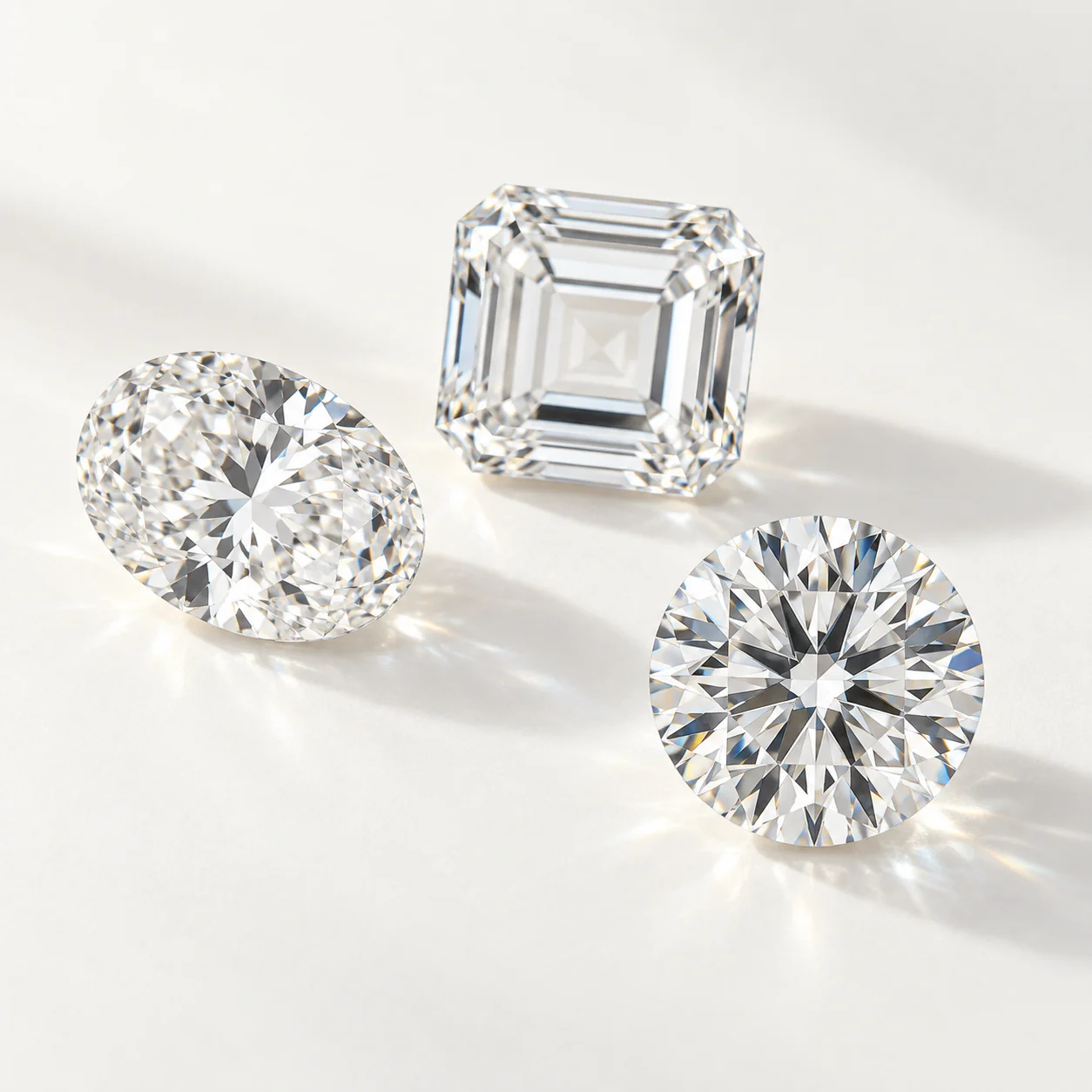
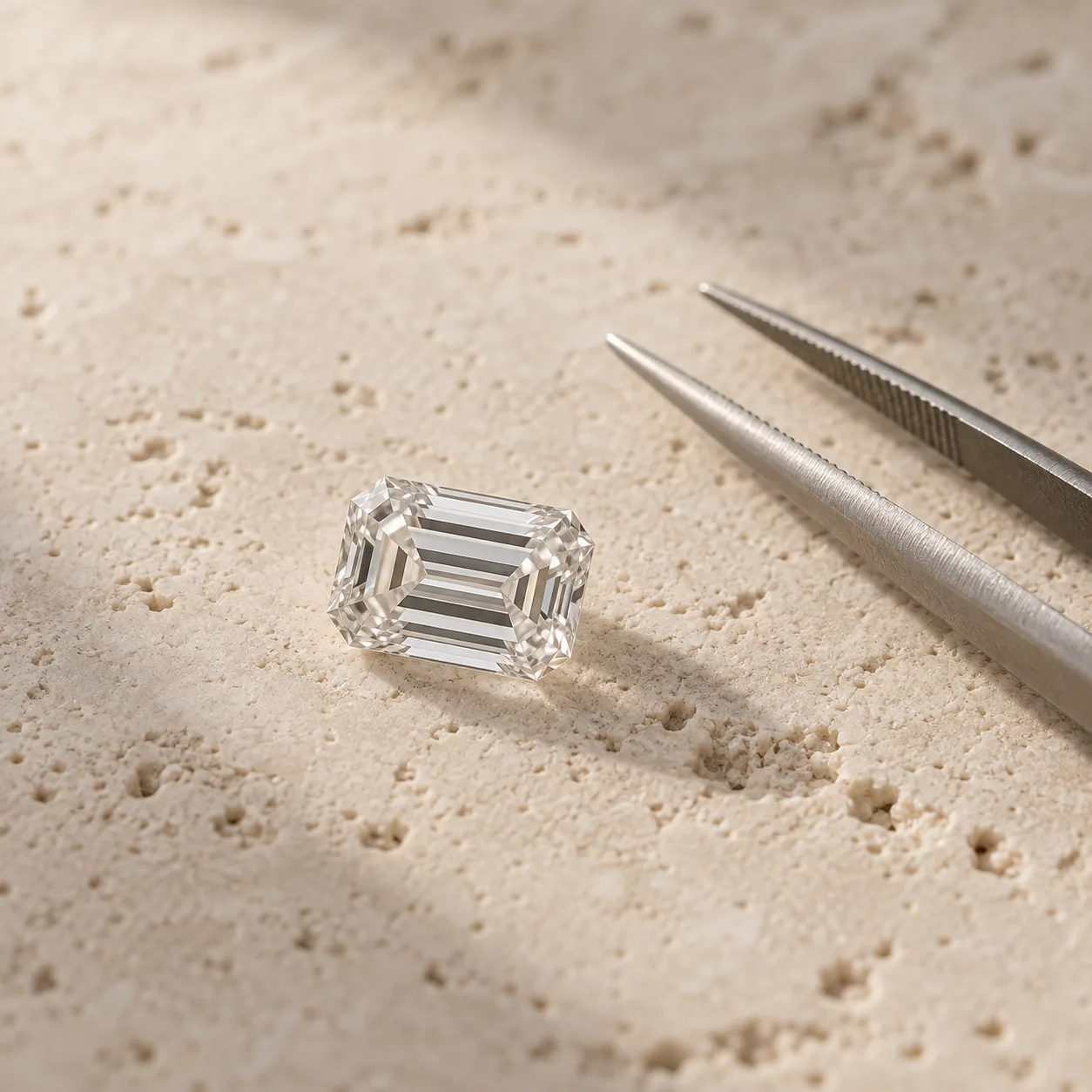
GIA gives cut grades only to round brilliants, because they are the only cut with standardized facets. Marquise, emerald, pear, oval, heart and every other outline count as fancy shapes. With no cut grade on the report, you have to do some of the judging yourself.
Here is what we'd look at:
- Table and depth as measurements, not targets. The Excellent ranges above were built for round brilliants. Don't hold an oval or an emerald cut to them. Use the numbers to compare stones of the same shape.
- Polish and symmetry, where the report lists them. They tell you about finish, not the fancy shape's overall light performance.
- The stone in motion. A video, or several, tells you more than any figure about how a fancy shape handles light. GIA's own advice is to look at a number of diamonds, because your eyes will tell you whether a cut is right for you.
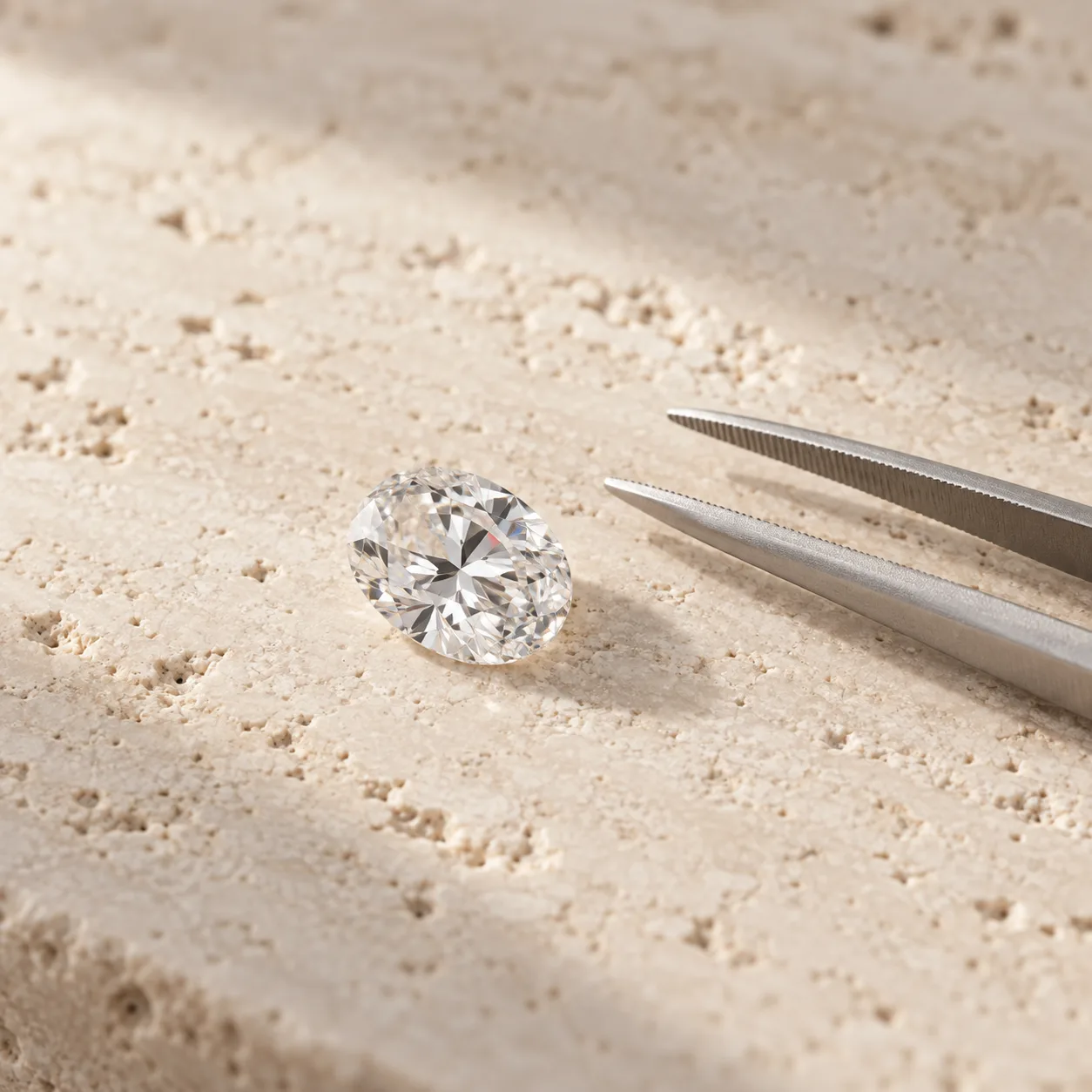
If you're drawn to elongated shapes, browse our oval and pear shaped diamonds and compare a few side by side before you decide.
Is an excellent cut diamond worth paying for?
On a round, Excellent is a good place to start, and cut is worth prioritizing when you can see the difference. Cut affects the brightness, fire and sparkle you see, but a grade alone cannot tell you which stone you will prefer; compare them by eye.
Paying more for Excellent across every subgrade is a different matter. Given GIA's finding on polish and symmetry, a round graded Excellent overall with Very Good polish or symmetry is a sensible buy. We wouldn't pay a premium to tick a third Excellent box.
You'll also see the phrase "ideal cut diamond" in the trade. GIA's scale has no Ideal grade, and its top grade is Excellent. If a listing uses the word, ask which laboratory's grade it refers to, and read the report.
On a GIA report for a fancy shape, there is no overall cut grade to pay for. Pay for how the stone looks to you.
The sensible way to spend
Prioritize cut you can see, and skip grades you cannot tell apart.
Once you've found a round with a cut you like, don't spend more on grades that look the same to you. We cover which color and clarity grades earn their price in which grades are worth paying for. The short version is that a well-cut stone in sensible middle grades usually looks better than a poorly cut stone with top grades on paper.
The other easy saving is the stone itself. Lab-grown diamonds usually cost less than comparable natural ones. When the two look the same, we'd rather you put the difference into a better cut or a slightly larger stone. Every diamond we sell comes with a GIA or IGI grading report. Check the cut grade where the report gives one, along with the listed proportions, polish and symmetry.
Stones That Fit This Guide
View all
Browse our center stones for engagement rings, compare a few by eye, and read our returns policy before you order.
Questions
What is the best cut grade for a diamond?
On a GIA report it is Excellent, and it applies only to standard round brilliants. Each grade covers a range of proportion sets, so two Excellent stones can still look slightly different, and your own preference is part of the choice.
What is the best cut of diamond?
There is no best shape. The shape is the outline and the cut is the craftsmanship. Choose the outline you love, then look for the best-made example of it you can find.
Is an ideal cut diamond better than an excellent cut diamond?
GIA's scale has no Ideal grade. Its top grade is Excellent. If a listing says Ideal, ask which laboratory's grade it refers to and read the grading report itself.
Do polish and symmetry need to be Excellent as well?
No. Under GIA's system a round can still be graded Excellent with Very Good polish and symmetry. In GIA's observation testing, Very Good polish or symmetry did not reliably look different from Excellent on an otherwise Excellent-cut round.
Sources
Nothing on this page is an appraisal or financial advice. Markdown version · RSS