How Much to Spend on an Engagement Ring, and Where the Money Shows
The average reported spend, the advertising origin of the salary rules, and how to set a budget that buys a beautiful ring without breaking the bank.
Written by Love & Carat, with AI assistance, from the sources listed below. How we write
In This Guide (8)
- What do couples actually spend on an engagement ring?
- Where did the three months' salary rule come from?
- How do you set an engagement ring budget that suits you?
- Where does extra money show, and where doesn't it?
- How lab-grown diamonds stretch an engagement ring budget
- What to ask before you buy
- Questions
- Sources
There is no correct figure. Spend what you can pay comfortably, then put that money where the eye can see it. For reference, The Knot puts the average cost of an engagement ring at $5,200, as CNBC reported in December 2025. The months-of-salary rules came from advertising, not an age-old tradition.
What do couples actually spend on an engagement ring?
One reported figure is an average engagement ring cost of $5,200, according to The Knot as cited by CNBC in December 2025. An average does not tell you what most couples spend.
Earlier figures tell a similar story. BBC News Magazine cited a report for the Jewelers of America putting the average at about $4,000. According to BBC News Magazine, against an average US salary of around $37,000 a year at the time, that ring figure came to just over a month's pay. In the UK, the BBC reported that Liverpool Victoria's 2011 research put the "average engagement ring" at £1,231, which the insurer described as about three weeks' pay.
Who pays is changing too. In DatingAdvice.com's Holiday Engagement Survey of 1,000 partnered U.S. adults, 70.6% of women said they're willing to contribute to the cost of their own ring, as CNBC reported in December 2025. Almost 19% said they would pay in full, about 23% would pay part and 29% would contribute if needed.
Instead of one partner taking on debt to hit an arbitrary ring budget, some women would rather share the cost and keep the purchase aligned with reality
Where did the three months' salary rule come from?
It came from advertising. BBC News traces the salary rules to a diamond cartel's advertising drive that began in the 1930s, during the Depression. According to the BBC, the cartel then controlled 60% of rough diamond output. According to the BBC, a diamond engagement ring was not the norm before the campaign: even on the eve of World War Two, only 10% of engagement rings contained diamonds. By the end of the 20th century, 80% did, according to the BBC.
The BBC describes how the suggested spend varied by place and period:
- The 1930s: a single month's salary, at the start of the campaign.
- The US in the 1980s: two months. One advert asked, "How can you make two months' salary last forever?"
- The UK: the adverts kept the one-month suggestion.
- Japan: men were urged to spend three months' salary. A 1970s advert read "A diamond engagement ring: worth three months' salary."
According to BBC News, Frances Gerety wrote the slogan "A Diamond is Forever" in 1947 while working at the advertising firm NW Ayer and Son. A doctoral dissertation from Auburn University describes the diamond engagement ring as the result of thirteen years of strategic advertising and marketing campaigns by N.W. Ayer & Son.
They invented a tradition which captured some latent desire to mark this celebration of love
That quote is from Dr TC Melewar, professor of marketing and strategy at Middlesex University. He told the BBC that once the tradition existed, a price could be put on it. So treat any months-of-salary figure as a slogan, not a guideline.
How do you set an engagement ring budget that suits you?
Start from your own finances, not a formula. We don't give financial advice, and we can't tell you what is right for your household. A useful approach is to set the number first and choose the stone second.
- Pick a figure you could pay without strain. If a ring would mean debt you'd resent, the figure is too high, whatever the averages say.
- Decide whether it's shared. As the survey above suggests, many couples now treat the ring as a joint purchase. Talk about it early.
- Know what matters to you both. Some people want the biggest stone the budget allows. Others want a particular shape, or a setting with side stones. Rank these before you look.
- Leave room for the rest. The setting, sizing and insurance all come out of the same pocket. If you insure the ring, your insurer may ask for an independent appraisal.
You can think of budgets in three loose bands. With a modest budget, every choice counts: put the money into cut and pick a size that suits the hand. With a middle budget, compare well-cut stones across shapes and face-up sizes rather than assuming a particular carat weight is within reach. With a generous budget, you may have more room to choose by taste, but extra grades still may not change what you see. That is when it pays most to remember that the extra grades you can afford may be ones nobody will see.
Where does extra money show, and where doesn't it?
This is where most of a budget is won or lost. Some grades change what you see across a table. Others only change what is printed on the report.
Cut shows. Cut decides how much light a stone returns: its sparkle, brightness and contrast. A well-cut stone of modest size may look more lively than a larger stone with a poor cut. If you pay for one thing, we'd put the money into the cut.
Size shows, up to a point. A bigger stone is visibly bigger, and shape matters as much as weight. Elongated shapes such as ovals and pears spread over a longer outline, so they can look larger face-up than a round of the same weight. A stone just shy of a round-number weight may look much like one that hits it; compare face-up dimensions rather than carat alone.
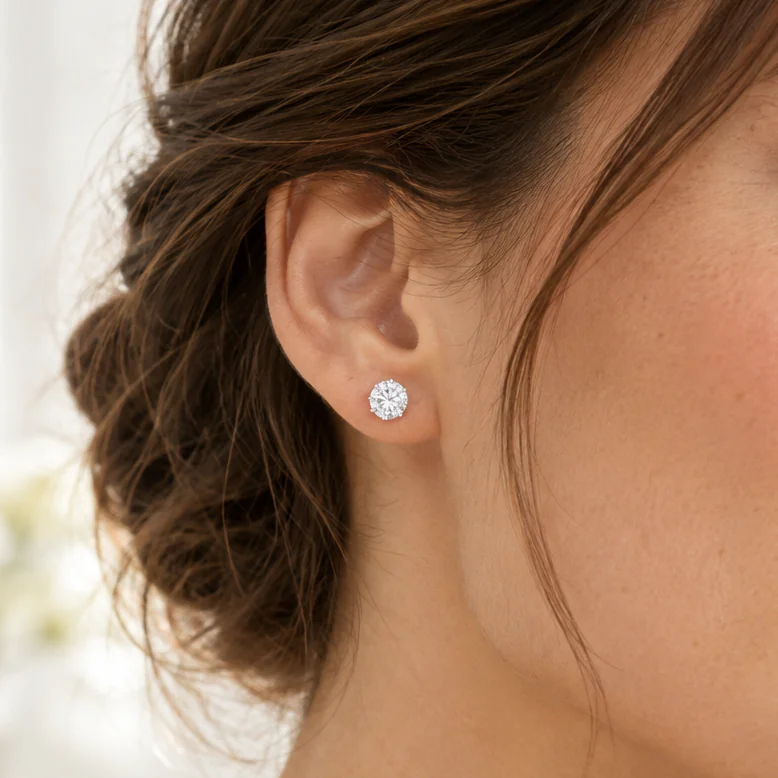
Color shows less than you'd think. A well-cut, near-colorless stone can face up white; compare candidates in lighting and a setting metal like the ones you'll use. A yellow-gold setting also forgives a touch of warmth. Paying for the very top of the scale rarely changes what anyone sees.
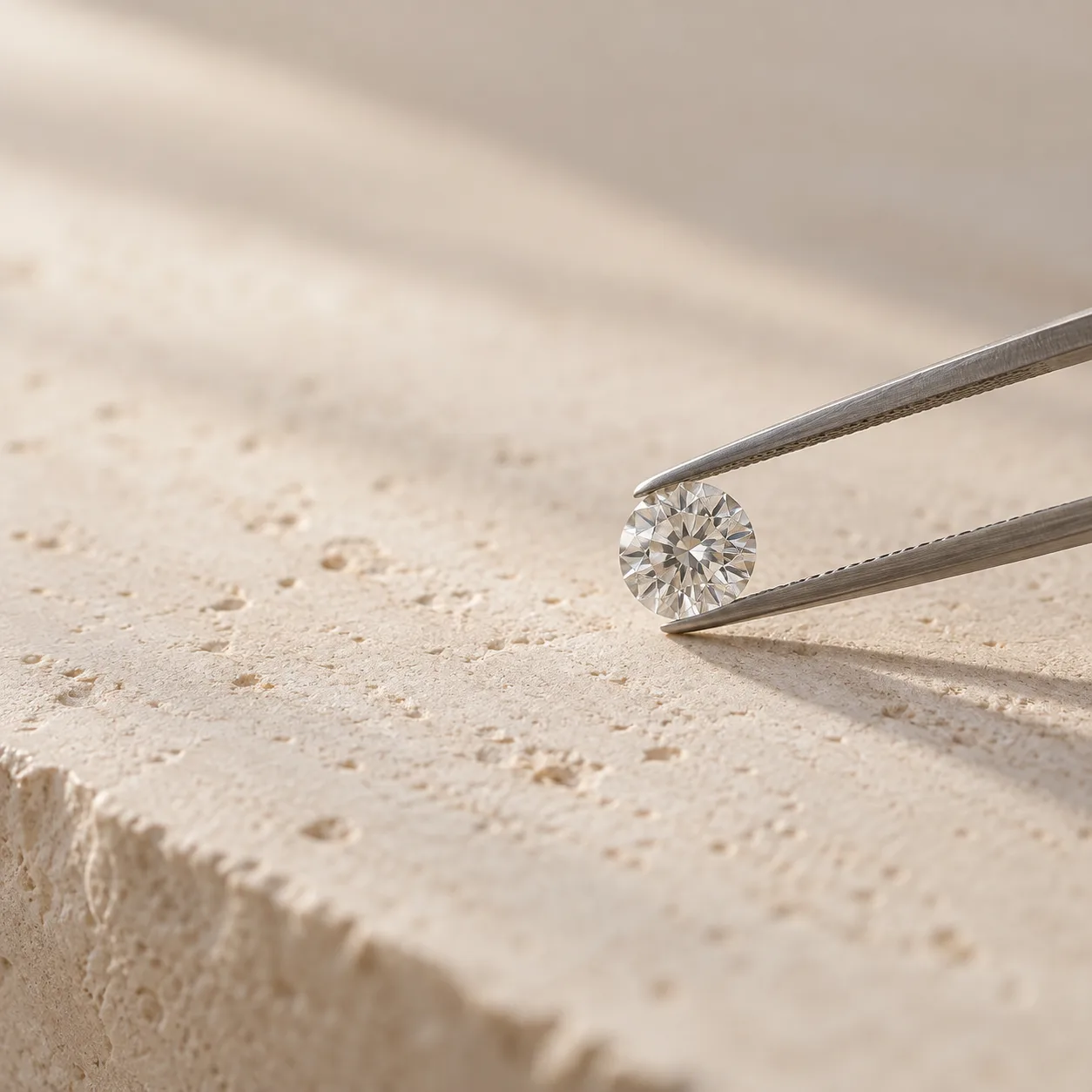
Clarity mostly doesn't show. What matters is whether a stone is eye-clean, meaning no inclusions are visible without magnification at a normal viewing distance. Past that point, a higher clarity grade buys you nothing you can see. We'd take the eye-clean stone and spend the difference on cut or size.
How lab-grown diamonds stretch an engagement ring budget
A lab-grown diamond is a diamond: the same carbon crystal, graded on the same scales for cut, color, clarity and carat. The difference is origin, and usually price. A lab-grown diamond typically costs less than a comparable natural one. That is why we recommend it whenever the two look the same, which, to the eye, they do. Our honest comparison of lab-grown and natural diamonds covers the trade-offs in full.
We sell natural diamonds too, and some people want one for its origin. That's a fair reason. But if what you want is the look, a certified lab-grown diamond may let you choose the cut and size you hoped for at a lower cost, or choose a similar-looking stone and leave money for the setting.
One thing to be plain about: diamonds are not investments, lab-grown or natural. Don't buy either expecting to sell it later for what you paid, and be wary of anyone who promises resale value.
Stones That Fit This Guide
View all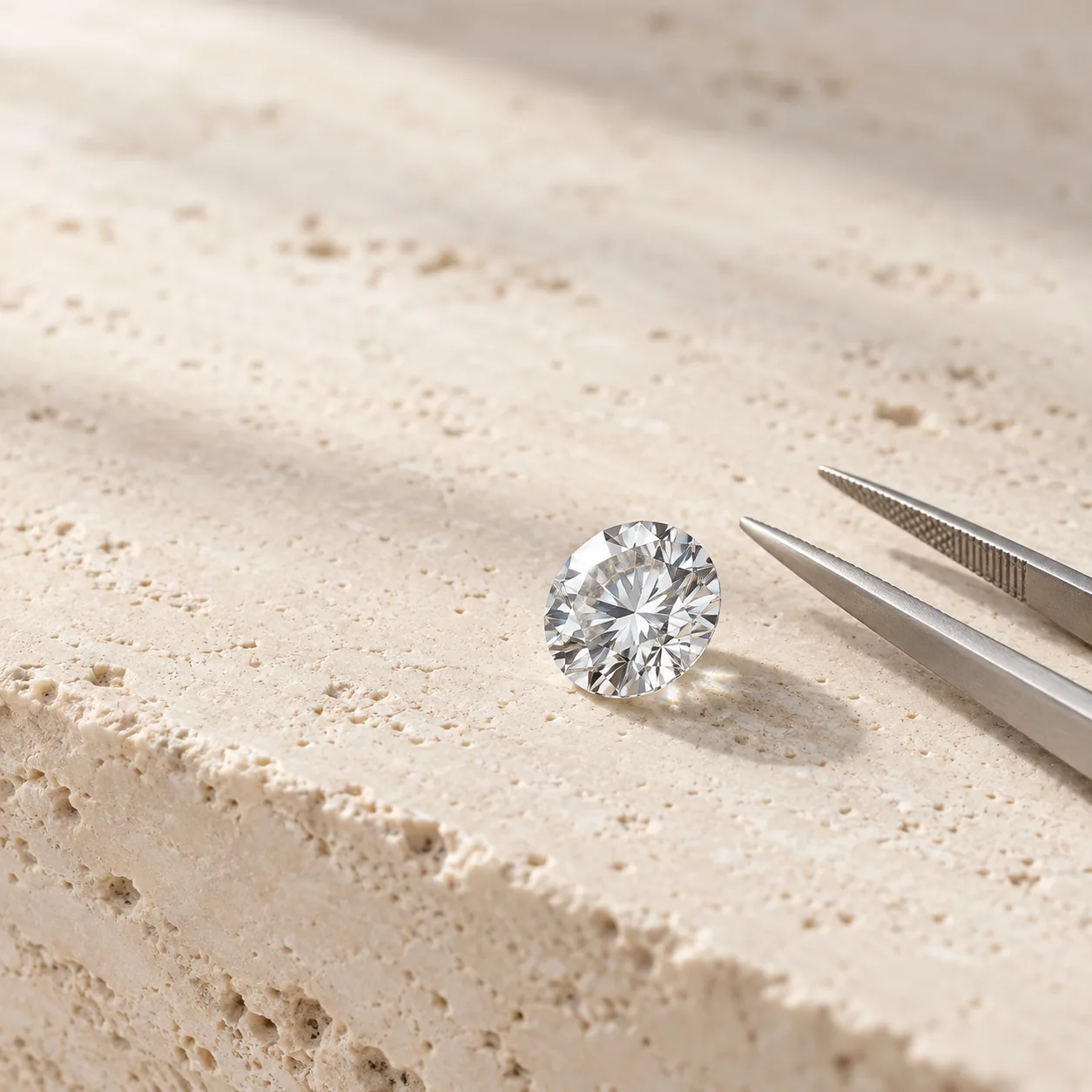
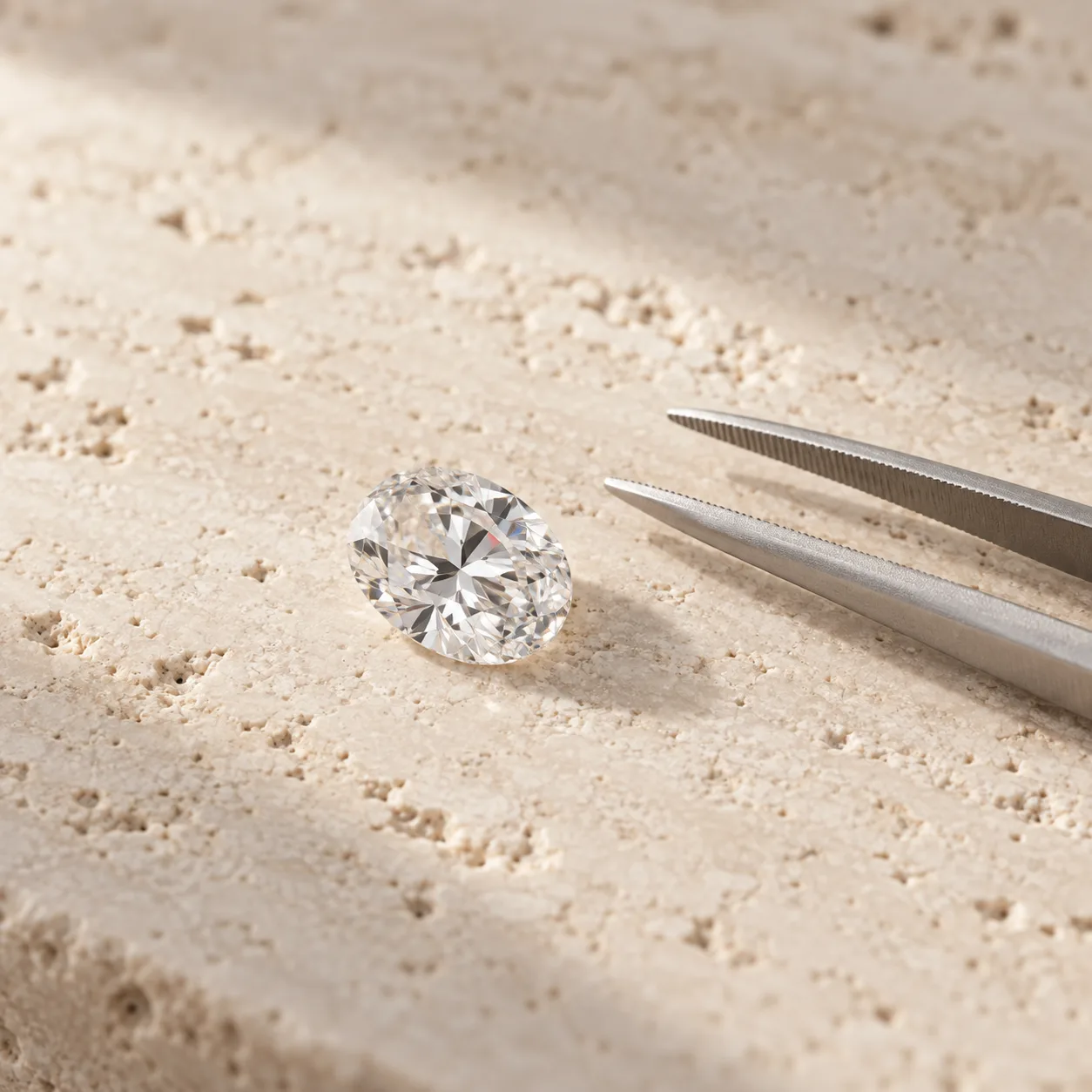
You can browse more shapes and sizes among our center stones for engagement rings.
What to ask before you buy
Whatever you spend, use the grading report to verify the stone's graded characteristics, then assess its appearance and the total ring cost. Every diamond we sell comes with a GIA or IGI grading report, so you can check its reported color and clarity, and its cut grade where one is assigned. Our glossary explains how to read a certificate.
Before you pay, ask:
- Which laboratory graded it? Look for a GIA or IGI report; if the stone is laser-inscribed, check the inscription against the report.
- What does the report say about cut and proportions? Check the cut grade if one is assigned, and ask to see how the stone looks face-up.
- Is it eye-clean? A clarity grade alone doesn't always tell you. Ask about the stone you're actually buying.
- Is it lab-grown or natural? The report states the origin. Make sure the price reflects it.
- What happens if it's not right? Read the returns policy before you order, not after.
- How does it ship? Our orders ship insured and signed for, and we pay the import duty on orders to the US. Outside the US, duties or taxes may be collected on delivery.
Spend what you can afford comfortably, put it into cut and size, and let a certified lab-grown diamond give you the same look for less.
Questions
Is a high budget necessary for an engagement ring?
No. The Knot's average, as reported by CNBC in December 2025, describes spending, not a target. Choose a comfortable budget and compare certified lab-grown diamonds by cut and face-up size, without assuming a higher budget guarantees a particular stone.
How can I tell whether a center stone will look big on the hand?
Compare face-up dimensions and proportions, not just carat weight. An oval or pear may look larger face-up than a round of the same weight because of its longer outline.
Should my ring budget be based on my salary?
We don't give financial advice, and no salary formula was ever meant to fit everyone: the month-based rules began as advertising. Pick a figure you could pay without debt or regret, then let the grades that show decide where it goes.
Should I aim to spend the reported average?
No. The Knot's reported $5,200 average, cited by CNBC in December 2025, is a point of reference, not a target. Choose a budget that suits you; a comparable lab-grown diamond usually costs less than a natural one, and you can prioritize cut and visible size over grades you cannot see.
Is an engagement ring a good investment?
No. Diamonds are not investments, lab-grown or natural, and no one should promise you resale value. Buy the ring for how it looks and what it means.
Sources
- De Beers myth: Do people spend a month's salary on a diamond engagement ring? - BBC News
- A dissertation submitted to the Graduate Faculty of Auburn University in partial fulfillment of the requirements for the Degree of Doctor of Philosophy
- Nearly 71% of women would contribute to cost of engagement ring: Survey
Nothing on this page is an appraisal or financial advice. Markdown version · RSS