The Cost of a Lab-Grown Diamond: What Moves the Price
What a lab-grown diamond costs comes down to five things. Only some of them show once the stone is on a hand, and those are where your money should go.
Written by Love & Carat, with AI assistance, from the sources listed below. How we write
In This Guide (8)
A lab-grown diamond costs what its carat weight, cut, color, clarity and shape add up to on the day you buy it. It usually costs less than a natural diamond of the same grades. Some of those grades show once the stone is set and some don't, and the best way to keep the cost down is to stop paying for the ones that don't.
Our prices are on our center stone listings. Check the price shown on each listing when you compare stones; prices may change. Below we explain how to read a price, what pushes it up, and where we'd hold back.
What sets the cost of a lab-grown diamond?
Five things move the price of a lab-grown diamond. They don't all show equally once the stone is in a ring.
- Carat. Weight is an important price factor. Compare stones with similar cut, color, clarity and shape to see what more weight costs and how much larger it looks.
- Cut. Proportions and finishing affect how a stone handles light. Where a cut grade is available, use it alongside photos or video.
- Color. This runs from colorless to faintly tinted. The top grades cost more, but near the top the steps between them are very hard to see in a setting.
- Clarity. This describes internal features and surface characteristics; some are visible only under magnification.
- Shape. Round, oval, pear, emerald, cushion and the rest are priced differently, and some shapes look larger than others at the same weight.
Then there's the question underneath all five: lab-grown or natural. A lab-grown diamond is diamond, but reports do not always describe lab-grown and natural diamonds in the same way. It usually costs less than a comparable natural stone, and that difference is the whole reason we suggest one when the two look the same.
How much is a 1 carat lab-grown diamond?
One carat is a useful size to consider when comparing prices. At that weight, cut, color, clarity and shape can still make a difference to the price.
Two lab-grown stones that both weigh one carat can be priced well apart:
- A round's cut and color can affect its price.
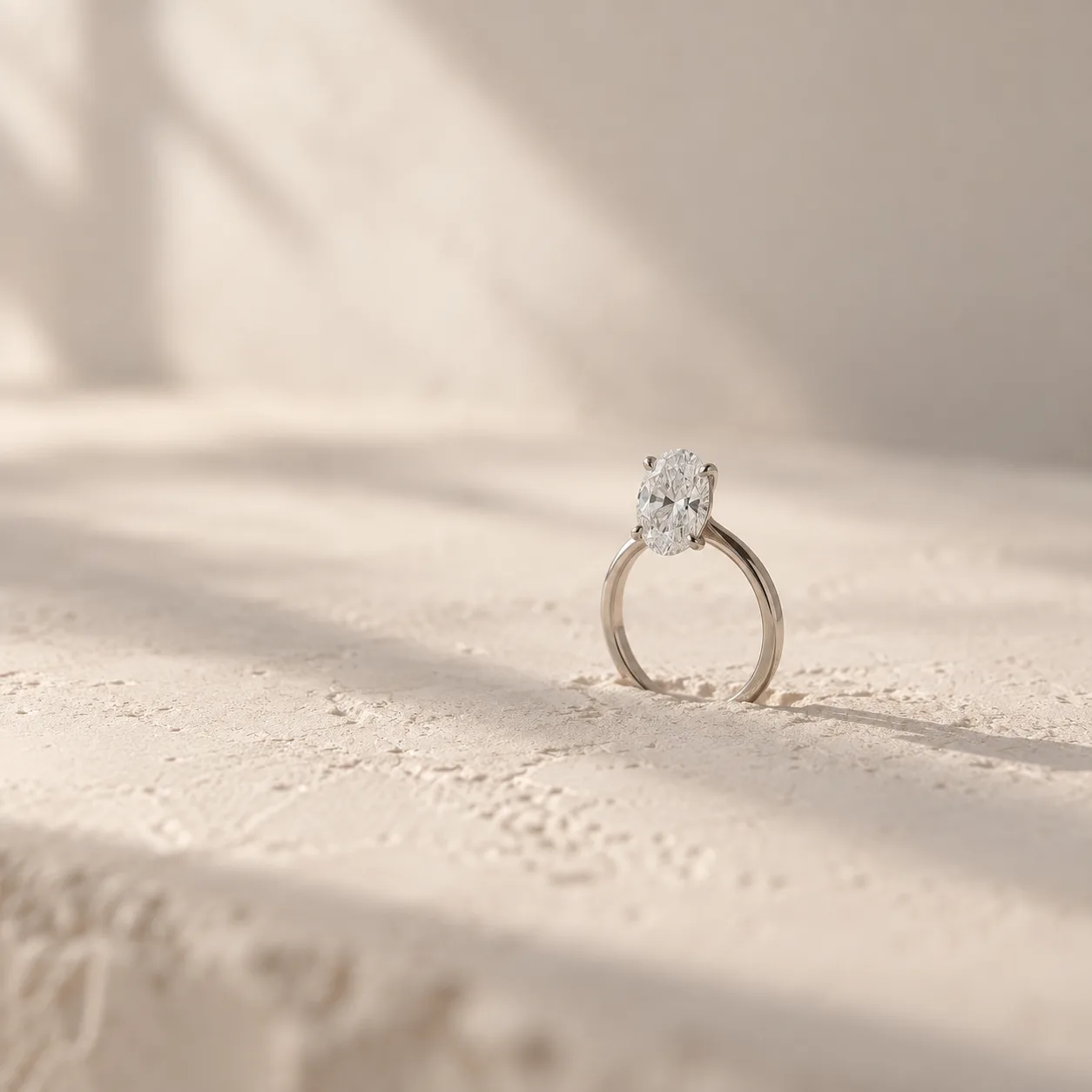
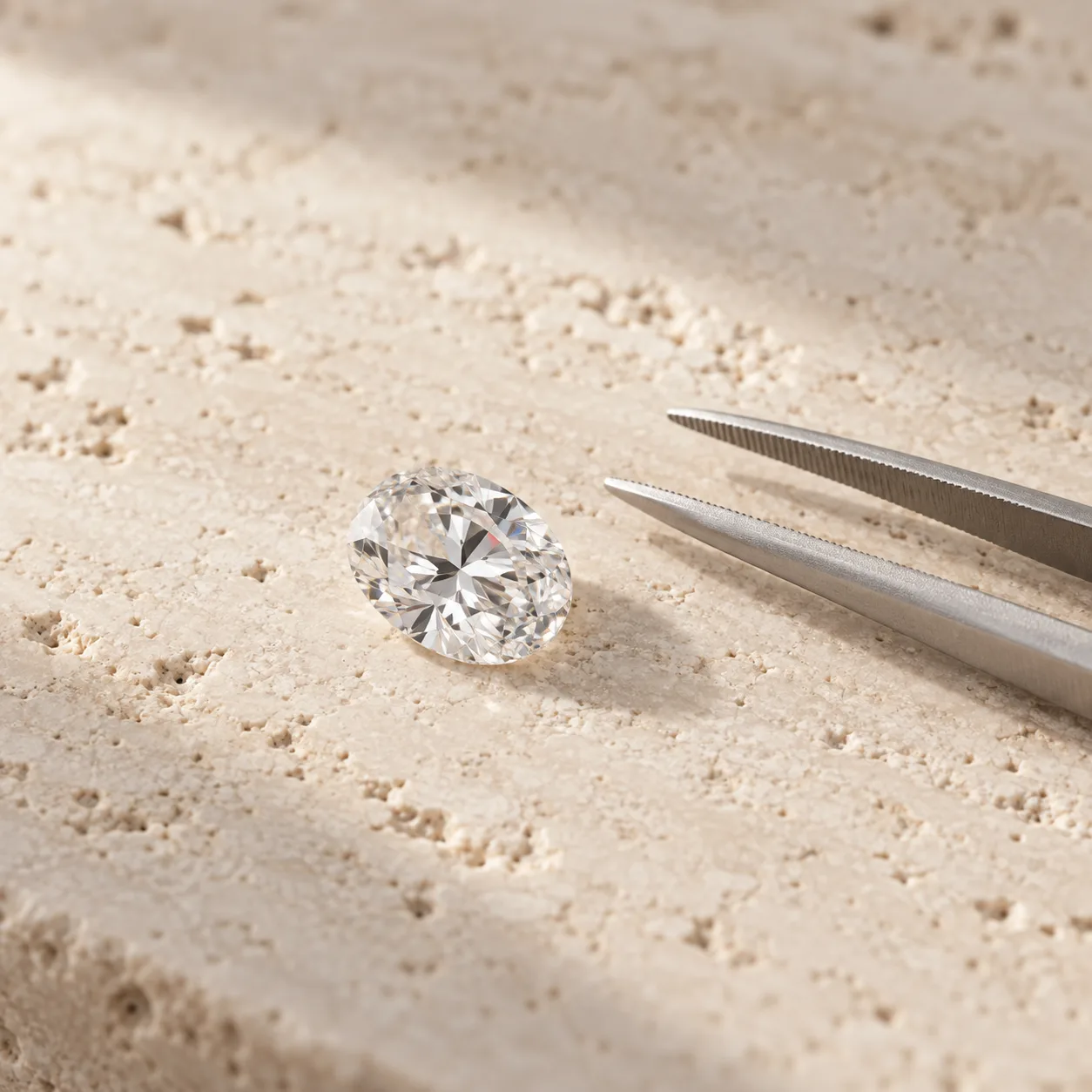
- An oval's shape and color can affect both its appearance and its price.
Set in a ring, they can look closer than their prices suggest. So when you ask what a 1 carat lab-grown diamond costs, the useful answer is a list of today's one-carat stones, filtered to the grades you'd actually see. You can build that list on our center stone listings.
A few things we'd do at this size:
- Look just under the round number. A stone just under one carat can look much like a full-carat stone on the hand; compare their measurements and appearance. If the price steps down, take the saving.
- Consider an elongated shape. Ovals and pears spread their weight across a longer outline, so they can look generous for their carat weight. Our oval and pear shaped diamonds are worth a look if you want size on the hand.
- Don't sacrifice appearance for carat. Compare how stones handle light before paying for extra weight.
Where the price differences are invisible to the eye
Color and clarity are good places to look for savings you may not notice on the hand. Some grades show clearly. Others only show on the report.
Color: near-colorless usually looks white
In many settings, including yellow or rose gold, a near-colorless stone can look white; compare it in the metal you plan to wear. If you cannot see a difference once the stone is set, there may be no reason to pay more for a higher color grade.
Our guide to which color grades actually look white goes through the scale grade by grade.
Clarity: eye-clean is the line that matters
Clarity grades reflect characteristics assessed under magnification, though some inclusions may also be visible on the hand. Once a stone is eye-clean, meaning no inclusion is visible without magnification, higher clarity may not change how it looks; check what each stone's report actually records. If both stones look eye-clean to you, a higher clarity grade may not improve the look you see.
GIA's president and chief executive made a related point when the laboratory changed how it describes lab-grown stones:
Using descriptive terms for the quality of laboratory-grown diamonds is appropriate, as most fall into a very narrow range of color and clarity
Cut: the grade worth paying for
Cut is the exception. A poorly cut stone may handle light less appealingly, so compare how the stones look before paying for higher color or clarity. If you're unsure where to spend, we'd put the money into the cut before color or clarity.
Put your budget into cut and size, stop at near-colorless and eye-clean, and keep the difference.
What the grading report tells you, and how GIA now labels lab-grown stones
Every diamond we sell comes with a GIA or IGI grading report. The report describes the stone's assessed characteristics. It isn't a price or a valuation.
GIA has changed how it describes lab-grown diamonds. According to National Jeweler, GIA introduced this assessment on Oct. 1, 2025:
- The GIA Laboratory-Grown Diamond Quality Assessment replaced the lab's earlier lab-grown reports.
- Those earlier reports used the same color and clarity scale as natural diamonds.
- Qualifying stones receive a "premium" or "standard" assessment instead of specific color and clarity grades; stones below GIA's minimum criteria do not receive an assessment.
The National Jeweler article sets out what GIA requires for "premium":
- D color
- VVS clarity or higher
- "Excellent" polish and symmetry
- For round brilliants, a cut grade of "excellent"
Stones that meet the lab's minimum criteria, but not all of the premium ones, are classified "standard."
This matters for cost. "Premium" requires high color and clarity, but those distinctions may not make a visible difference to you in a ring. A "standard" stone may look just as good to you in a ring; compare the particular stones rather than paying for the label alone.
GIA's fee schedule effective July 1, 2026 sets out how the service works:
- It applies to colorless to near-colorless lab-grown diamonds of 0.15 carats or more.
- Each assessed stone's girdle is laser-inscribed with the term "Laboratory Grown" and its assessment number.
- The fee is the total carat weight multiplied by a cost per carat, with a minimum fee per stone submission.
For the fees that apply today, check GIA's current schedule. Our lab-grown diamond glossary entry explains more about how these stones are graded.
How lab-grown compares with natural on price
Lab-grown diamonds usually cost less than natural diamonds with the same carat, cut, color and clarity. Compare carat weight, shape, appearance and the information each report actually provides, then check both listings' prices on the same day; GIA's current lab-grown assessment does not give specific color and clarity grades.
The gap isn't fixed. It changes with the stone and over time. We won't guess where either price is heading, and nobody can promise what a diamond will be worth later.
That's the plain truth about diamonds: they are not investments. Buy one because you love how it looks, not because you expect to sell it. If you're weighing the two side by side, our honest comparison of lab-grown and natural diamonds covers more than price.
What a sensible budget buys
A sensible budget for a lab-grown diamond is the one that buys the look you want without paying for grades you can't see. Here's the order we'd work in:
- Pick the shape first. It changes how large the stone looks and how it sits on the hand.
- Prioritize cut. Where the report provides a cut grade, use it alongside the stone's appearance; for other shapes, don't assume a cut grade is available.
- Choose color for the metal. Near-colorless usually looks white, and in yellow or rose gold you can often go a step lower.
- Stop at eye-clean. Ask whether any inclusion is visible without magnification. If not, higher clarity is optional.
- Then spend what's left on carat, looking just under round-number weights.
Orders ship insured and signed for, and we pay the import duty on orders to the US. Elsewhere, duties or taxes may be collected on delivery when a stone crosses a border. Our shipping details set out how that works.
When you're ready to compare actual stones, these are good places to start:
Stones That Fit This Guide
View all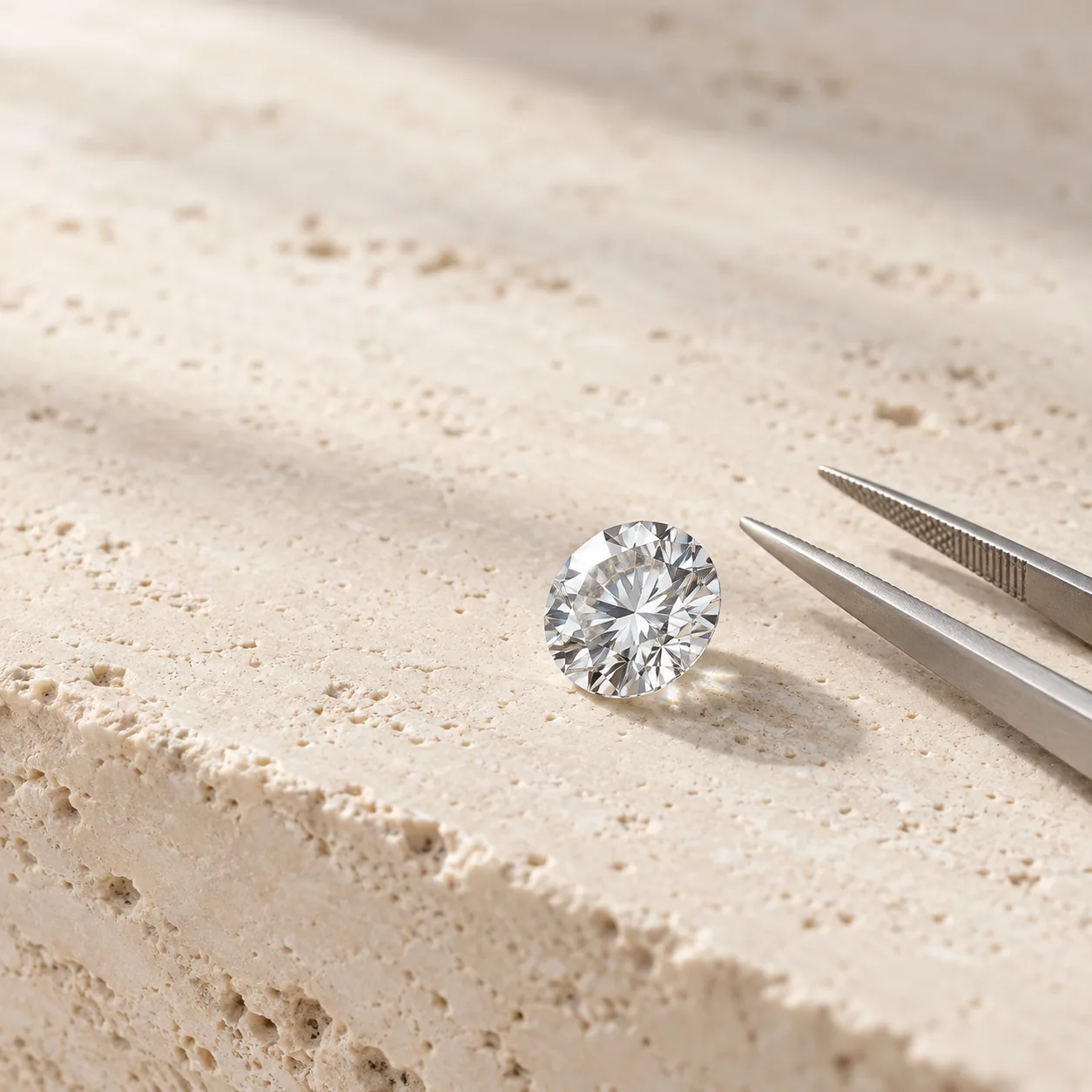
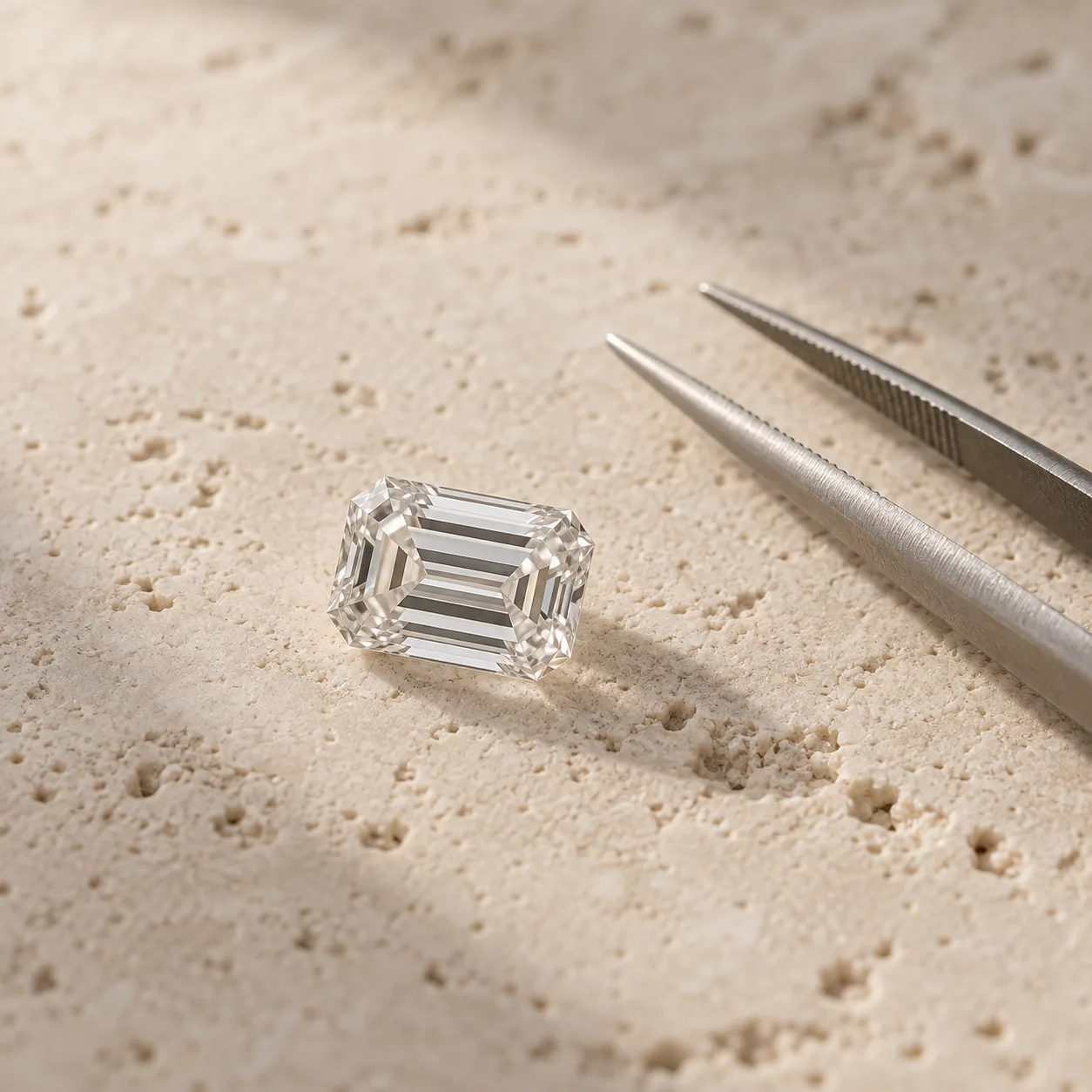
If you can't see what an extra grade adds, consider a less expensive stone. Go back one step on color or clarity, keep the cut, and see whether you can tell the difference. If you can't see a difference, you needn't pay for the higher grade.
Questions
What is the cost difference between a natural diamond and a lab-grown diamond?
Lab-grown diamonds usually cost less than natural diamonds of the same carat, cut, color and clarity. The gap varies by stone, so compare specific listings and their current prices rather than relying on a rule of thumb.
How many carats does a $5,000 budget buy?
There's no fixed carat weight for that budget. Lab-grown diamonds usually cost less than comparable natural diamonds, but size also depends on shape, cut, color and clarity. Set your budget, prioritize appearance, then filter today's listings by price and carat weight.
How much is a .25 carat diamond worth?
We don't appraise or value stones, and we can't tell you what a particular diamond is worth. If you need a figure for insurance, your insurer may ask for an independent appraisal.
Can a jeweler tell a lab-grown diamond from a natural one?
You generally cannot tell by looking at the stone with the naked eye. A jeweler can check its report and girdle inscription, while reliable identification of an unknown stone may require laboratory testing. According to GIA's fee schedule effective July 1, 2026, each lab-grown diamond in its Quality Assessment service has its girdle laser-inscribed with the term "Laboratory Grown" and its assessment number.
Is a lab-grown diamond a good investment?
No. Diamonds, lab-grown or natural, are not investments, and no one can promise you resale value. Buy one because you love it.
Sources
Nothing on this page is an appraisal or financial advice. Markdown version · RSS