
What Is a Lab-Grown Diamond? How It's Made, Graded and Compared
A lab-grown diamond is a diamond made through a technological process rather than formed over geological ages. Here's how it's made, how it's graded, and where the eye stops seeing a difference.
Written by Love & Carat, with AI assistance, from the sources listed below. How we write
In This Guide (8)
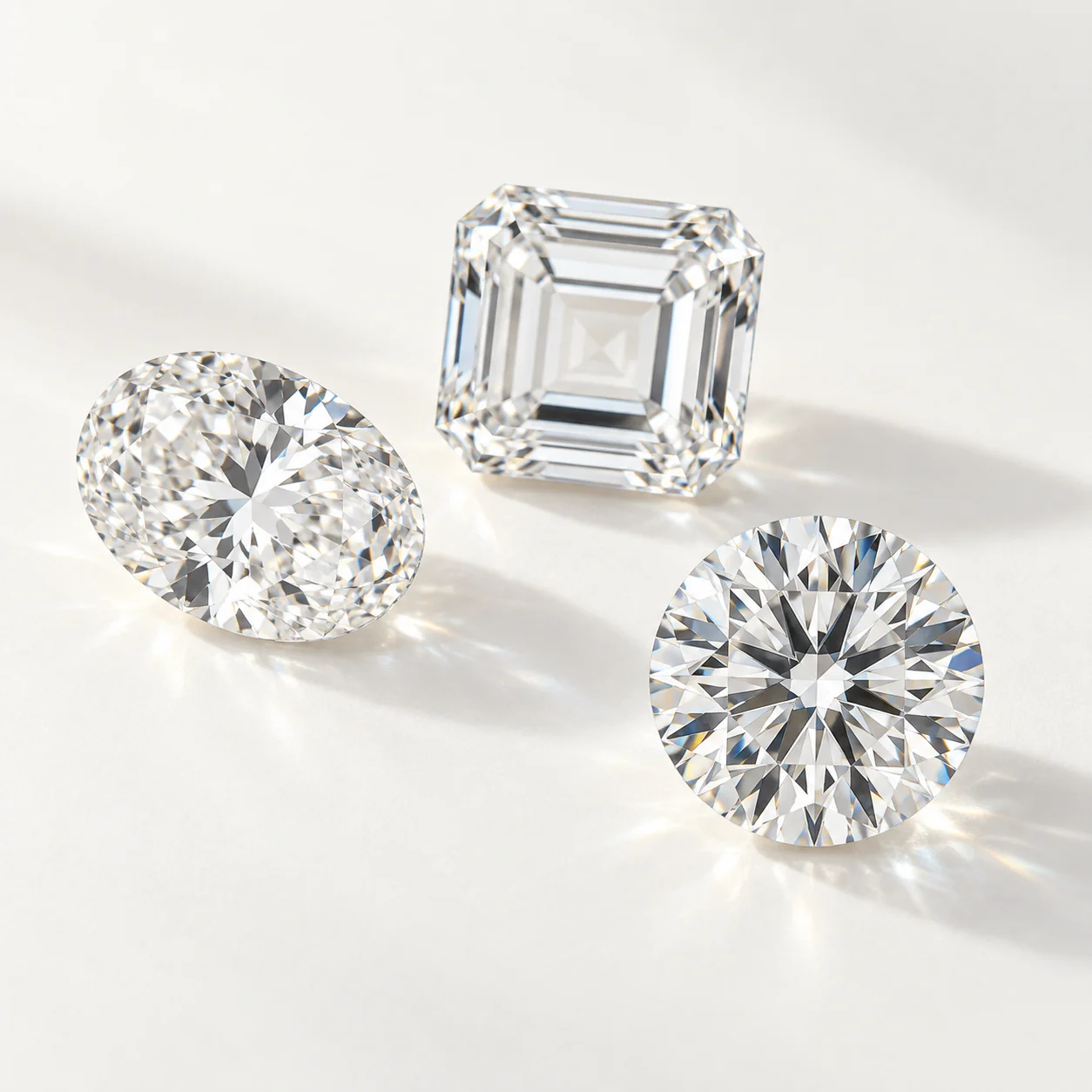
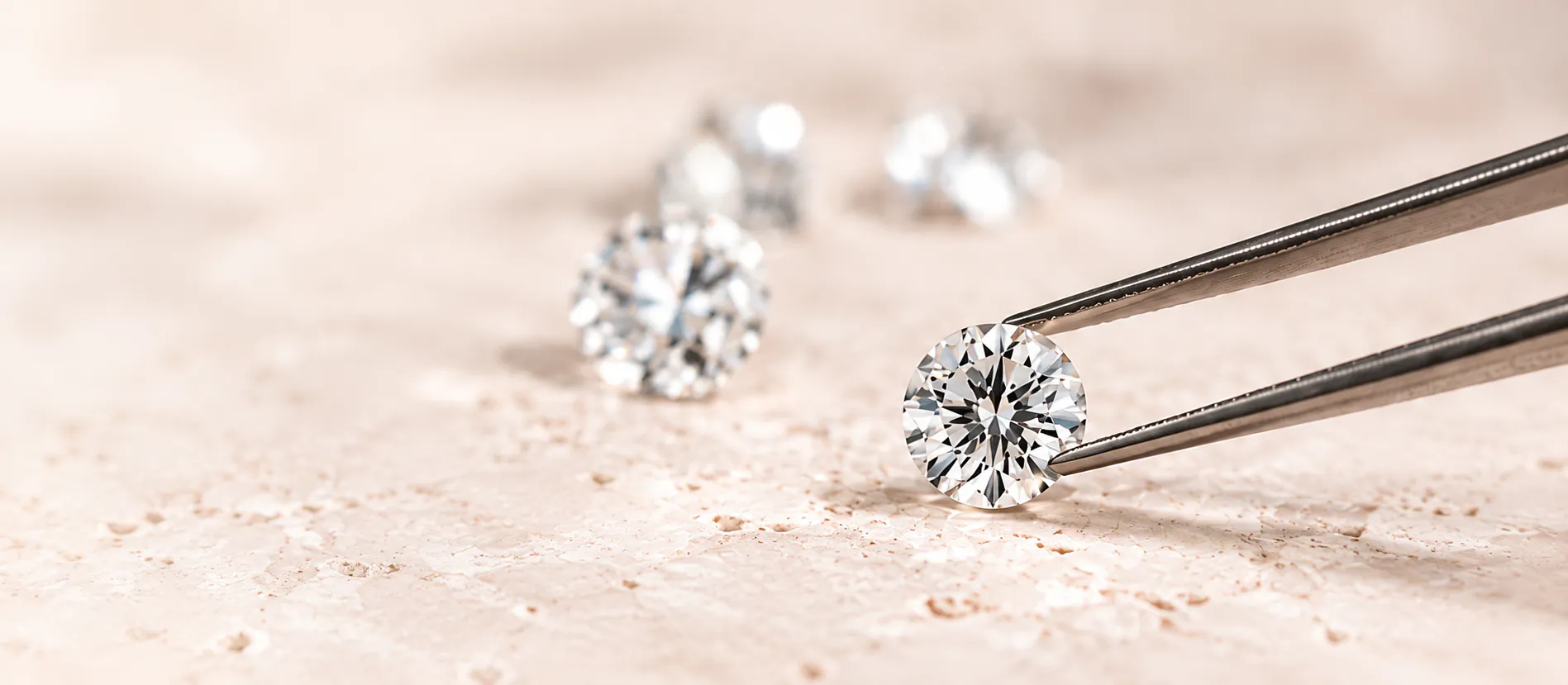
A lab-grown diamond is a diamond made by people rather than by the earth. It has the same carbon crystal structure as a natural diamond, which formed over millions to billions of years underground. It is not a fake and not a lookalike: GIA describes it as having essentially the same chemical composition, crystal structure, optical, and physical properties as a diamond found in nature.
What is a lab-grown diamond, exactly?
GIA's definition is that it is man-made, the result of a technological process, as opposed to the geological process that creates natural diamonds. The material itself is the same. Both are made of tightly bonded carbon atoms in the same crystal structure, with nearly the same optical and physical properties.
By eye, the difference can potentially be indistinguishable.
A simulant is a different thing. Stones made of glass, moissanite or cubic zirconia may look like diamond, but GIA notes they are completely unrelated to diamonds at the atomic level. A simulant can be a fine choice if you know what you're buying. It just isn't a diamond, and a lab-grown diamond is.
What separates lab-grown from natural is history, not substance. The two grow in very different environments, and that leaves tiny atomic-level irregularities called defects. GIA explains that the species, distributions and relative concentrations of those defects reveal whether a diamond is natural or lab-grown. A gemological laboratory can read them. Those growth clues aren't something you can reliably read by eye.
How are lab-grown diamonds made?
According to GIA, scientists first grew diamonds in a laboratory in the mid-1950s, though those were too small for jewelry. The first gem-quality ones followed in the 1970s, and colorless lab-grown diamonds reached the jewelry market in commercial quantities in the mid-2010s. A 2016 account cited by GIA described industrial use as the material's primary function at that time.
There are two methods.
HPHT: high pressure, high temperature
HPHT recreates some of the conditions deep in the earth where natural diamonds form. GIA describes a capsule holding a carbon source and a mixture of metals, heated to 1300-1600°C (2400-2900° F) under pressures of 5-6 GPa. That is the equivalent of 150-190 km (about 90-120 miles) below the surface. The molten metal dissolves the carbon, and carbon atoms settle onto a small diamond seed crystal, which begins to grow.
How big the crystal gets depends on things like the growth time and the size of the capsule. In its 2024 update, GIA recorded a 150.42 ct HPHT-grown crystal created in November 2021 as the largest lab-grown diamond documented at that time.
CVD: chemical vapor deposition
CVD uses a different approach. It works at near-vacuum pressure instead of crushing force. GIA describes a vacuum chamber filled with a hydrogen and carbon-containing gas, such as methane. A source of energy such as a microwave beam breaks the gas down, and carbon settles onto flat diamond seed plates. Growth happens layer by layer, like rain, as IGI puts it. GIA gives the chamber temperature as about 900-1200°C.
It isn't instant. GIA explains that the stones are taken out every few days to polish off non-diamond carbon, then put back, and that the whole process can take three or four weeks. According to IGI, it takes nearly one month to grow a CVD crystal that can yield a 1.00 carat polished stone.
Color treatment after growth
Some CVD lab-grown diamond crystals have a brownish color after growth. GIA explains that a brown color can be removed by heat treatment before cutting. In GIA's 2024 update, about 80% of CVD lab-grown diamonds submitted to GIA had undergone post-growth HPHT treatment to improve their color grade.
We don't see that as a reason to avoid a stone. If treatment information matters to you, check whether the particular report or assessment includes it; GIA's report description says its Dossier omits that detail.
Lab-grown, lab-created, synthetic: what's in a name?
You'll see several words for the same thing. GIA's technical writing has used "synthetic" for lab-grown diamonds; according to GIA's 2024 update, it began issuing reports on them in 2007. GIA's own history also mentions "lab-created" stones. You may also hear other names for a lab-grown diamond; we use "lab-grown" for clarity.
We say lab-grown, every time, for three reasons.
- It's accurate. The diamond grows as carbon accumulates on a seed crystal.
- It's clear. "Lab-grown" tells you both what it is (a diamond) and where it came from (a lab), with nothing hidden.
- It avoids confusion. "Synthetic" may suggest an imitation, but a lab-grown diamond is diamond.
For the fuller story on what the labels mean, including how the FTC approaches it, see our guide to whether lab-grown diamonds are real diamonds.
How is a lab-grown diamond cut and graded?
Once the rough crystal comes out of the press or chamber, it is cut and polished by a diamond cutter, just as a mined rough would be. CVD crystals often have a rough black graphite edge that is cut away first.
GIA identifies lab-grown origin and provides a distinct quality assessment for lab-grown diamonds. GIA's description of its Laboratory-Grown Diamond Reports explains how those reports evaluated the 4Cs; its current service page instead describes a distinct lab-grown diamond quality assessment. For any stone, check which grades its document actually supplies, including cut, color, clarity and carat where listed. Here is what to look for on the report:
- Identity. GIA says its lab-grown diamond quality assessment has a distinct format from natural-diamond reports. IGI's report likewise authenticates the man-made nature of the stone.
- Growth method and treatment. GIA's description of its Laboratory-Grown Diamond Reports says the full version includes growth method and post-growth treatment, while the Dossier omits those details. GIA's current service page describes quality assessments instead; check the actual document for the details it provides.
- The inscription. GIA says it laser-inscribes the girdle with "Laboratory-Grown" and the quality assessment number. Compare the inscription with the stone's document and use GIA's verification service.
- Digital access. GIA describes its Laboratory-Grown Diamond Reports as digital; consult the document and GIA's verification service for the stone you're considering.
Every diamond we sell comes with a GIA or IGI grading report. Our glossary entry on certificates walks through reading one line by line.
How does a lab-grown diamond compare with a mined one?
| Lab-grown diamond | Natural diamond | |
|---|---|---|
| Material | Crystalline carbon | Crystalline carbon |
| Formation | Technological growth process | Geological process over millions to billions of years |
| Telling them apart | Specialized testing | Specialized testing |
| Price | Usually less | Usually more |
In appearance and everyday wear, a lab-grown diamond and a comparable natural diamond can be remarkably alike. The difference may be invisible to the eye, but specialized instruments and gemological laboratory testing can distinguish the two; GIA says its iD100 can do so in under two seconds.
The differences are in the story and the price. GIA puts it well: the two are gems with vastly different creation processes and stories, and people buy each with different things in mind. If an ancient stone from deep in the earth matters to you, that is a perfectly good reason to choose natural. If you want the look, the hardness and the fire for less money, lab-grown is the sensible pick.
One thing is the same for both. Neither is an investment. Buy a diamond because you love it, never on a promise of resale value.
GIA has reported a recent period of relatively little change in lab-grown diamonds. In GIA's 2024 update, it reported relatively few changes in lab-grown diamonds in the preceding five years. That suggests developments had largely stabilized, at least for then.
So how should you spend on a lab-grown diamond?
Because lab-grown diamonds usually cost less than comparable natural ones, it's tempting to go straight for the top grades. Our advice is the opposite: spend where the eye can see it, and save where it can't.
- Put the money into the cut. Cut drives sparkle more than anything else on the report. A well-cut stone in a modest color grade may look better than a poorly cut stone with a top color grade.
- Aim for eye-clean, not flawless. Beyond the point where you can't see inclusions without magnification, higher clarity grades mostly add cost. Our guide to eye-clean explains where that line sits.
- Consider near-colorless, not necessarily colorless. Compare stones in the setting you have in mind, especially yellow or rose gold; if you can't see a difference, choose the less expensive grade.
- Choose a size you'll enjoy, not a number. Compare well-cut stones on either side of a round carat weight; if they look the same to you, choose the less expensive one.
If you're choosing a center stone now, these are good places to start. Browse more on our center stones page.
Stones That Fit This Guide
View all
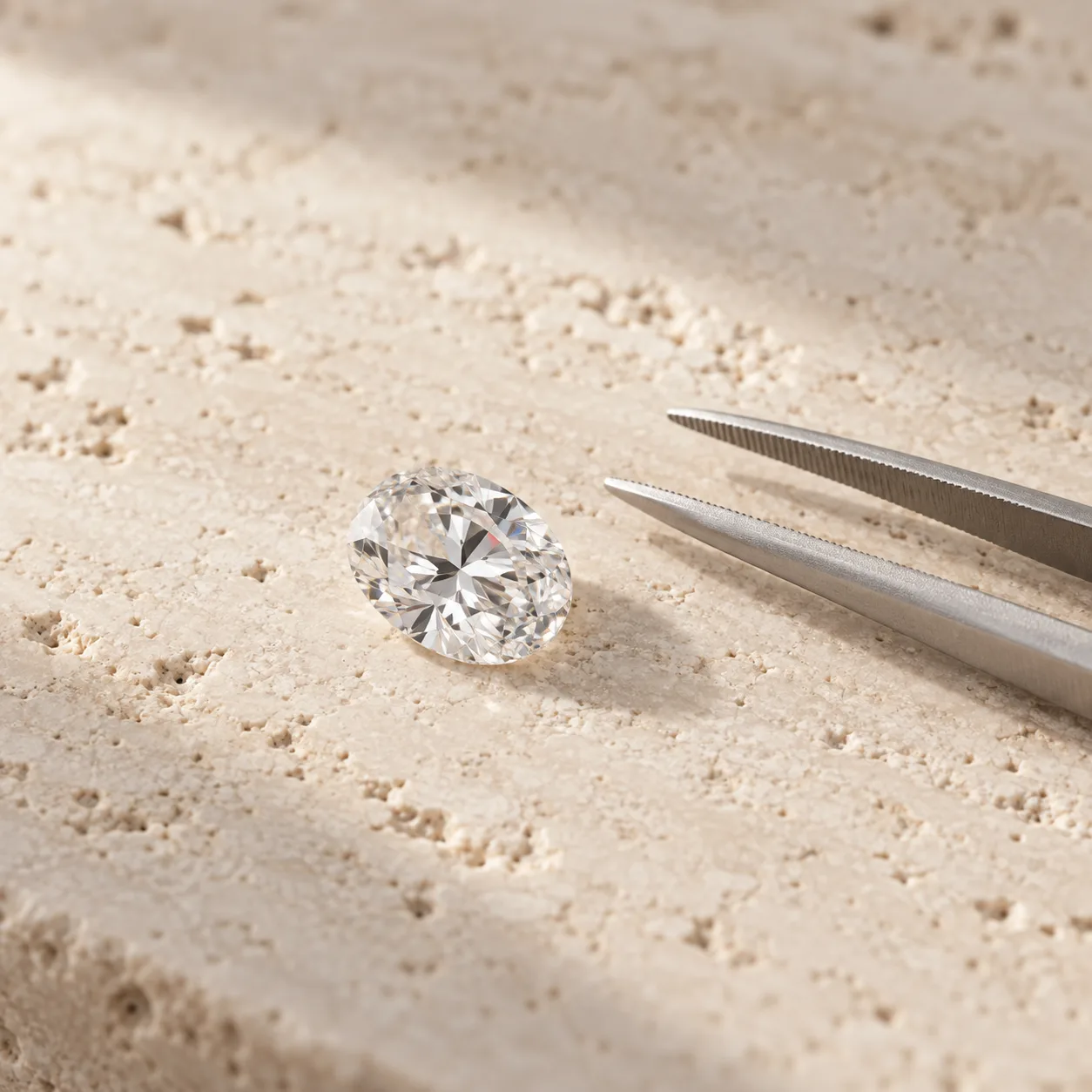
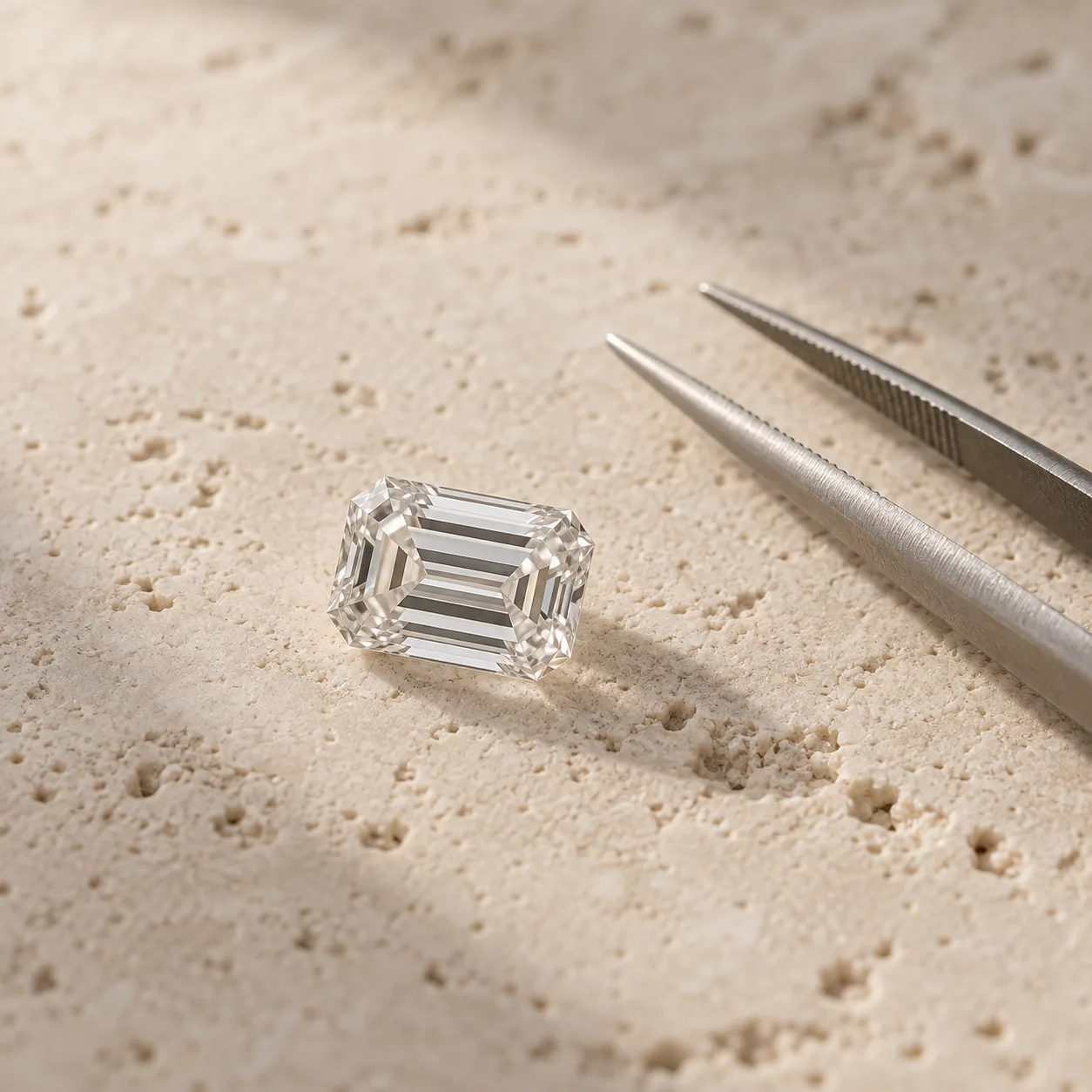
A lab-grown diamond is a diamond: buy the cut, check the report, and don't pay for grades your eye can't see.
Questions
Is a lab-grown diamond a fake diamond?
No. A lab-grown diamond is diamond: tightly bonded carbon in the same crystal structure as a mined stone. Simulants such as cubic zirconia, glass and moissanite are different materials; GIA tests diamonds it reports on to confirm their identity.
Is it worth buying a lab-grown diamond?
If you want the look of a diamond for less money, it is a sensible choice, because it usually costs less than a comparable natural stone. Buy it because you love it, not as an investment. No diamond is one, and nobody can promise you resale value.
What are the downsides of lab-grown diamonds?
You cannot reliably tell origin by eye, so check the GIA or IGI grading report accompanying the diamond. Post-growth treatment is common among CVD lab-grown diamonds submitted to GIA; if that detail matters to you, check whether the particular document includes it. Some buyers also prefer the story of a stone formed deep in the earth.
How long does it take to grow a lab-grown diamond?
GIA says the CVD growth process can take three or four weeks. According to IGI, it takes nearly one month to grow a CVD crystal that can yield a 1.00 carat polished stone.
Can a jeweler tell the difference without a lab?
Not by eye. GIA makes a desktop instrument, the GIA iD100, that helps jewelers separate natural diamonds from lab-grown diamonds and simulants in under two seconds, and full identification is done at a gemological laboratory.
Sources
- HPHT and CVD Diamond Growth Processes | How Lab- ...
- Laboratory-Grown Diamonds: An Update on Identification and Products Evaluated at GIA
- Simulants, Moissanite and Lab-Grown Diamonds | GIA 4Cs
- Laboratory-Grown Diamond Report (LGDR) by GIA
- IGI - What is a Lab Grown Diamond (web)
- More Info About Laboratory-Grown Diamonds | Gemological Institute of America - 4Cs
- Laboratory-Grown Diamond Services Details
Nothing on this page is an appraisal or financial advice. Markdown version · RSS