
Are Lab-Grown Diamonds Real Diamonds? What the FTC and Labs Say
Yes, a lab-grown diamond is diamond. Here is what the FTC says about the name, how labs tell grown from mined, and what that means when you buy.
Written by Love & Carat, with AI assistance, from the sources listed below. How we write
In This Guide (8)
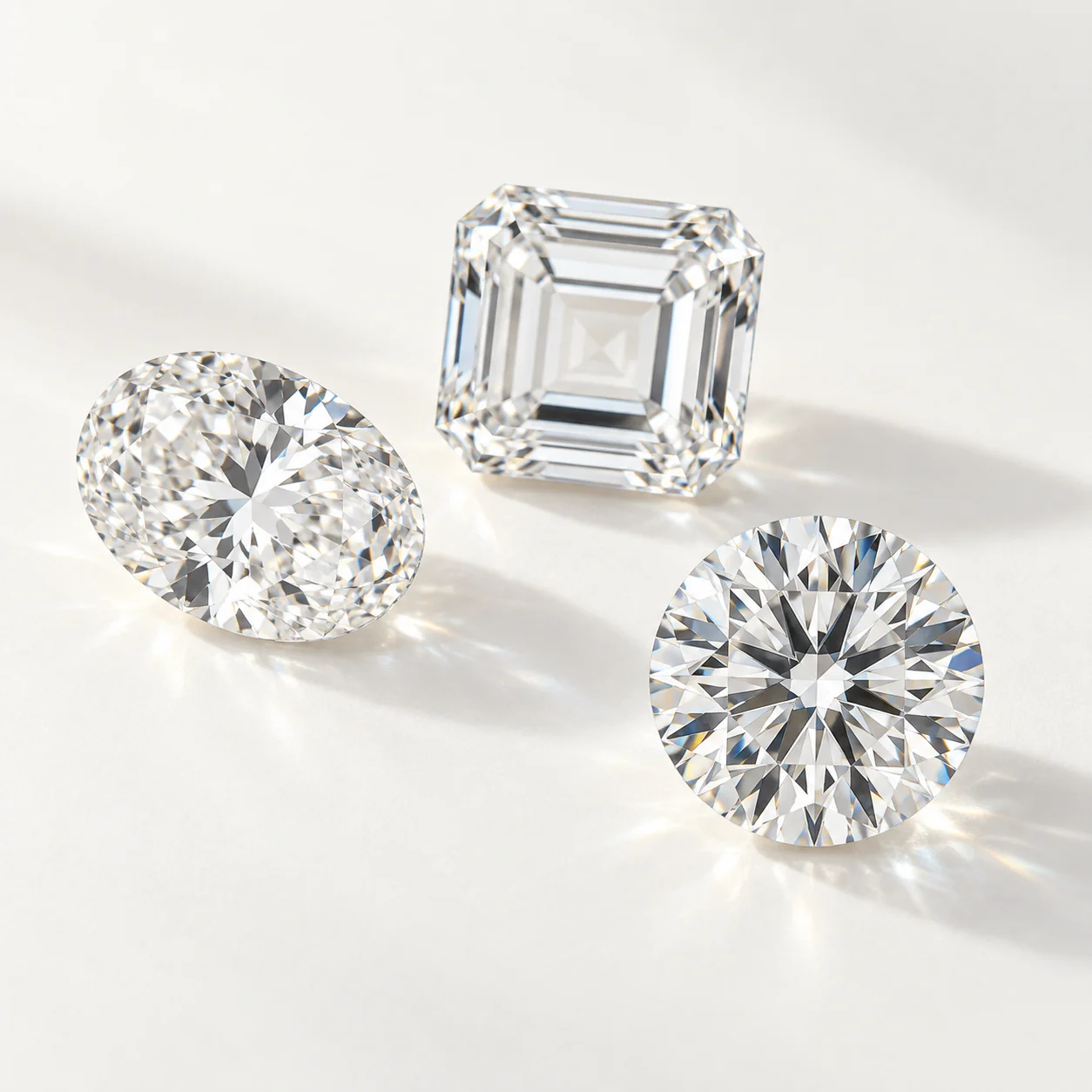
Yes. A lab-grown diamond is diamond: crystallized carbon with essentially the same physical and optical properties as a natural diamond. How much it sparkles depends on the cut. In its 2018 revisions to the Jewelry Guides, the Federal Trade Commission recognized that lab-grown stones with essentially the same properties as mined stones are diamonds. What it asks is that sellers say plainly the stone was grown, not mined.
So when someone asks "is a lab-grown diamond real?", the honest answer is that it is diamond, with a different origin. Here is what that means on paper, in a laboratory and at the checkout.
What makes a diamond a diamond?
A diamond is defined by what it is made of and how its atoms are arranged, not by where it formed. The FTC's definition, in Section 23.12(a) of the Jewelry Guides as published on August 16, 2018, reads:
A diamond is a mineral consisting essentially of pure carbon crystallized in the isometric system.
The same definition gives the physical fingerprint: a hardness of 10, a specific gravity of approximately 3.52 and a refractive index of 2.42. A lab-grown diamond meets that definition. The same material has the same basic optical properties and resistance to scratching; a particular stone's sparkle and durability also depend on its cut and how it is worn.
What differs is the story. A mined diamond formed deep in the earth. A lab-grown diamond was grown in a controlled process, by methods the laboratories call CVD (chemical vapor deposition) and HPHT (high pressure, high temperature). Our glossary entry on lab-grown diamonds explains both in more detail.
What does the FTC say about calling it a diamond?
The FTC's answer came with the final revisions to the Jewelry Guides, approved on July 24, 2018. In the notice published in the Federal Register on August 16, 2018, the Commission explained why it took the word "natural" out of its definition of diamond:
lab-created products that have essentially the same optical, physical, and chemical properties as mined diamonds are also diamonds.
Being a diamond does not mean the origin can go unsaid. The FTC's business guidance, In the Loupe (July 2019), tells sellers of laboratory-created diamonds to describe them as "laboratory-grown," "laboratory-created," "[manufacturer name]-created" or a phrase of like meaning. That wording should come immediately before the word "diamond" and be equally conspicuous. The same brochure makes a few other points:
- Imitations are different. A simulant should be called "imitation" or "simulated," making clear it is neither a laboratory-created nor a mined diamond.
- "Faux" is not enough. In its July 2019 gemstone guidance, the FTC says the term does not adequately convey that a stone is not mined; use clear origin wording instead.
- "Cultured" needs a qualifier. Under § 23.12(c)(3), the word may describe a laboratory-created diamond only if a clear disclosure such as "laboratory-grown" makes plain that the stone is not mined.
The Guides also include a separate section, § 23.27, on the misuse of words such as "real," "genuine" and "natural." One nuance matters: the Guides set out the FTC's current thinking and, in their own words, do not bind the FTC or the public. The Commission can still act under Section 5 of the FTC Act against claims that are unfair or deceptive. That is the text as shown in the eCFR on September 30, 2026; check the eCFR for the current version.
This is why you will always see "lab-grown" in front of "diamond" on our pages. It is the plain truth about the stone, and it is how the FTC asks the trade to talk.
How do laboratories tell lab-grown from mined?
Not by eye, and not with a loupe. As GIA puts it, lab-grown and natural diamonds are essentially chemically and optically the same, so traditional gemological observation and instruments cannot tell them apart. GIA uses devices such as its iD100 and other instrumentation, and advises sending a stone to a gemological laboratory to confirm its origin.
GIA's Summer 2024 update on laboratory-grown diamonds describes how that detective work has become harder. Colorless to near-colorless lab-grown diamonds share so many properties with mined ones that independent gemologists and appraisers have needed to invest in powerful analytical equipment or depend on laboratories. Labs look for traces of how a stone grew. One example is a silicon-related signal long used to flag CVD growth, though GIA notes it is becoming weaker or undetectable in more recent stones.
It is also worth knowing what a simple tester can and can't do. The FTC notes that thermal testers are used to distinguish diamonds from cubic zirconia, but may not accurately identify moissanite, a laboratory-created stone that resembles diamond but is a different material. A tester like that is no way to tell whether a diamond was grown or mined.
How does a grading report label a lab-grown diamond?
A lab-grown diamond is graded for the same things as a mined one, such as carat, color and clarity. The difference is that its report identifies it as laboratory-grown. GIA, for example, issues a Laboratory-Grown Diamond Report. Every lab-grown diamond we sell is graded by GIA or IGI and laser-inscribed, so the stone and its paperwork can be matched. Our certificate guide walks through a report line by line.
When you read one, check these things:
- The origin is stated plainly. The report should say the diamond is laboratory-grown. If it doesn't, ask why before going further.
- Check for treatment information. According to GIA's 2024 update, about 80% of CVD-grown diamonds submitted to GIA had undergone post-growth HPHT treatment to improve color. Read the report for any treatment notes, and ask the seller about treatments and applicable disclosures; do not assume a blank comments section means there was no treatment.
- The inscription matches. The inscription on the stone should match the report. Ask the grading laboratory how to confirm a report is authentic.
- The grades are the ones you were quoted. The grades on the report should line up with the listing.
What does "real" mean for price and resale?
"Real" tells you what the stone is made of. It tells you nothing about what the stone will be worth later. We don't value stones and we don't give investment advice. Diamonds, mined or lab-grown, are not investments. Nobody can honestly promise you a resale price, and you should be wary of anyone who tries.
What "real" does mean is practical. A lab-grown diamond is the same material as a mined one, with the same hardness. It can be graded and set like any diamond. For most people buying an engagement ring, those are the things that matter.
Compare prices for lab-grown and natural diamonds with similar grades and appearance; if the lab-grown option costs less, you can put the difference toward the setting or keep it. Whatever your budget, we would rather help you skip grades you cannot see than pay for them.
A lab-grown diamond is diamond: buy it for how it looks and wears, not for what someone says it might be worth later.
What should you check when buying one?
Once you've settled on lab-grown, the question stops being "is it real?" and becomes "which one?" That's where you can save without anyone noticing.
- Put the money into the cut. Cut drives sparkle more than any other grade. Our guide to cut shows what to look for.
- Stop paying for color and clarity your eye can't see. A stone that is eye-clean at normal viewing distance looks the same on the hand as one graded several steps higher. We will point you to the lower grade whenever it looks identical.
- Insist on a report from a recognized lab. We only sell certified stones, and we'd never suggest skipping a certificate to save money. The report is how you know what you have.
- Read the treatment information. A treated diamond is still diamond. Ask about any treatment; the FTC's July 2019 guidance calls for disclosure in certain circumstances, including when treatment requires special care.
- Know your options if it isn't right. Check the returns policy before you buy, so you know how returns work if the stone isn't what you pictured.
If you'd like to see how this plays out on actual stones, browse our center stones for engagement rings, or start with one of these.
Stones That Fit This Guide
View all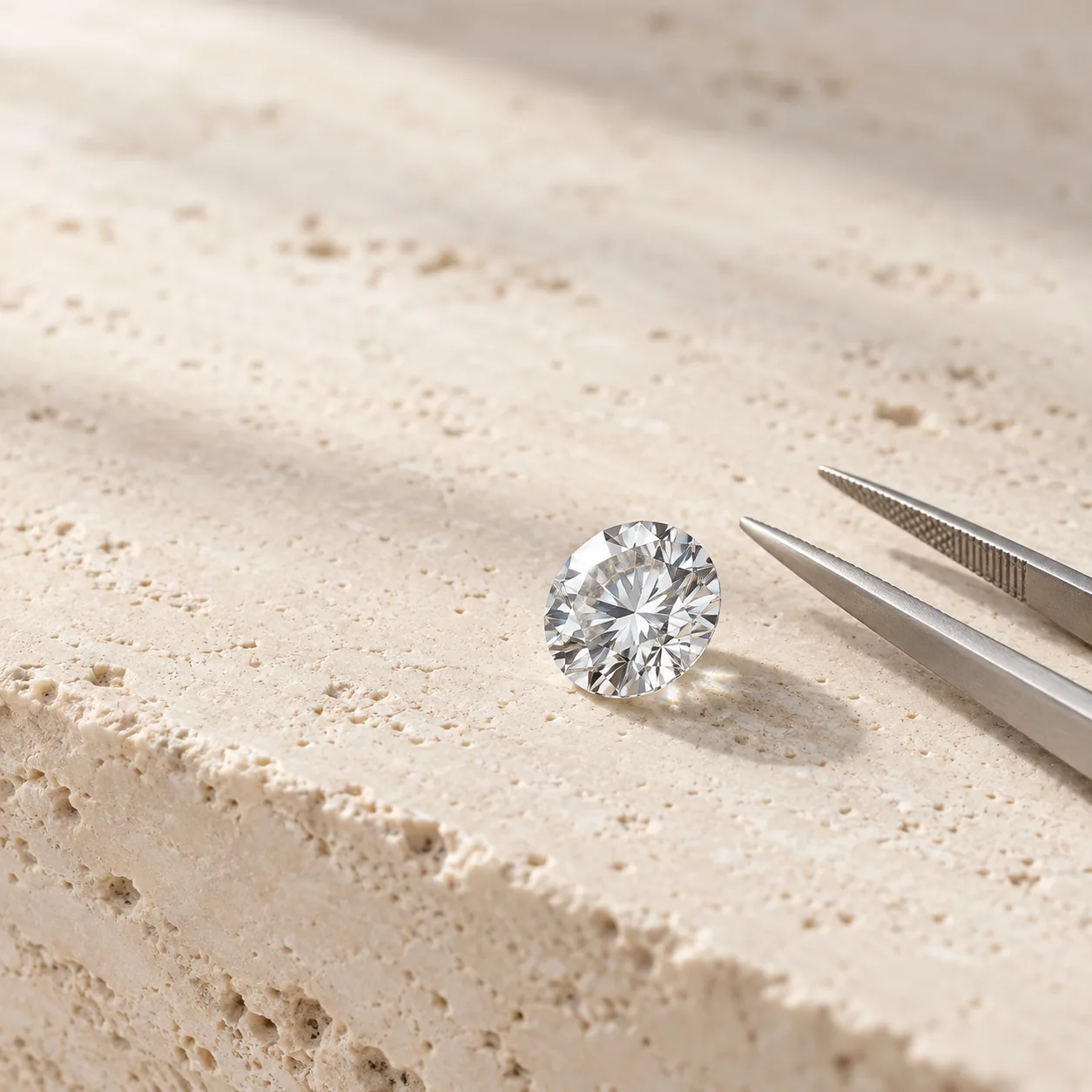
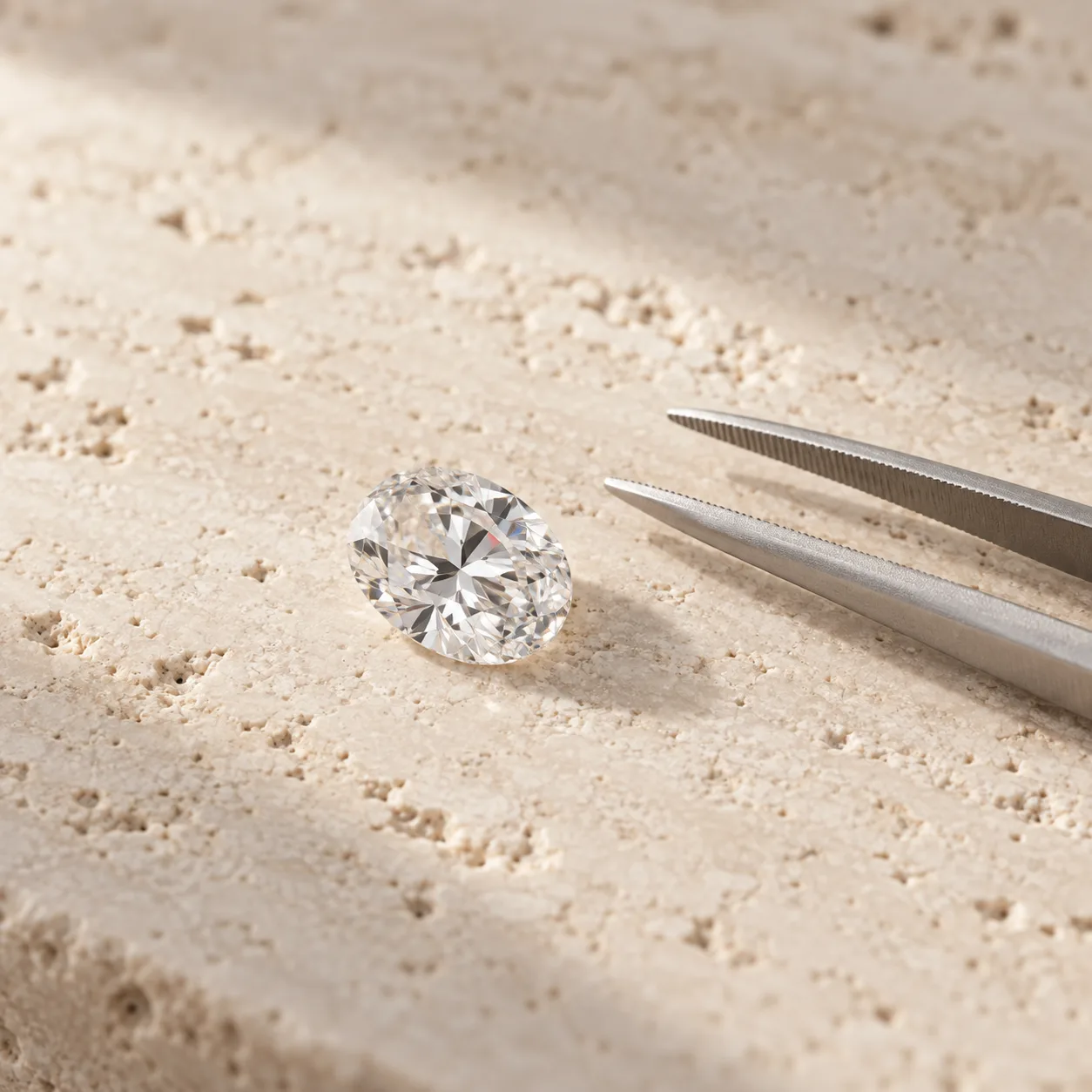
Compare lab-grown and natural round diamonds of similar size and cut to see how close they can look. Check each stone's report and listed price rather than assuming either will sparkle identically or cost a particular amount.
Questions
Is a lab-grown diamond considered fake?
No. Unlike a lab-grown diamond, simulants such as cubic zirconia and moissanite are different materials. The FTC's July 2019 brochure says diamond imitations should be described as "imitation" or "simulated," while a lab-grown diamond should be described as "laboratory-grown" or similar.
Is a lab-grown diamond worth buying?
If you like the look and wear of diamond, a certified lab-grown diamond can be a sensible choice. Compare the stones and their prices; buy for how the stone looks on the hand, not as a store of value, and check its report from a recognized lab.
What are the disadvantages of lab-grown diamonds?
Diamonds are not investments; don't count on a resale price. You cannot reliably tell lab-grown from natural origin by eye, so check the laboratory report and match it to the stone. Some lab-grown diamonds undergo post-growth treatment; check the report for notes and ask the seller about treatments.
Have attitudes toward lab-grown diamonds changed?
GIA described a lab-grown diamond presented by India's Prime Minister to First Lady Jill Biden in 2023 as an example of changing attitudes. A high-profile gift does not tell us who buys these stones.
What is the lifespan of a lab-grown diamond?
A lab-grown diamond has the same inherent hardness as a natural diamond, but neither stone is unbreakable. An exposed edge or point can chip if struck, so consider a protective setting and check the prongs occasionally.
Sources
- eCFR :: 16 CFR Part 23 -- Guides for the Jewelry, Precious Metals, and Pewter Industries
- Federal Register :: Guides for the Jewelry, Precious Metals, and Pewter Industries
- Jewelry Guides | Federal Trade Commission
- 40665
- In the Loupe: Advertising Diamond, Gemstones and Pearls | Federal Trade Commission
- How do I identify laboratory-grown diamonds?
- Laboratory-Grown Diamonds: An Update on Identification and Products Evaluated at GIA
Nothing on this page is an appraisal or financial advice. Markdown version · RSS