Carat Weight: How Big a Diamond Really Looks on the Hand
Carat measures weight, not width. Here is how to compare visible size on grading reports, and why a stone a few points lighter may look similar and cost less.
Written by Love & Carat, with AI assistance, from the sources listed below. How we write
In This Guide (9)
Carat is a measure of weight, not size. A metric carat is defined as 200 milligrams, so a carat figure tells you how heavy a diamond is, not how wide it will look on a hand. The size you see depends on how that weight has been cut and shaped, which is why two stones of the same carat weight can look quite different.
That is the most useful thing to know before you look at any carat size chart. A chart is a rough guide. The grading report, the cut and your own hand tell you the rest.
What does a carat actually measure?
Diamond carat weight is a precise unit. One carat is equal to 0.2 grams, about the same weight as a paperclip, and the modern metric carat was adopted by the United States in 1913 and other countries soon after. The name comes from the carob seed, which early traders used as counterweights on their scales.
According to GIA, each carat divides into 100 points, the way a dollar divides into pennies. A diamond that weighs 0.25 carats may be called a "twenty-five pointer", and anything over a carat is spoken as carats and decimals. As GIA illustrates, a 1.08-carat diamond is spoken as "one point oh eight carats."
Don't confuse carat with karat. Karat, as in 18K gold, measures the purity of gold, not the weight of a stone.
How to read carat weight on a grading report
Every diamond we sell comes with a GIA or IGI grading report, and the carat weight is one of the first lines you'll see. Weights are typically given to two decimal places, such as 0.76 ct or 1.57 ct.
Behind that number is a finer measurement. GIA weighs diamonds to the fifth decimal place and then rounds, and its rounding is stricter than ordinary rounding: it rounds up to the next hundredth only if there's a nine in the thousandth place. In GIA's example, a diamond weighing 1.769 ct is reported as 1.77 ct, but one weighing 1.768 ct is reported as 1.76 ct.
The line we'd read just as closely is the measurements. An optical device captures the diamond's length and width, and those dimensions appear on the report alongside the weight. They are the best guide to face-up size, so when you compare two stones for size, compare their measurements, not their carats.
Why the same carat weight can look bigger or smaller
A cut diamond carries its weight throughout its shape: in the crown you see face-up, and in the deeper part below the girdle that you don't. How that weight is shared out decides the face-up size.
GIA's example is a poorly cut stone that is too deep and has weight hidden below the girdle. You pay for that weight, but you won't see it once the diamond is set.
For standard round brilliants, total depth is one of the proportions GIA measures when it grades cut. Its cut grading booklet shows that a total depth of 57.5% to 63.0% is the range in which an Excellent grade remains possible. It is not a guarantee: a stone in that range can still grade anywhere from Excellent to Poor, depending on its other proportions. GIA's assessment also checks weight ratio, which prevents "thick makes". Our guide to table and depth explains how to read those percentages, and our piece on diamond cut grades explains why a well-cut stone also looks brighter.
Shape changes the impression too
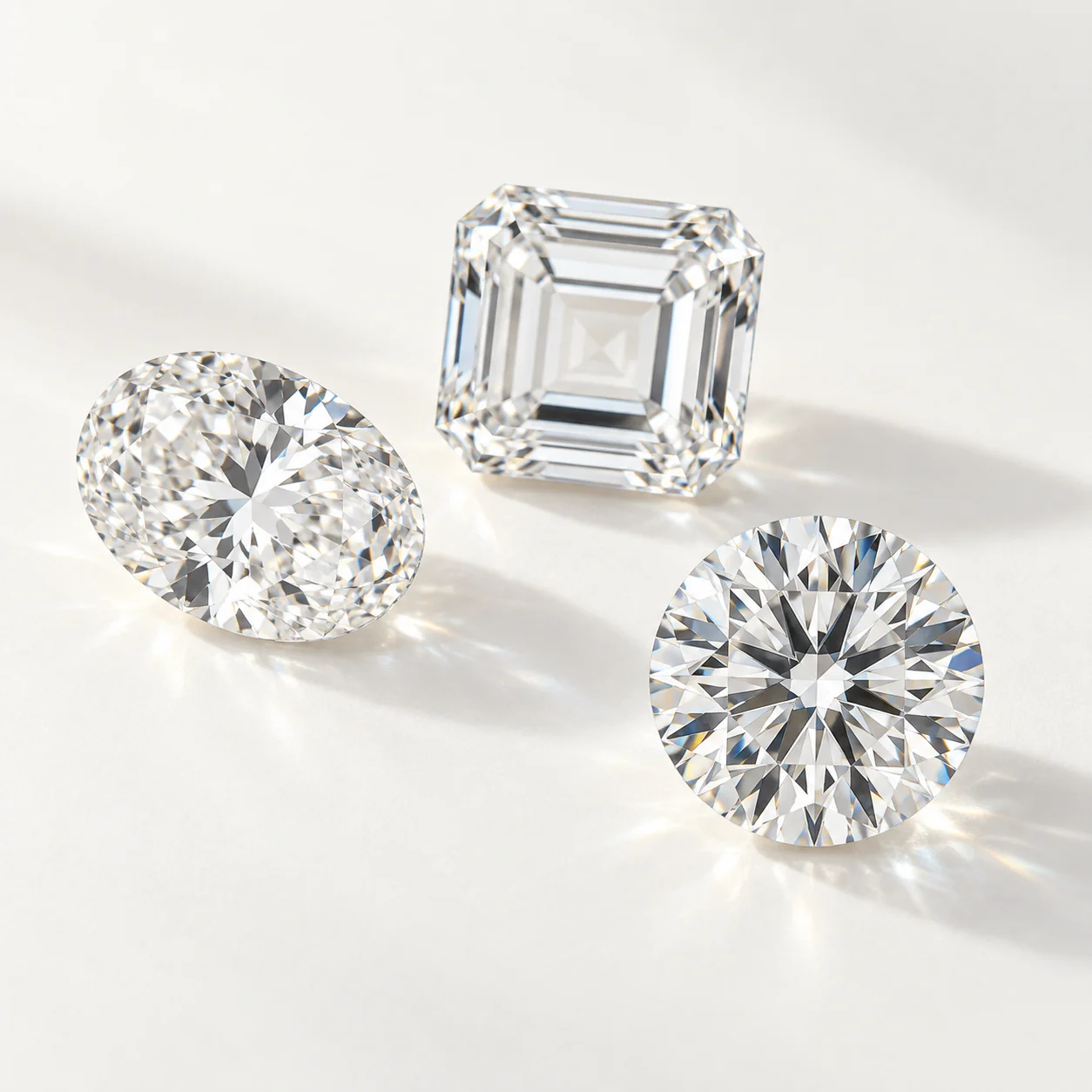
Elongated shapes, such as ovals, pears, marquises and long emerald cuts, spread their weight along a longer outline. To many eyes they look larger face-up than a round of similar weight, and they lengthen the look of a finger. If size on the hand matters to you, our oval and pear shaped diamonds are worth a look. Use the report's length and width to work out the length-to-width ratio, then check whether the outline looks the way you picture it.
Material matters if you're comparing a diamond with a colored gemstone. Size depends on the gem material's specific gravity, and diamond's is lower than ruby's, so a one-carat diamond is larger than a one-carat ruby.
What does a 1 carat diamond look like?
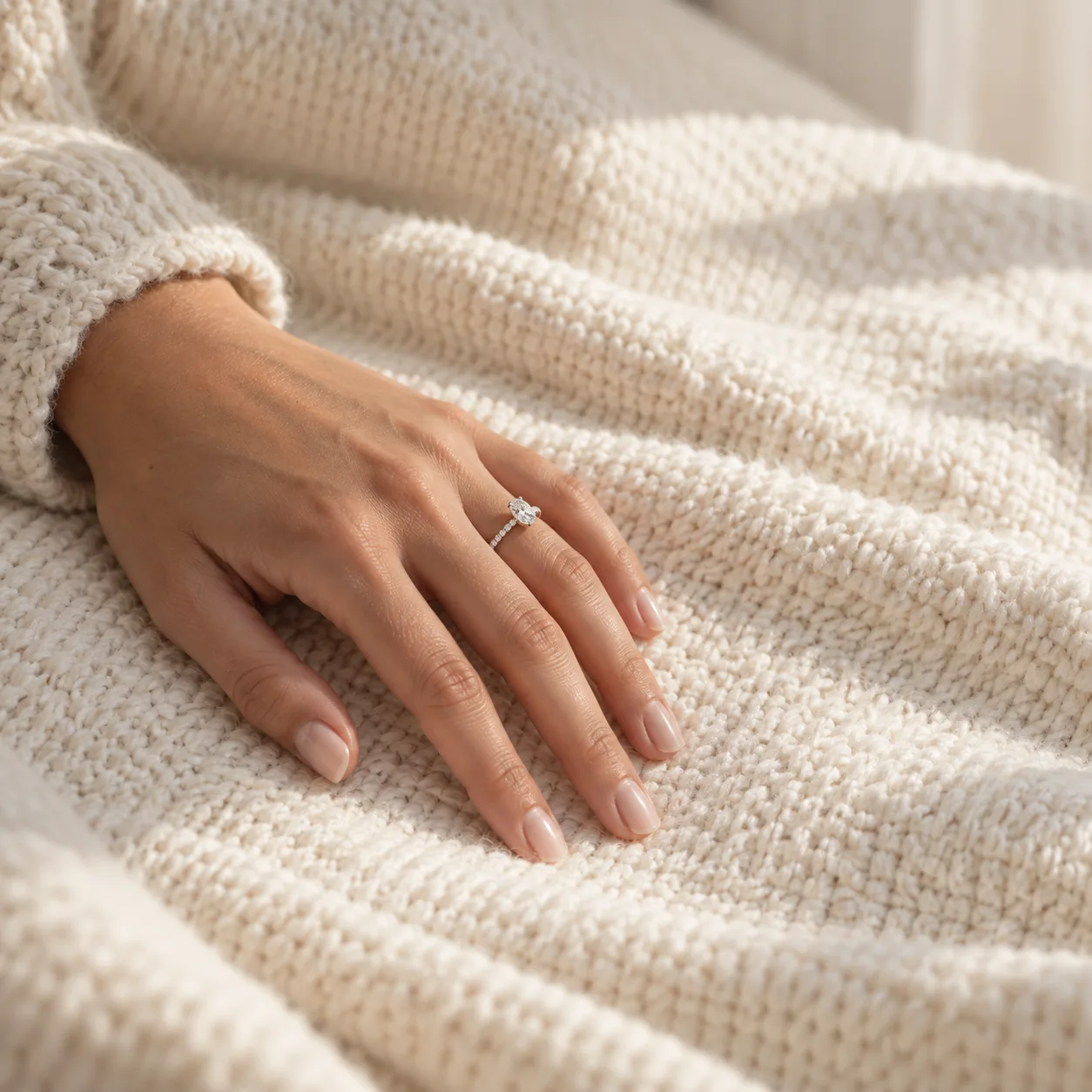
A well-cut one-carat diamond can look substantial on the hand, but its apparent size depends on the finger and the setting. For context, GIA notes that the majority of diamonds used in fine jewelry weigh one carat or less. Among natural diamonds, GIA says, only one in 1,000 diamonds weighs more than a carat.
How big that same stone looks depends on more than the stone itself.
- Finger size. The same diamond covers more of a slim finger than a broad one, so it looks larger on a smaller hand.
- Band width. A fine band makes the center look bigger by contrast. A wide band makes it look smaller.
- Prongs and setting. Slim prongs show more of the stone. A thin metal rim, or a halo of small stones, can make the center read wider from a distance.
- Side stones. A three-stone ring or a pavé band adds sparkle around the center. If a ring is described by total carat weight, the combined weight of all its diamonds, check the center stone's own weight too. Our page on side stones for engagement rings goes through the options.
As for whether a larger stone, say two carats, is "too much", there is no rule. It depends on the wearer's hand, style and day. A lower setting can feel less prominent in daily wear; a taller setting makes the stone stand out more.
The price steps at round weights, and the stones just under them
For natural diamonds, GIA says that, all else being equal, price increases with carat weight, because larger stones are rarer and more sought after. The increase isn't smooth. GIA describes "magic sizes" at 0.25 ct, 0.50 ct, 0.75 ct and 1.00 ct, where demand pushes the price per carat up, and its natural-diamond buyer's guide adds 1.00, 1.50, and 2.00 carats to the list. These GIA examples do not establish the same price steps for lab-grown diamonds, so compare actual listings instead of assuming they apply.
GIA illustrates the effect with two D-color round brilliants of identical clarity and cut, one at 0.96 ct and one at 1.02 ct. The difference in size is almost imperceptible, yet the heavier stone's price may be as much as 20 percent more, simply for crossing the one-carat line.
Some people want the round number for what it means to them, and that is a fine reason to pay for it. If the number itself doesn't matter to you, compare stones just below the threshold; a similar-looking stone may cost less.
Carat tells you the weight; the cut and the report's measurements tell you the size you'll actually see.
The sensible way to spend on carat
Our advice runs in this order.
- Pick the look first. Decide on shape and how large you want it to read on the hand. Then think about weight.
- Put money into cut before carat. A well-cut stone shows its weight face-up and looks brighter. A deep, heavy stone hides weight you've paid for.
- Look a few points under the round numbers. As above, that is where a near-identical stone can cost less.
- Compare like with like. GIA suggests using carat weight to compare the per carat price for each stone when color, clarity and cut grades match. Keep the shape and the diamond type the same too.
- Consider lab-grown. A lab-grown diamond usually costs less than a comparable natural one, which can leave room for more size or a better cut. Our honest comparison of lab-grown and natural diamonds sets out the trade-offs.
Keep in mind what GIA says about chasing size: if you want the largest diamond you can afford, you'll have to sacrifice clarity, color and/or cut. We'd give up a little weight before we'd give up cut. Color and clarity have more room to bend, as long as the stone looks clean and white to the eye.
Choosing a stone
If you're starting around one carat, compare a round with an oval at a similar budget and see which reads bigger to you. If you're drawn to something longer, an emerald cut shows its outline clearly.
Questions
How do I figure out how big a carat size will look?
Use the length and width printed on the grading report rather than the carat figure. Compare two stones by their face-up measurements, and keep in mind that your finger and the setting will change the impression too.
Is a 2 carat diamond too big or too flashy?
That depends on the wearer's hand, style and daily routine, not on any rule. A low setting and a simple band make a larger stone feel quieter. A tall setting makes it feel bolder.
How much carat weight can my budget buy?
There is no single answer, because price depends on all four Cs and on whether the diamond is lab-grown or natural. A lab-grown diamond usually costs less than a comparable natural one, so the same budget can reach a larger lab-grown stone. Compare the total prices, report measurements and appearance of stones with similar grades and the same shape.
What size diamond looks tacky?
Size alone rarely does. A stone tends to look wrong when it is out of proportion to the hand or the band, or when it is cut badly and looks dull. A well-cut stone in a balanced setting looks considered at almost any weight.
Sources
Nothing on this page is an appraisal or financial advice. Markdown version · RSS