Lab-Grown Diamond Vs. Moissanite Vs. Cubic Zirconia: The Difference
A lab-grown diamond is diamond. Moissanite and cubic zirconia are different materials made to look like one. Here is how to tell them apart and what each is good for.
Written by Love & Carat, with AI assistance, from the sources listed below. How we write
In This Guide (9)
A lab-grown diamond is a diamond. It is grown above ground instead of mined, but it is the same carbon crystal. Moissanite and cubic zirconia (CZ) are different materials that are made to look like diamond. The trade calls them simulants. All three can be lovely, but they wear, sparkle and age differently, and only one of them is diamond.
Is a lab-grown diamond the same as moissanite or cubic zirconia?
No. This is the most common mix-up in the whole subject, so it is worth being precise.
A lab-grown diamond has the same crystal structure as a natural diamond: tightly bonded carbon atoms, with nearly the same chemical, optical and physical properties. GIA says that by eye the difference from a mined diamond can be indistinguishable. What separates them is their growth history, which laboratories detect with advanced instruments. Our lab-grown diamond glossary entry covers how they are made.
Simulants are another matter. GIA says common simulants, including glass, moissanite and cubic zirconia, are completely unrelated to diamonds at the atomic level and are easily identifiable by their optical and physical characteristics. So "lab simulated diamond" and "lab-grown diamond" are not two names for the same thing. A simulant may be made in a lab, but it is not diamond.
That isn't a put-down of moissanite or CZ. As GIA puts it:
Purchasing a simulant can be a great option as long as it is an informed decision.
What is each one made of?
- Lab-grown diamond: carbon. It is grown by one of two methods. In High-Pressure, High-Temperature (HPHT) growth, a carbon source is heated under great pressure. In Chemical Vapor Deposition (CVD), carbon rains onto diamond seeds at near-vacuum pressure and builds up layer by layer.
- Moissanite: silicon carbide. Moissanite does occur in nature, but in a 2017 lab note GIA said natural moissanite was extremely rare and gem-quality material had not been found. The moissanite sold for jewelry is generally synthetic, so you will usually see it called “synthetic moissanite.” That is why gemologists write "synthetic moissanite."
- Cubic zirconia: zirconium oxide, grown from a melt. A GIA review records that cubic zirconia was discovered as a natural mineral in 1937. Commercial production became feasible only after a "skull-melting" technique was developed in the USSR in 1972, and colorless CZ first reached the market in 1976.
Here is how the three compare on the measurable properties GIA has published:
| Property | Lab-grown diamond | Moissanite | Cubic zirconia |
|---|---|---|---|
| Hardness (Mohs) | 10 | 9¼ | 8.0 to 8.5 |
| Specific gravity | 3.52 | 3.22 | 5.6 to 6.0 |
| Refraction | Singly refractive | Doubly refractive | Singly refracting |
How do they handle light?
All three are bright, but each has its own character.
A lab-grown diamond behaves optically like a mined diamond, because it is one. Its sparkle depends mostly on how well it is cut. That is why we keep pointing people to our cut guide.
Moissanite's refractive indices of 2.648 and 2.691 and dispersion of 0.104 put it closer to diamond in appearance than earlier imitations. A GIA buyer's guide describes its brilliance as only slightly less than a natural diamond. GIA also notes that moissanite has a much higher dispersion than diamond, leading to more obvious fire. Fire is the rainbow flashes, and some people love that look. If you prefer diamond’s look, compare the two in different lighting before deciding.
Cubic zirconia has a refractive index of 2.15 to 2.18 and dispersion of 0.058 to 0.066. GIA says CZ can be a convincing diamond simulant in small sizes. If you are considering a larger CZ, compare its appearance with a diamond in person or through reliable images.
Color differs too. Diamond color can lean slightly yellowish, while synthetic moissanite can have a slightly greenish or greyish hue.
How do they wear and age?
This is where the choice matters most for a ring you'll wear every day.
Lab-grown diamond. Diamonds, both natural and lab-grown, are the hardest mineral on Earth, 10 on the Mohs scale, with good to excellent toughness. They are durable to heat, light and chemicals. A diamond resists scratching, but it can chip, and dirt or residue can dull its appearance. Have the setting checked as it wears, and remember that even a diamond can be damaged.
Moissanite. With a hardness of 9¼ and excellent toughness, GIA says its durability competes with a natural diamond. For everyday wear it is a genuinely robust choice.
Cubic zirconia. CZ is softer, and GIA warns that colorless CZ has been shown to yellow over time and can be somewhat brittle. It is fine for fashion pieces. It is a weaker choice for a ring meant to last decades.
You may also see "diamond hybrids," which are another stone coated with a thin diamond or diamond-like layer. GIA notes those coatings, while durable, are not permanent and can be removed.
Can a jeweler tell them apart?
Yes, though not always with the cheapest tool. GIA's position is that all diamond simulants have optical and physical characteristics that can be identified by a trained gemologist.
- A thermal test alone may not distinguish moissanite. In 1997, GIA researchers found that thermal probes then on the market reacted to synthetic moissanite as if it were diamond. Its double refraction gives it away, though: under magnification, facet edges look doubled.
- CZ is heavy. In a loose stone, the high specific gravity is readily apparent to a trained eye.
- Labs have dedicated instruments. GIA built the iD100, a desktop instrument to help jewelers separate natural diamonds from lab-grown diamonds, diamond simulants and some treated diamonds in under two seconds.
Separating a lab-grown diamond from a mined one is a different job. A loupe alone cannot reliably tell them apart; gemological screening or laboratory testing can establish their origin. A grading report records the laboratory's identification of the diamond as well as its grades.
GIA has also recorded fraud. In 2020 it described a synthetic moissanite carrying a fraudulent GIA inscription that borrowed the report number of a natural diamond. Standard testing identified it as synthetic moissanite. GIA also noted that its measurements differed from those of the natural diamond because the materials have different densities. The lesson for buyers: an inscription alone proves nothing. Check that the report matches the stone's weight and measurements, using the laboratory's own report lookup.
What must sellers call each one, and what paperwork should you get?
According to GIA's buyer's guide published April 30, 2014, the FTC issues Guides for the Jewelry Industry, and sellers are required to disclose treatments and synthetics. For the exact terms a seller may and may not use today, read the FTC's Guides for the Jewelry Industry on the FTC's own website. We cover the naming question in more depth in Are Lab-Grown Diamonds Real Diamonds?.
The paperwork differs by stone:
- Diamonds, lab-grown or natural: ask for a grading report. GIA tests every stone submitted for a grading report to verify it is a natural or lab-grown diamond. Its lab-grown report also states whether there is evidence of post-growth treatments. GIA also laser-inscribes the girdle of each lab-grown diamond it grades with a statement identifying it as lab-grown.
- Moissanite, CZ and other gems: GIA does not issue grading reports for simulants. For a non-diamond gem submitted to GIA, ask about an identification report rather than a diamond grading report. If a simulant comes with a "diamond grading" document, that is a red flag.
Every diamond we sell comes with a GIA or IGI grading report. Our certificate guide shows how to read one line by line.
The sensible way to spend
If you want diamond without paying extra for a comparable natural stone, consider a lab-grown diamond. It usually costs less than a comparable natural diamond, and a grading report helps you check what you are buying. Moissanite is a fair, durable choice if you love its extra fire and know what you're buying. CZ suits fashion jewelry better than a ring you'll wear every day.
Within lab-grown, you don't have to break the bank. You don't need the top color or a flawless clarity grade. Compare well-cut, eye-clean stones in the near-colorless range before paying more for grades you cannot see. We'd put the money into the cut and let the paper grades fall where the eye stops seeing a difference.
A lab-grown diamond is diamond; moissanite and cubic zirconia are beautiful imitations, so choose with your eyes open and the right report in hand.
One thing we will always say plainly: no diamond, lab-grown or natural, is an investment. Buy the stone you love wearing, not one you hope to sell.
Stones That Fit This Guide
View all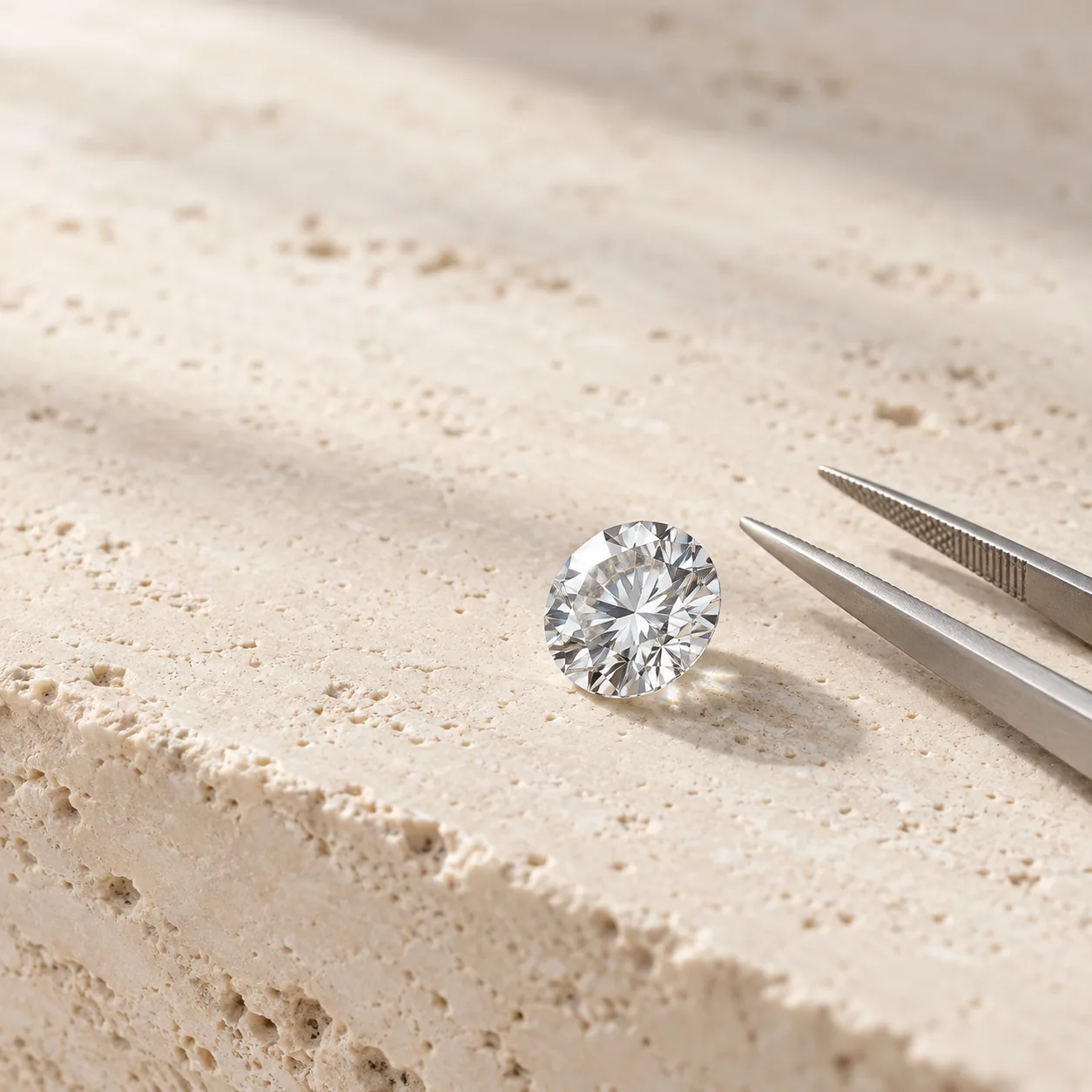
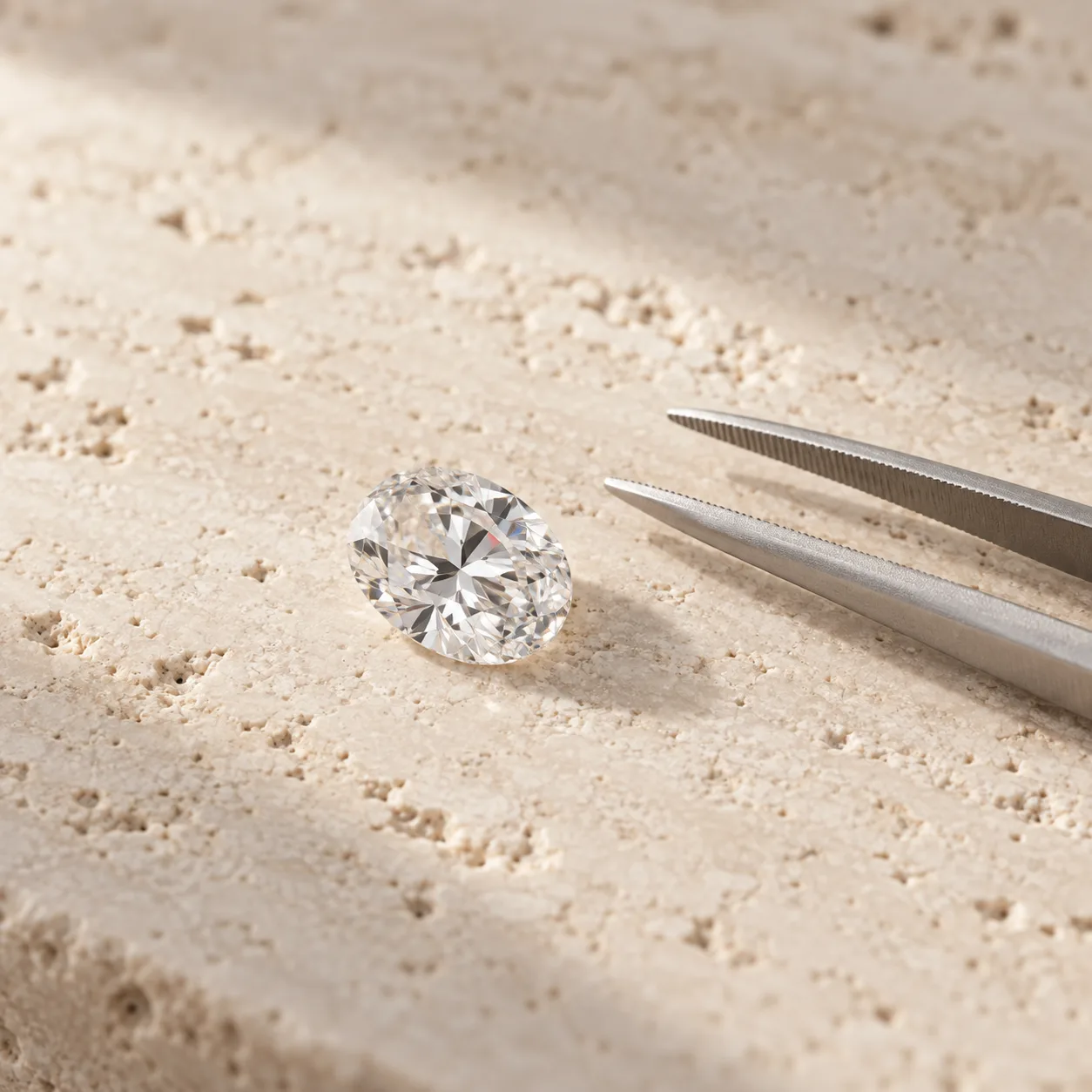
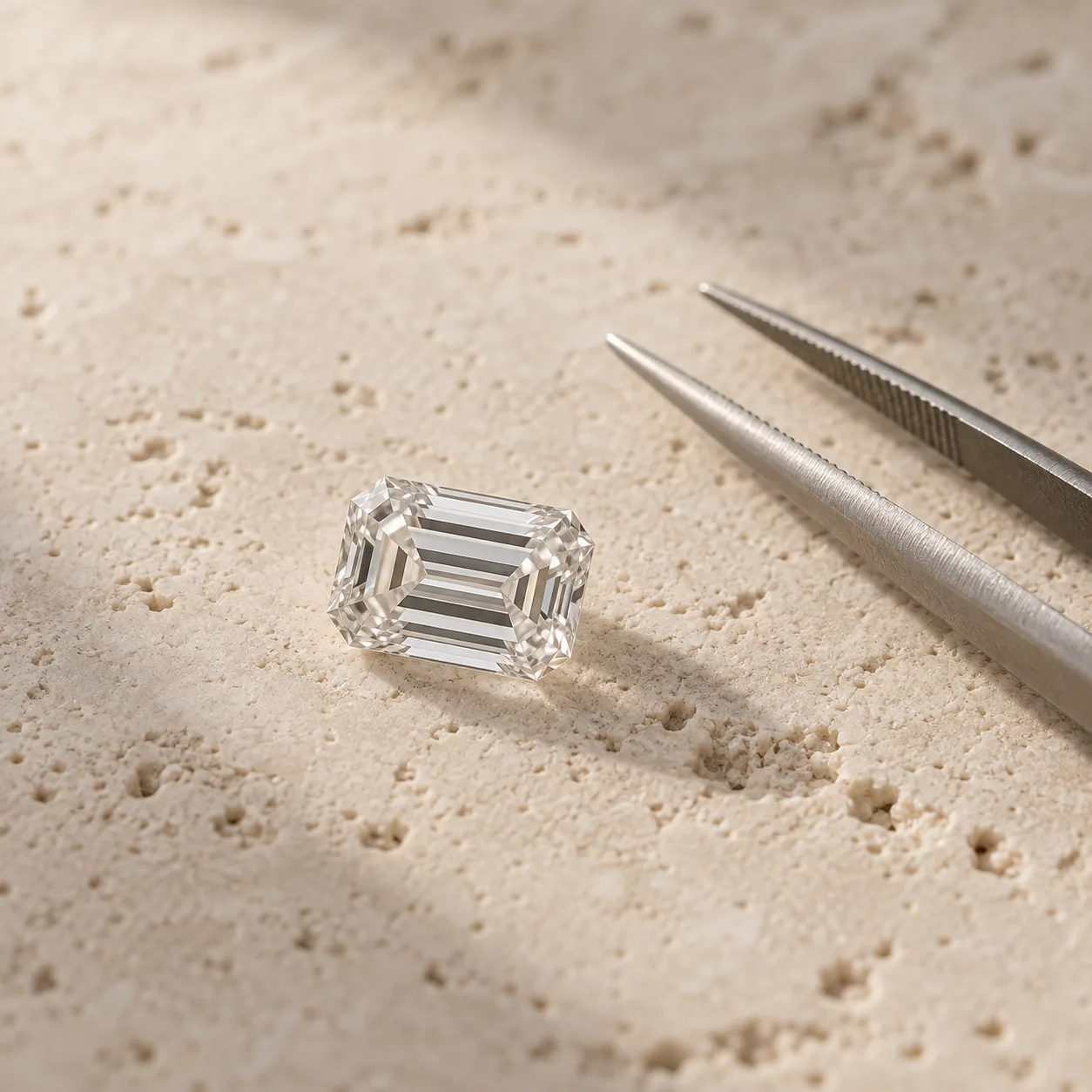
If you're ready to compare stones, explore our center stones for engagement rings; every diamond we sell comes with a GIA or IGI grading report.
Questions
Is moissanite trashy?
No. It is a hard, durable, brilliant stone, and GIA says buying a simulant can be a great option as long as it is an informed decision. The problem is selling moissanite as if it were a diamond.
Can a jeweler tell whether a stone is moissanite rather than diamond?
Yes, though a thermal test alone may not distinguish moissanite from diamond. A trained gemologist may see doubled facet edges under magnification and can use appropriate gemological testing to confirm the stone's identity.
What is the lifespan of a lab-grown diamond?
A lab-grown diamond is diamond, so it wears like one: 10 on the Mohs scale and durable to heat, light and chemicals. Settings and prongs also need care, so have them checked periodically.
What is the downside of a lab-grown diamond?
Like any diamond, it is not an investment and you should not count on resale value. It can also be treated after growth, which is why you want a grading report that states whether there is evidence of post-growth treatment.
Sources
- Synthetic Moissanite Imitating Rough Diamond | Gems & Gemology
- Synthetic Moissanite: A New Diamond Substitute | Gems & Gemology
- Simulants, Moissanite and Lab-Grown Diamonds | GIA 4Cs
- Synthetic Moissanite with Fraudulent GIA Inscription | Gems & Gemology
- More Info About Diamond Simulants | Gemological Institute of America - 4Cs
- Jewelry Buyers Guide to Diamond Alternatives
- Cubic Zirconia: an Update
Nothing on this page is an appraisal or financial advice. Markdown version · RSS