Lab-Grown Diamonds: What Synthetic and Cultured Mean
Lab-grown, lab-created, synthetic and cultured name the same kind of diamond. Here's what the FTC asks sellers to disclose, and the words that deserve a second look.
Written by Love & Carat, with AI assistance, from the sources listed below. How we write
In This Guide (8)
A lab-grown diamond is grown rather than mined and has essentially the same optical, physical and chemical properties as a mined diamond; you may see “cultured” used with a clear disclosure that the diamond is not mined. You may encounter “lab-created” or “synthetic” for stones with these properties, or “cultured” with a clear disclosure that the diamond is not mined. Under the FTC's Jewelry Guides, as revised effective August 16, 2018, what matters is that the seller tells you plainly that it isn't mined. We say "lab-grown" because it is the clearest of the four.
What do all these names actually describe?
Every one of these words points to the same thing: carbon crystallized into diamond by a controlled growth process, usually CVD or HPHT (here's how the two differ), instead of over geological time underground. The result is a lab-grown diamond. When the FTC revised its Guides, it removed the word "natural" from its definition of diamond because lab-created products with essentially the same optical, physical and chemical properties as mined diamonds are also diamonds.
The names differ mainly in tone:
- Lab-grown says where the stone came from and how. It's the one we use.
- Lab-created refers to the same origin as lab-grown; we use “lab-grown” when describing these diamonds.
- Synthetic appears in the FTC's guidance for diamonds with essentially the same optical, physical and chemical properties as mined diamonds. We prefer “lab-grown” because “synthetic” can be confused with “simulated,” which means something different.
- Cultured is also used for pearls. The FTC says that when an ad uses “cultured” for lab-grown diamonds, it needs a clear, conspicuous disclosure that the diamonds are not mined.
- A manufacturer's name followed by “-created” is another disclosure the FTC suggests, provided it clearly identifies the diamond as not mined.
If you want the basics of the stone itself, our glossary entry on lab-grown diamonds covers them in a few minutes.
What does the FTC allow and require?
The FTC's Guides for the Jewelry, Precious Metals, and Pewter Industries are the Commission's administrative interpretation of Section 5 of the FTC Act, the law against unfair and deceptive practices. The Commission approved the revisions by a 5-0 vote in July 2018, set out its reasoning in a Statement of Basis and Purpose dated July 24, 2018, and the revised Guides took effect on August 16, 2018.
The Guides themselves are guidance. They don't bind the FTC or the public, but the Commission may take action under the FTC Act if a seller makes a claim inconsistent with them.
The FTC's business guidance for jewelry sellers says:
- A seller of a lab-grown diamond should say it isn't mined, using "laboratory-grown," "laboratory-created," "[manufacturer name]-created" or a phrase of like meaning, immediately before the word "diamond" and just as prominent.
- Those words, and "synthetic," should be used only if the product has essentially the same optical, physical and chemical properties as a mined diamond.
- A simulated or imitation stone should be described as "imitation," "simulated" or similar, so it's clear it is not a diamond at all.
The special case of "cultured"
"Cultured" gets its own clause. Section 23.12(c)(3) allows it for lab-grown diamonds with essentially the same properties as mined ones only if the term is qualified by a clear and conspicuous disclosure that the product is not a mined stone, for example "laboratory-created," "laboratory-grown" or "[manufacturer name]-created."
The 2018 revision added some flexibility. The FTC found that sellers can qualify "cultured diamond" effectively even when the disclosure doesn't sit right next to the word, for instance in advertising that is all about stones that aren't mined. A headline using “cultured diamond” may be acceptable under the FTC's 2018 Guides if the ad clearly and conspicuously discloses elsewhere that it is not mined. But the disclosure has to be there, clearly.
The same idea covers colored stones. For a lab-grown ruby, lab-grown sapphire or lab-grown emerald, the FTC advises placing “laboratory-grown,” “laboratory-created” or similar immediately before the gemstone name, with equal conspicuousness. A "cultured ruby" needs the same kind of qualifying disclosure.
The Guides can be amended. For today's wording, read 16 CFR Part 23 on the eCFR.
Why do we say lab-grown?
It's the shortest honest description. "Lab-grown" is simply a short form of one of the disclosures the FTC itself suggests. Placed before “diamond,” it tells you both what the stone is and that it wasn't mined. There's nothing to decode.
We avoid "cultured" on its own because it blurs exactly the line the FTC wants drawn. We avoid "synthetic" because it's too easy to mix up with "simulated." We also sell natural diamonds, so we want the difference to be unmistakable on every page. And every diamond we sell comes with a GIA or IGI grading report, so the words on our site can always be checked against an independent document.
None of this is about making grown stones sound grander or humbler than they are. Lab-grown diamonds usually cost less than comparable natural ones. That's our whole reason for recommending them wherever they look the same.
Which words should make you look twice?
Most sellers describe their stones carefully. A few words still deserve a second look.
- "Faux." The FTC is direct about this one:
Do not use the word “faux” to describe a laboratory-created or imitation stone because it would not likely disclose adequately that the stone is not a mined stone.
- "Simulated" and "imitation." These describe stones that look like diamonds but are not diamonds. They're honest words, but they describe a different product.
- Moissanite. The FTC describes it as a lab-created gemstone that resembles a diamond, and notes that thermal testers used to tell diamonds from cubic zirconia may wrongly register it as a diamond. It's a lovely stone in its own right, but it isn't a diamond.
- "Real," "genuine," "natural" and "precious." The Guides have a whole section, § 23.27, on the misuse of these words. Be wary of any of them near a stone whose origin isn't spelled out.
- "Cultured" with no disclosure anywhere. If you can't find a clear statement that the stone isn't mined, the listing isn't doing its job.
- A brand name standing alone. "[Name]-created" is fine. A name with no "created" or "grown" tells you nothing about origin.
If you think a jewelry ad misled you, the FTC says it takes consumer complaints at ftc.gov or on 1-877-FTC-HELP.
How do you read it on a certificate?
Marketing words can vary. The grading report is where origin is settled. Look for the line that identifies the stone as grown rather than natural, and make sure it matches the listing you're reading. Our certificate glossary walks through the rest of the report.
GIA announced plans to change its descriptions for lab-grown diamonds in 2025. On June 2, 2025, GIA announced that, beginning later that year, it would describe lab-grown diamonds with descriptive terms rather than the color and clarity scales it developed for natural diamonds. GIA said its planned description would confirm lab-grown origin and, if the stone met its minimum quality standard, designate it “premium” or “standard” based on color, clarity and finish; stones below that standard would receive no designation. GIA also said existing reports for lab-grown diamonds remain valid. For how a GIA report reads today, check GIA's own site.
GIA gave its reason plainly:
More than 95% of laboratory-grown diamonds entering the market fall into a very narrow range of color and clarity.
That's GIA's figure, and it's useful to a buyer. GIA's observation is a reason to compare how stones look rather than assume a finer color or clarity distinction is worth paying for.
Where should the money go?
The word on the label doesn't change the stone. “Lab-created” and “cultured, lab-grown” can describe the same kind of diamond; compare individual stones using their reports. So once you've confirmed what it is, spend on what you can see.
- Cut first. Cut affects how much a diamond sparkles, so we'd prioritize it when comparing stones. Our guide to which lab-grown grades are worth paying for goes into detail.
- Color and clarity to "looks clean and white," not beyond. Past the point where you can't see a difference at arm's length, higher grades buy you paperwork rather than beauty. We'll happily point you to the cheaper stone when two look the same.
- Size last, and only if you want it. The savings on a grown stone can go into a slightly larger diamond, a better cut, or simply staying under budget.
One thing to be clear about: diamonds, grown or mined, are not investments. Buy the stone because you love it, not for what it might fetch later.
Stones That Fit This Guide
View all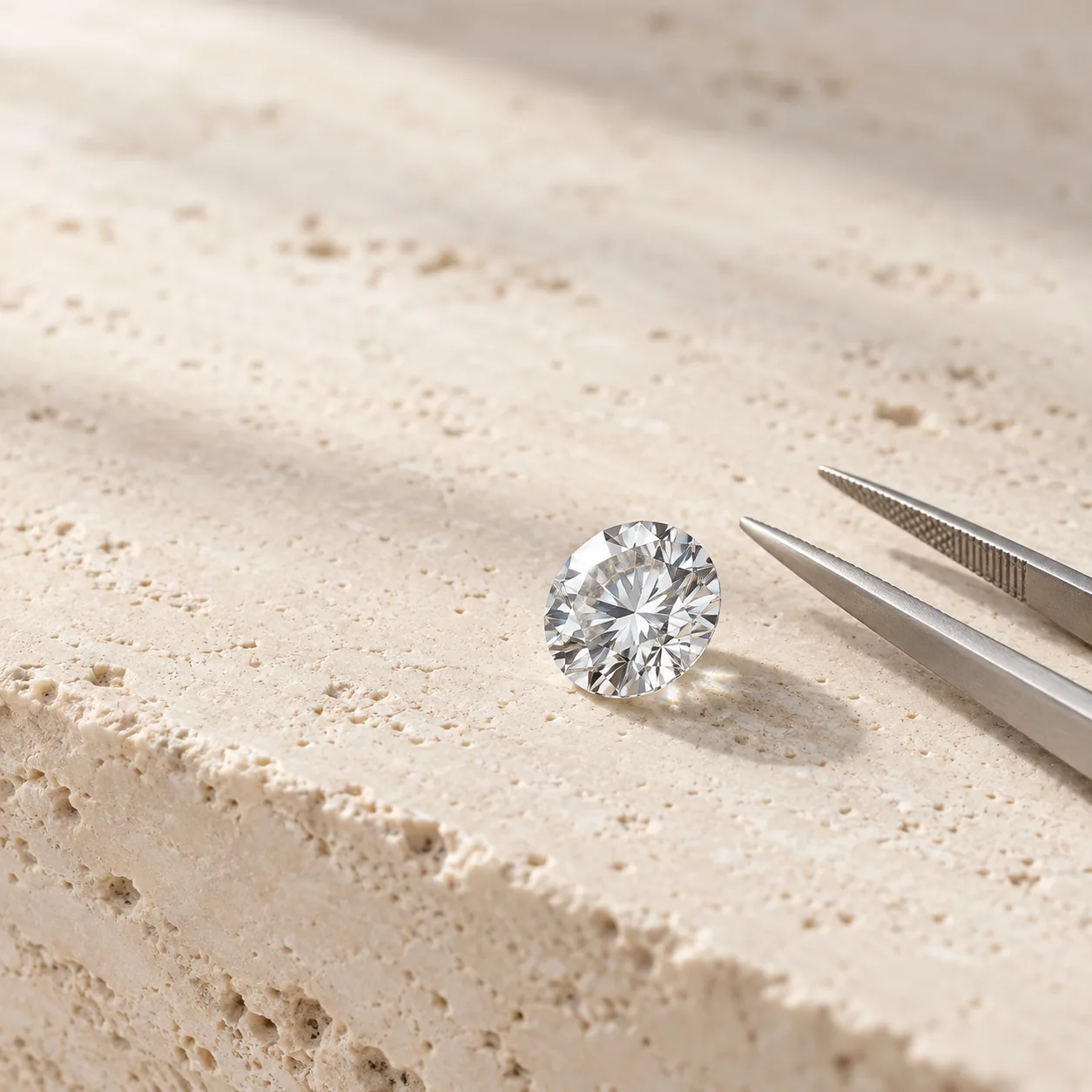
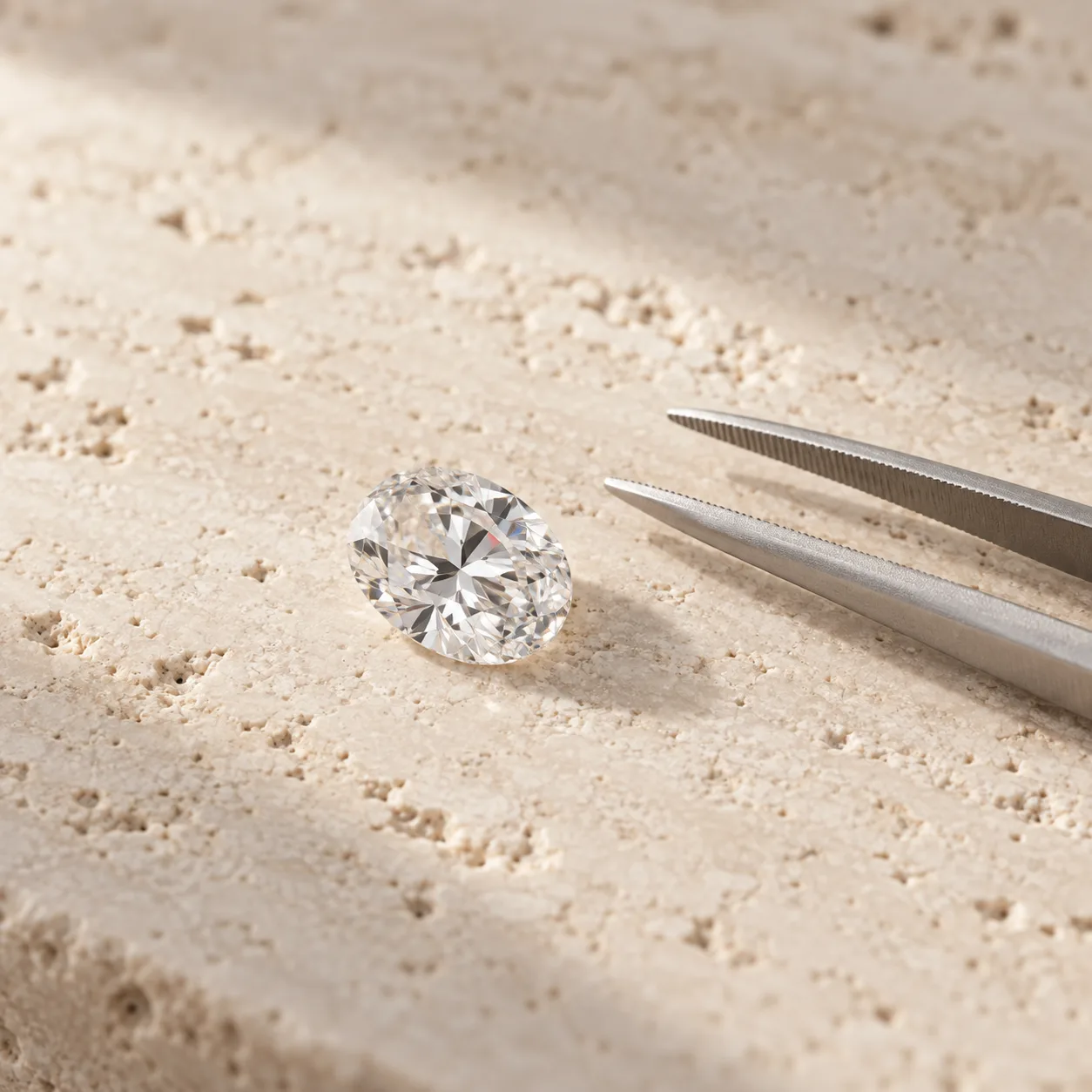
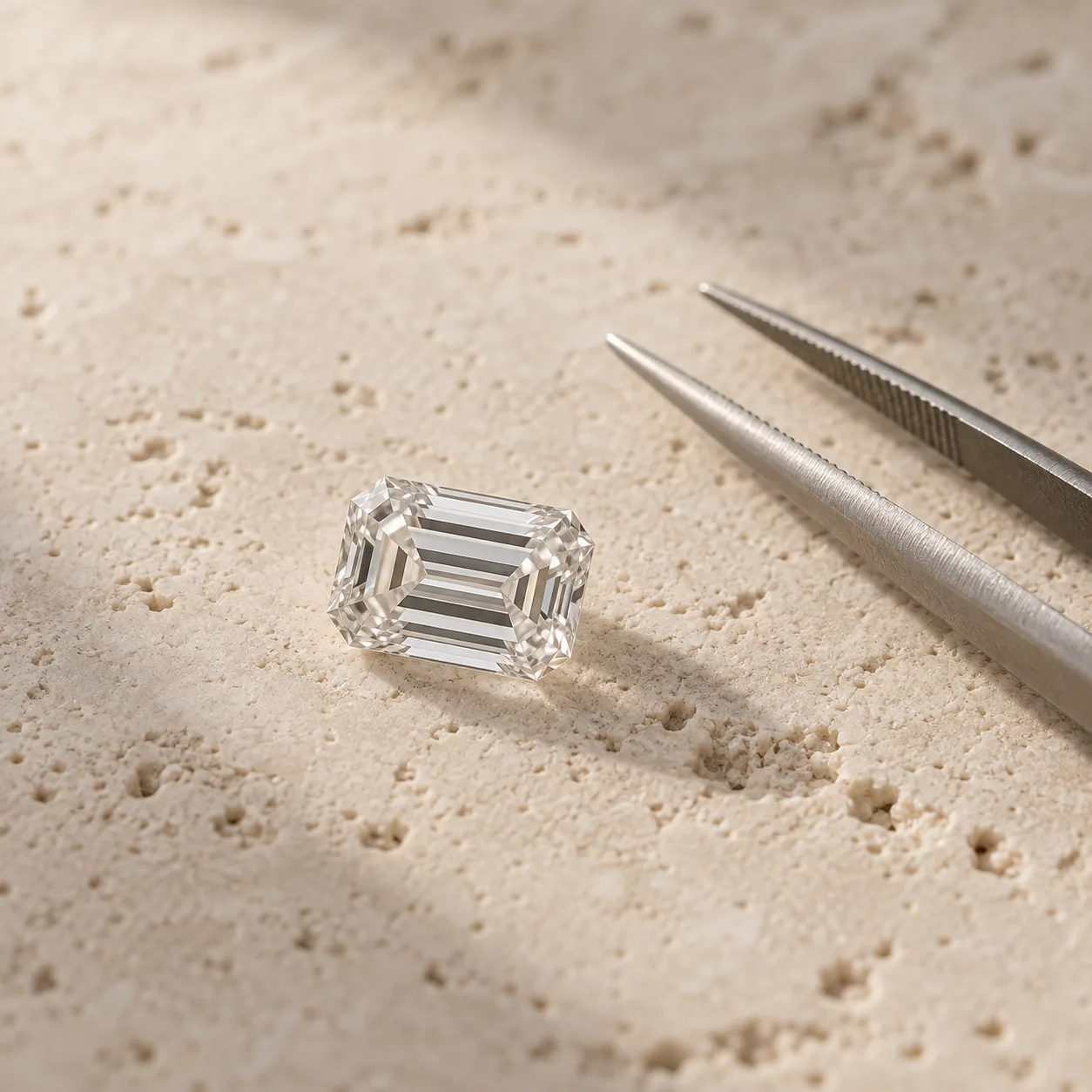
When you're ready to compare, explore our center stones for engagement rings; every diamond we sell comes with a GIA or IGI grading report, which you can use to check its origin before you choose.
The word matters less than the report: confirm the stone is lab-grown on its certificate, then spend on cut, not on grades your eye can't see.
Questions
Is a lab-grown diamond really a diamond?
Yes. When the FTC revised its Jewelry Guides in 2018, it took the word "natural" out of its definition of diamond, because grown stones with essentially the same properties as mined ones are also diamonds. Moissanite and other simulants are not.
What is the downside of a lab-grown diamond?
Neither lab-grown nor mined diamonds are investments. Buy it because you love how it looks. Nobody can honestly promise you what it will fetch if you sell it later.
Is it worth buying a lab-grown diamond?
If you want a diamond that looks the part for less money, usually yes. Lab-grown diamonds usually cost less than comparable natural ones, so the same budget stretches to a better cut or a larger stone.
Can a seller describe a lab-grown diamond as “cultured”?
Not on its own. Under the FTC Guides as revised effective August 16, 2018, "cultured" has to come with a clear and conspicuous disclosure that the stone is not mined. If you can't find that disclosure, ask for the grading report.
Sources
- Federal Register :: Guides for the Jewelry, Precious Metals, and Pewter Industries
- FTC Approves Final Revisions to Jewelry Guides | Federal Trade Commission
- eCFR :: 16 CFR Part 23 -- Guides for the Jewelry, Precious Metals, and Pewter Industries
- In the Loupe: Advertising Diamond, Gemstones and Pearls | Federal Trade Commission
- Statement of Basis and Purpose: Final Revisions to the Jewelry Guides | Federal Trade Commission
- 40665
- GIA to Use New Descriptive Terminology for Laboratory-Grown Diamonds
Nothing on this page is an appraisal or financial advice. Markdown version · RSS