The Bulgari Pink Diamond at Christie's Geneva: What Makes It Rare
Christie's Geneva offers the Bulgari Pink, a 24-carat Fancy Intense Pink diamond ring, on 10 November 2026. Here is what its grade and type mean.
Written by Love & Carat · auction news from the auction houses' own announcements, no affiliation implied, with AI assistance, from the sources listed below. How we write
In This Guide (8)
- House: Christie's
- Sale: Magnificent Jewels Including the Bulgari Pink, live auction 24405, as Christie's sale page lists it
- City and venue: Geneva, Four Seasons Hotel des Bergues, according to Christie's press release
- Date: 10 November 2026, at 4pm CET on the sale page, with the jewel on view from 5 to 10 November
- Lot: "The Bulgari Pink," a colored diamond and diamond ring by Bulgari, 1950s, set with tapered baguette-cut diamonds in platinum, as Christie's described it on 30 October 2026
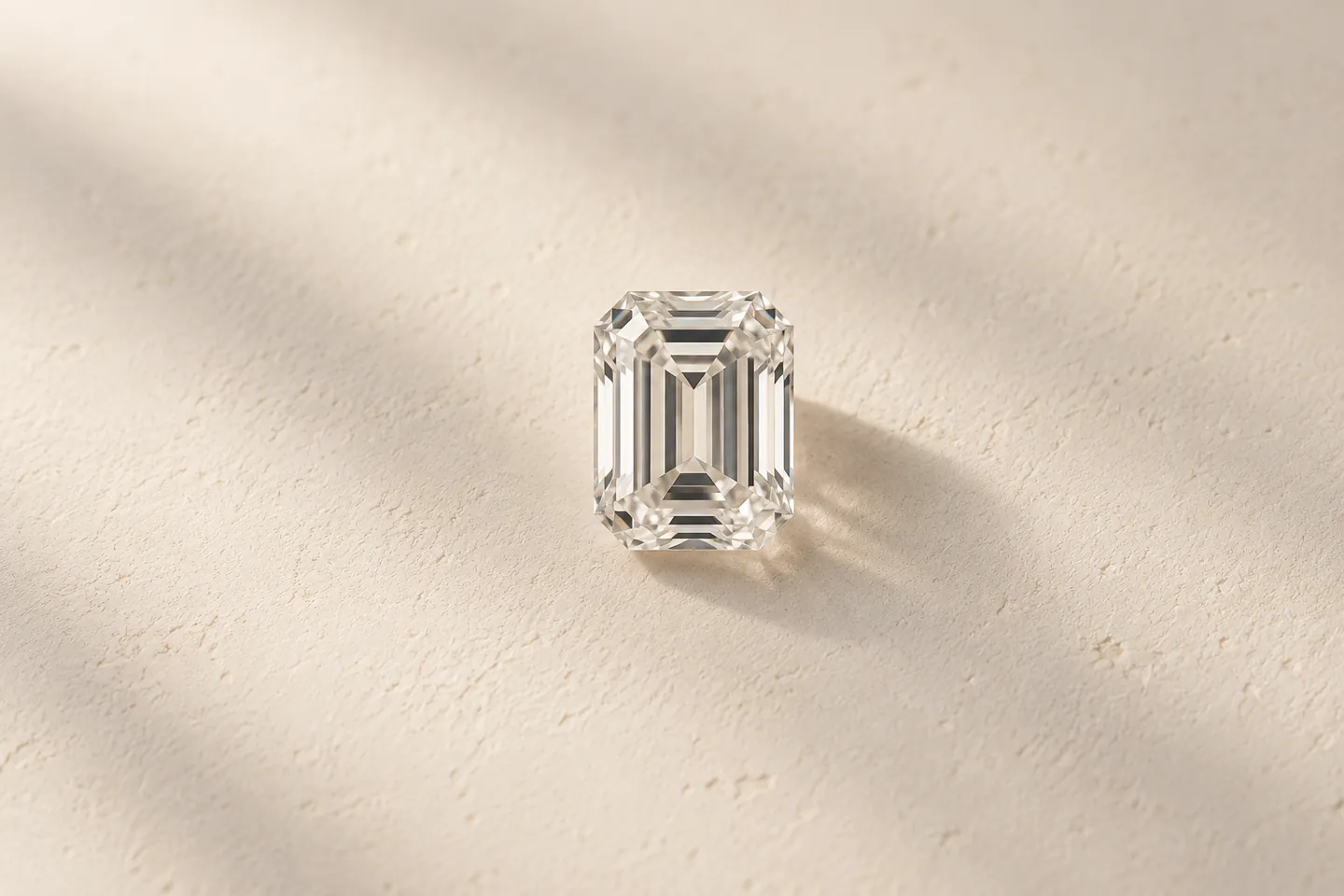
- Stone: 24.00 carats, emerald cut (a rectangular step cut), Fancy Intense Pink, Type IIa, according to Christie's press release; Christie's announcement does not state whether the stone has been treated.
- Geographic origin: Christie's 30 October 2026 feature says the diamond was identified as coming from India's Golconda mines, while its press release only compares the stone with historic Golconda diamonds; according to family lore, the rough was acquired in India.
- Laboratory: not named in Christie's release, as JCK reported on October 19, 2026
- Estimate: CHF 10 to 15 million, or US$12 to 18 million, not including the buyer's premium
- Result: to come
Where Did the Bulgari Pink Come From?
The stone comes from the collection of a European noble family. According to Christie's press release, it has stayed in private hands for more than 70 years and has never been offered at auction.
According to the family's account, the owner's great-grandfather acquired the rough diamond in India in the 1950s. The family says the rough was later entrusted to Bulgari, which made it into the ring offered now. Christie's calls this "family lore," so it is the family's story rather than a documented record.
The timing matters to the story. National Jeweler reported on October 13, 2026 that Rome was becoming the center of postwar glamour then. Bulgari's Via Condotti boutique drew stars such as Elizabeth Taylor, Richard Burton, Audrey Hepburn and Mel Ferrer, as well as other Hollywood figures filming at Cinecittà Studios.
If the lot leaves you curious about pink at a size you could actually wear, browse our lab-grown and natural colored diamonds. We compare them honestly at the end of this piece.
What Does Fancy Intense Pink Mean?
A colorless diamond is graded on the D-to-Z scale, where less color scores higher. Fancy-colored diamonds use a different system that considers hue, tone and saturation. GIA explains that for fancy colors, "the more saturated and more distinct the shade, the higher the rating."
On GIA's system, a grade has two parts. First, the laboratory selects one of 27 hues. Then it describes tone and saturation, meaning how light or dark the color is and how strong it is, with terms such as Fancy Light, Fancy Intense and Fancy Vivid. GIA judges all of this under controlled lighting against color comparators. Christie's gives the Bulgari Pink's grade as Fancy Intense Pink.
Fancy Intense is one of GIA's stronger pink color grades; Fancy Deep and Fancy Vivid are other categories. You can see how the grades were spread in GIA's study of 1,490 natural-color pink diamonds, published in Gems & Gemology in 2002:
- Fancy: 488 stones, 33% of the sample
- Fancy Intense: 282 stones, 19%
- Fancy Deep: 147 stones, 10%
- Fancy Vivid: 55 stones, 4%
The other stones in the study received grades from Faint through Fancy Light. GIA also notes that "pink" covers a family of colors. Purplish pink, orangy pink and brownish pink all count, as long as pink is the last word in the description.
Christie's gives one reason pinks exist at all. Pink diamonds get their color from rare distortions in their crystal lattices while they form deep in the Earth's crust.
What Is a Type IIa Diamond?
Diamond "type" is a scientific classification. It describes what a diamond is made of at the atomic level. It is not a grade of beauty. National Jeweler describes Type IIa as "the rarest and most chemically pure category of natural diamonds." Christie's says the category represents fewer than 2% of all gem-quality diamonds.
GIA's pink study shows why this matters for color too. Strong color was much less common among Type II pinks than among Type I pinks. Of the 324 Type II stones in the sample, only 25 (8%) graded Fancy Intense. Across all four of the stronger grades, the share was 73% for Type I but only 38% for Type II.
Those results describe Type II diamonds in GIA's study, not Type IIa diamonds specifically; they cannot tell us how often a Type IIa pink grades Fancy Intense.
Why Golconda Comes Up
Golconda refers to the historic diamond mines of India, long linked with exceptional stones. Christie's press release compares the Bulgari Pink's hue and proportions to "the most celebrated historic diamonds," including those from Golconda. Christie's 30 October 2026 feature goes further: it says the stone has been identified as coming from the Golconda mines, but gives no supporting laboratory report. Its Geneva specialist explains why the name carries weight.
She describes Golconda diamonds as having a "water-clear" look, with luminous, crystalline transparency.
Laboratories handle origin in their own reports. GIA offers a Diamond Origin Report that identifies a natural diamond's country of origin, not a particular mine; Christie’s has not named such a report for this lot. For colored diamonds, GIA has an Identification and Origin Report that gives the color grade and the color origin, meaning whether the color is natural. That report is only for natural colored diamonds that haven't had unstable treatments.
JCK notes that Christie's release does not name a grading laboratory for this stone. Bidders should read the lot's own documentation from the house.
Why Size and Color Together Make It Rare
GIA calls natural colored diamonds extremely rare, and therefore highly desirable. Christie's case for the Bulgari Pink rests on a combination: the Fancy Intense Pink color, the rectangular step cut and the 24-carat size.
JCK reported that Christie's sold the 10.38-carat Marie-Thérèse Pink, a purple-pink diamond, for $13.98 million in New York on June 17, 2025. That was nearly double its high estimate, and a record for a purple-pink diamond. JCK notes that the Bulgari Pink's high estimate exceeds that earlier sale result; an estimate is not a sale result, and the stones differ.
An estimate is only the house's estimate. No one knows the result until the sale on 10 November.
A pink diamond's rarity comes from color, type and size together. You only need the color to enjoy one.
How the Stones We Sell Compare
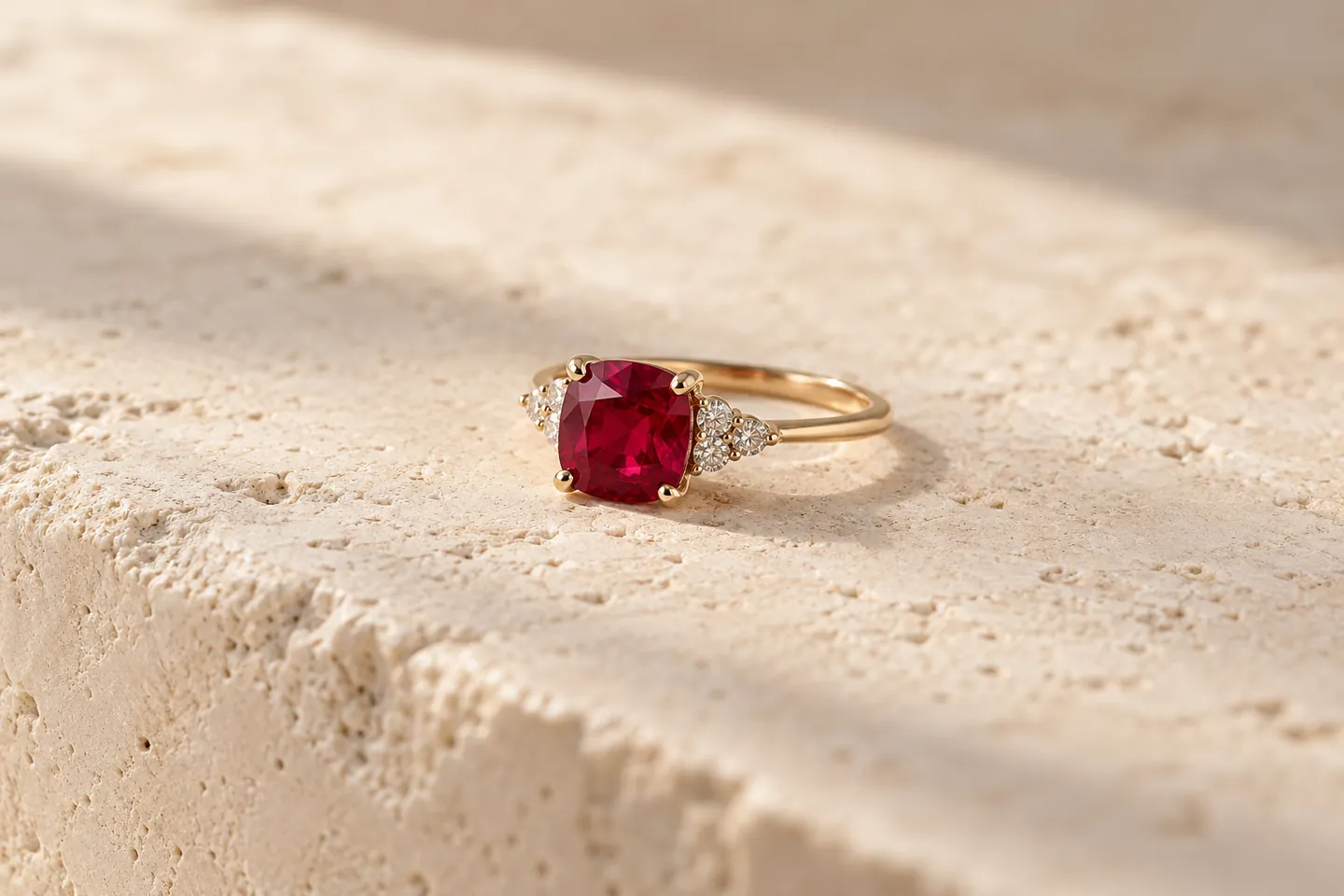
Our loose stones are not the auction lot: look at smaller stones in the same color family for their own color, not for the lot's size, rarity or history. Our colored diamonds page is the place to look for pinks, lab-grown and natural, and every diamond we sell comes with a GIA or IGI report.
Here is how we'd shop for one:
- Judge the color by eye. On a pink diamond, pay attention to how the color actually looks to you, not just the grade. We'd look at the photos and video first and let the grade follow. If a lighter grade gives you a pink you love, you don't need to pay for a stronger one.
- Consider lab-grown. Lab-grown diamonds usually cost less than comparable natural ones. Where a lab-grown pink looks the way you want, that's the one we'd recommend. Read more in our guide to lab-grown vs natural diamonds.
- Read the report's origin lines. Every diamond we sell comes with a GIA or IGI grading report. It tells you whether the stone is lab-grown or natural, and for a natural colored diamond it can state whether the color is natural. There's more on that in where diamond grading reports come from.
- Look closely at a step cut. If you like the Bulgari Pink's long, rectangular shape, browse our emerald-cut diamonds. An emerald cut's open facets show the inside of a stone clearly, so we'd check clarity more carefully than on a round.
If you want a rosy stone in a different gem, browse our pink sapphires, which are natural and come with a gemological laboratory report.
Whichever you choose, it ships insured with a signature on delivery, and we pay the import duty on orders to the US. Love & Carat has no connection to the Christie's sale and doesn't offer the lot or anything from it. We'll report the result once the house announces it.
Questions
Who made the Bulgari Pink ring?
Christie's describes it as a 1950s ring by Bulgari set with a pink diamond and tapered baguette-cut diamonds in platinum. According to family lore, the rough stone was later entrusted to Bulgari, which made it into a ring.
Does the estimate include the buyer's premium?
No. JCK reported on October 19, 2026 that the CHF 10 to 15 million estimate does not include the buyer's premium. Check Christie's sale conditions for the fee's terms.
Can a lab-grown diamond be pink?
Yes, and its grading report will say it is lab-grown. GIA says every lab-grown diamond it evaluates is laser inscribed with "Laboratory-Grown" and a GIA assessment number.
Is a pink diamond a good investment?
Diamonds are not investments, and we give no financial advice. Buy a pink diamond because you love how it looks. An auction estimate is the house's estimate, not a guide to what any stone will fetch later.
Sources
- Christie’s Presents The Bulgari Pink
- From Bulgari to JAR and Cartier: stunning jewels offered in Geneva
- Magnificent Jewels Including the Bulgari Pink
- 24-Carat Bulgari Pink Diamond Ring Could Fetch $18M at Christie's - JCK
- Christie's Geneva To Auction 'Bulgari Pink' Diamond | National Jeweler
- Characterization and Grading of Natural-Color Pink Diamonds
- Colored Diamonds: Diamond Grading & Reports | GIA 4Cs
Nothing on this page is an appraisal or financial advice. Markdown version · RSS